
Trump Orders Blockade on Venezuelan Oil Tankers Amid Rising Tensions
In This Article
HIGHLIGHTS
- Donald Trump announced a total blockade on sanctioned oil tankers entering and leaving Venezuela, escalating tensions with Nicolás Maduro's government.
- The US military has increased its presence in the Caribbean, with warships and troops deployed to enforce the blockade.
- Venezuela accused the US of piracy following the seizure of an oil tanker carrying Venezuelan crude, heightening diplomatic tensions.
- US Congressman Joaquin Castro criticized the blockade as an act of war, highlighting potential legal and political ramifications.
- The blockade could further cripple Venezuela's economy, already strained by existing US sanctions on its oil sector.
In a significant escalation of US foreign policy, President Donald Trump has ordered a comprehensive blockade on all sanctioned oil tankers entering and leaving Venezuela. This move intensifies the ongoing pressure campaign against Venezuelan President Nicolás Maduro, whom the Trump administration has long accused of using oil revenues to fund illegal activities such as drug trafficking and human trafficking.
Military Presence in the Caribbean
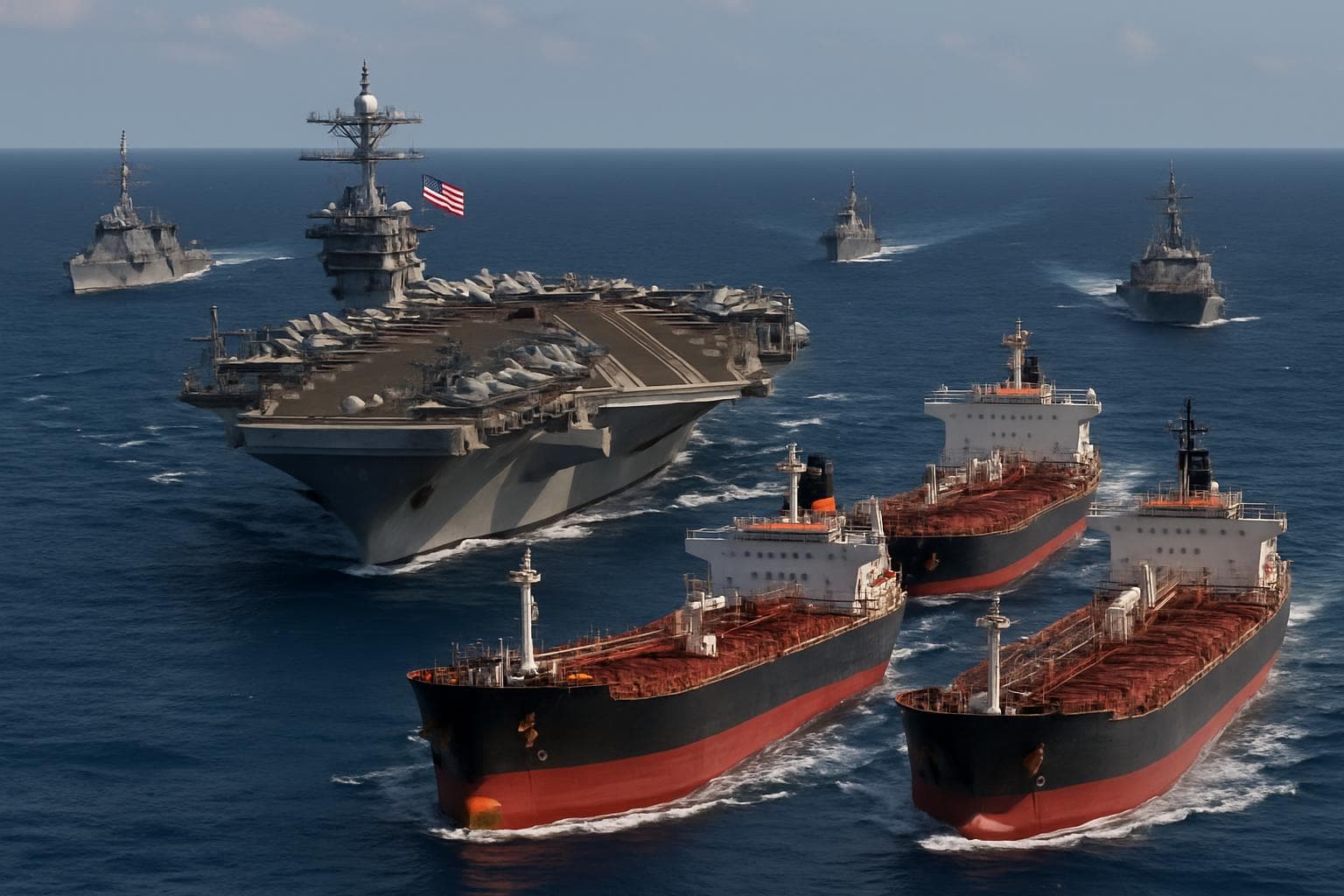
The US has bolstered its military presence in the Caribbean, deploying warships and thousands of troops to enforce the blockade. This includes the USS Gerald Ford, the world's largest aircraft carrier, which is now stationed within striking distance of Venezuela. Trump declared on Truth Social that Venezuela is "completely surrounded by the largest Armada ever assembled in the History of South America," signaling a robust military posture.
Diplomatic and Economic Repercussions
The blockade follows the US seizure of an oil tanker off the Venezuelan coast, which was reportedly carrying nearly two million barrels of crude oil. Venezuela denounced the action as "piracy" and a violation of international law, further straining diplomatic relations. The Venezuelan government has accused the US of attempting to destabilize its economy, which is heavily reliant on oil exports.
Political Reactions and Legal Concerns
US Congressman Joaquin Castro condemned the blockade as "unquestionably an act of war," emphasizing that Congress had not authorized such hostilities. This raises significant legal and political questions about the extent of presidential powers in foreign military engagements. Meanwhile, oil market participants are closely monitoring the situation, as the blockade could lead to a reduction in Venezuelan oil exports, affecting global oil prices.
Regional Implications
The situation has also drawn in regional actors, with Venezuela accusing Trinidad and Tobago of complicity in the US's actions. The Caribbean nation recently allowed US military access to its airports, a move Venezuela views as hostile. This development underscores the broader geopolitical implications of the US-Venezuela standoff, as neighboring countries navigate their positions amid escalating tensions.
WHAT THIS MIGHT MEAN
The blockade on Venezuelan oil tankers could have far-reaching consequences for both Venezuela and the broader region. Economically, the move is likely to exacerbate Venezuela's financial struggles, potentially leading to further humanitarian challenges. Politically, the blockade could strain US relations with other Latin American countries, particularly those wary of increased US military activity in the region.
Legal experts have raised concerns about the potential for international law violations, particularly in light of the US's aggressive military tactics. Should the situation escalate, it could lead to broader international condemnation and complicate diplomatic efforts to resolve the crisis.
Moving forward, the US Congress may face pressure to address the legality of the blockade and the broader implications of unilateral military actions. As the situation develops, it will be crucial to monitor the responses of key stakeholders, including international organizations and regional governments, to gauge the potential for diplomatic resolutions.
Related Articles

Greenland Politely Declines Trump's Hospital Ship Offer Amid Healthcare Debate
Senate Blocks Resolution to Limit Trump's Military Actions in Iran
Spain's Sánchez Stands Firm Against Trump's Trade Threat Over Iran Stance
Trump's New Tariff Strategy Sparks Global Trade Uncertainty
US-Iran Tensions Escalate Amid Renewed Nuclear Talks and Protests
Congress Subpoenas Attorney General Bondi in Epstein Investigation
Trump Orders Blockade on Venezuelan Oil Tankers Amid Rising Tensions
In This Article
 Ethan Brooks| Published
 HIGHLIGHTS
- Donald Trump announced a total blockade on sanctioned oil tankers entering and leaving Venezuela, escalating tensions with Nicolás Maduro's government.
- The US military has increased its presence in the Caribbean, with warships and troops deployed to enforce the blockade.
- Venezuela accused the US of piracy following the seizure of an oil tanker carrying Venezuelan crude, heightening diplomatic tensions.
- US Congressman Joaquin Castro criticized the blockade as an act of war, highlighting potential legal and political ramifications.
- The blockade could further cripple Venezuela's economy, already strained by existing US sanctions on its oil sector.
In a significant escalation of US foreign policy, President Donald Trump has ordered a comprehensive blockade on all sanctioned oil tankers entering and leaving Venezuela. This move intensifies the ongoing pressure campaign against Venezuelan President Nicolás Maduro, whom the Trump administration has long accused of using oil revenues to fund illegal activities such as drug trafficking and human trafficking.
Military Presence in the Caribbean
The US has bolstered its military presence in the Caribbean, deploying warships and thousands of troops to enforce the blockade. This includes the USS Gerald Ford, the world's largest aircraft carrier, which is now stationed within striking distance of Venezuela. Trump declared on Truth Social that Venezuela is "completely surrounded by the largest Armada ever assembled in the History of South America," signaling a robust military posture.
Diplomatic and Economic Repercussions
The blockade follows the US seizure of an oil tanker off the Venezuelan coast, which was reportedly carrying nearly two million barrels of crude oil. Venezuela denounced the action as "piracy" and a violation of international law, further straining diplomatic relations. The Venezuelan government has accused the US of attempting to destabilize its economy, which is heavily reliant on oil exports.
Political Reactions and Legal Concerns
US Congressman Joaquin Castro condemned the blockade as "unquestionably an act of war," emphasizing that Congress had not authorized such hostilities. This raises significant legal and political questions about the extent of presidential powers in foreign military engagements. Meanwhile, oil market participants are closely monitoring the situation, as the blockade could lead to a reduction in Venezuelan oil exports, affecting global oil prices.
Regional Implications
The situation has also drawn in regional actors, with Venezuela accusing Trinidad and Tobago of complicity in the US's actions. The Caribbean nation recently allowed US military access to its airports, a move Venezuela views as hostile. This development underscores the broader geopolitical implications of the US-Venezuela standoff, as neighboring countries navigate their positions amid escalating tensions.
WHAT THIS MIGHT MEAN
The blockade on Venezuelan oil tankers could have far-reaching consequences for both Venezuela and the broader region. Economically, the move is likely to exacerbate Venezuela's financial struggles, potentially leading to further humanitarian challenges. Politically, the blockade could strain US relations with other Latin American countries, particularly those wary of increased US military activity in the region.
Legal experts have raised concerns about the potential for international law violations, particularly in light of the US's aggressive military tactics. Should the situation escalate, it could lead to broader international condemnation and complicate diplomatic efforts to resolve the crisis.
Moving forward, the US Congress may face pressure to address the legality of the blockade and the broader implications of unilateral military actions. As the situation develops, it will be crucial to monitor the responses of key stakeholders, including international organizations and regional governments, to gauge the potential for diplomatic resolutions.
Related Articles
Greenland Politely Declines Trump's Hospital Ship Offer Amid Healthcare Debate
Senate Blocks Resolution to Limit Trump's Military Actions in Iran
Spain's Sánchez Stands Firm Against Trump's Trade Threat Over Iran Stance
Trump's New Tariff Strategy Sparks Global Trade Uncertainty
US-Iran Tensions Escalate Amid Renewed Nuclear Talks and Protests
Congress Subpoenas Attorney General Bondi in Epstein Investigation