
Trump Administration Scales Back Minnesota Operations Amid Outcry Over Alex Pretti Shooting
In This Article
HIGHLIGHTS
- President Trump announced a de-escalation of federal operations in Minnesota following the fatal shooting of Alex Pretti by immigration officers.
- Homeland Security Secretary Kristi Noem labeled Pretti a "domestic terrorist," but local officials and eyewitnesses dispute this characterization.
- A preliminary DHS report indicates two agents fired at Pretti, contradicting initial claims that he was reaching for a gun.
- Gregory Bovino, the border patrol commander in Minneapolis, has been replaced by Tom Homan amid growing scrutiny and protests.
- The Trump administration faces backlash over aggressive immigration enforcement tactics, with local protests and legal challenges mounting.
In response to mounting public outcry and political pressure, President Donald Trump announced a reduction in federal immigration operations in Minnesota following the controversial shooting of Alex Pretti, an intensive care nurse, by federal agents. The incident, which occurred over the weekend, has sparked widespread protests and criticism from both sides of the political aisle.
Federal Response and Leadership Changes
The Trump administration's decision to scale back its presence in Minnesota comes after two fatal shootings by immigration officers, including that of 37-year-old Renee Good earlier in January. Homeland Security Secretary Kristi Noem initially described Pretti as a "domestic terrorist," a claim that has been contested by local officials and eyewitnesses who assert that Pretti was unarmed at the time of the shooting.
In a move to address the escalating situation, the administration has replaced Gregory Bovino, the border patrol commander in Minneapolis, with Tom Homan, the White House's border czar. This leadership change is part of a broader strategy to de-escalate tensions in the region.
Contradictory Reports and Legal Challenges
A preliminary report from the Department of Homeland Security (DHS) has surfaced, indicating that two agents fired their weapons at Pretti, contradicting earlier claims that he was reaching for a firearm. The report, obtained by multiple news outlets, has fueled further controversy and calls for accountability.
Meanwhile, Minnesota's top federal judge has summoned ICE's acting head, Todd Lyons, to court for allegedly defying orders, signaling potential legal repercussions for the agency's actions in the state.
Public Outcry and Protests
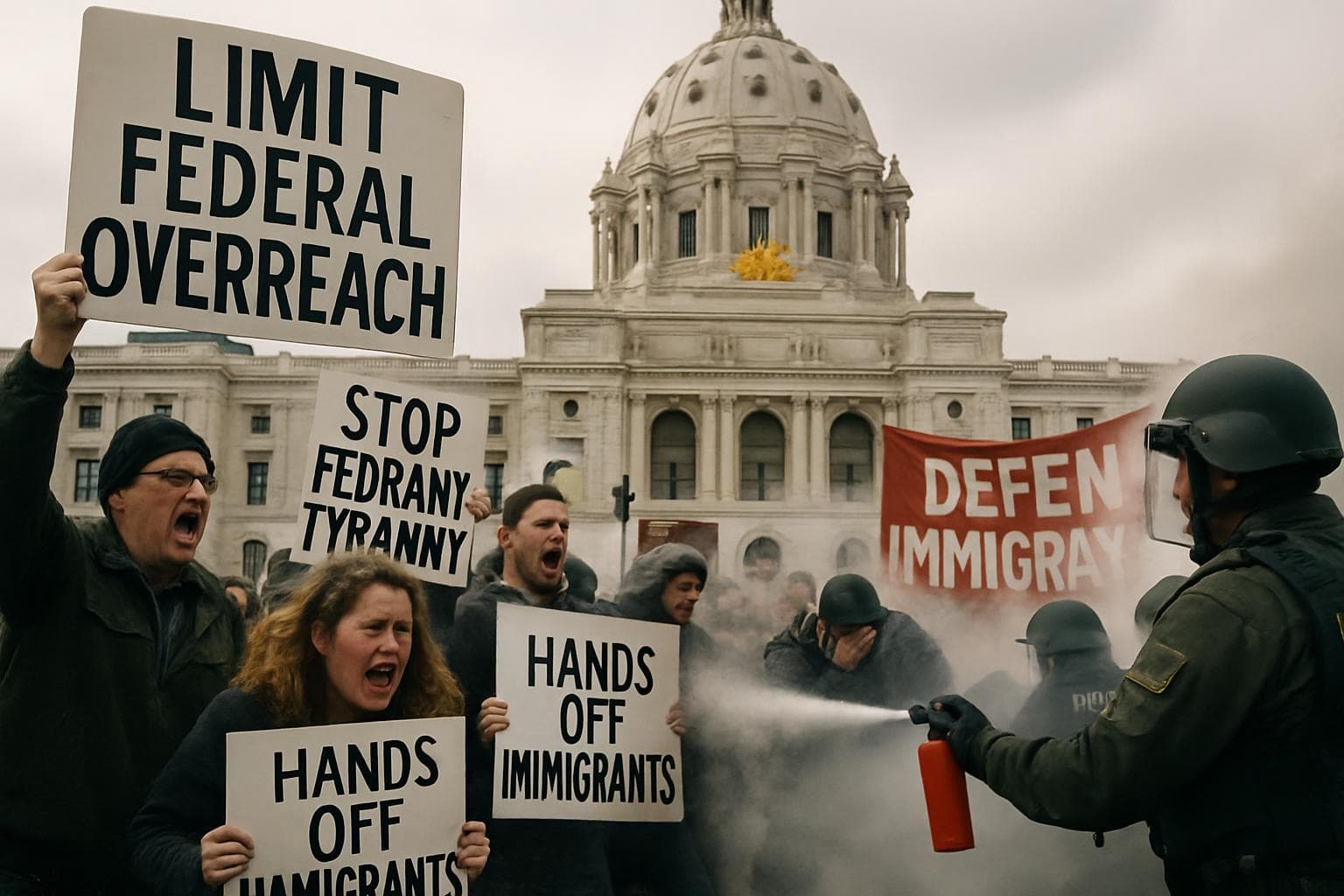
The shootings have galvanized local residents, leading to protests and demands for the withdrawal of federal agents from the area. Demonstrators have gathered outside hotels and government buildings, voicing their opposition to what they perceive as an overreach of federal power and a violation of civil rights.
Videos circulating online depict aggressive tactics by federal agents, including the use of teargas and pepper spray, further inflaming public sentiment. In one video, agents are seen detaining a woman in front of her child, prompting cries of protest from onlookers.
WHAT THIS MIGHT MEAN
The Trump administration's decision to de-escalate operations in Minnesota may temporarily ease tensions, but the underlying issues of federal overreach and aggressive immigration enforcement remain contentious. Legal challenges could lead to increased scrutiny of ICE and DHS practices, potentially resulting in policy changes or reforms.
Politically, the situation highlights the deep divisions over immigration policy in the United States, with implications for future administrations. As protests continue, the administration may face pressure to further justify its actions and address the concerns of local communities.
Experts suggest that the outcome of ongoing legal proceedings and public pressure could influence the broader national debate on immigration enforcement, potentially shaping future legislative and executive actions.
Related Articles
Senate Blocks Resolution to Limit Trump's Military Actions in Iran
Spain's Sánchez Stands Firm Against Trump's Trade Threat Over Iran Stance

US-Iran Tensions Escalate Amid Renewed Nuclear Talks and Protests

Greenland Politely Declines Trump's Hospital Ship Offer Amid Healthcare Debate
Congress Subpoenas Attorney General Bondi in Epstein Investigation
UK-Iran Tensions: Starmer Defends Cautious Approach Amid Trump Criticism
Trump Administration Scales Back Minnesota Operations Amid Outcry Over Alex Pretti Shooting
In This Article
 Ethan Brooks| Published
 HIGHLIGHTS
- President Trump announced a de-escalation of federal operations in Minnesota following the fatal shooting of Alex Pretti by immigration officers.
- Homeland Security Secretary Kristi Noem labeled Pretti a "domestic terrorist," but local officials and eyewitnesses dispute this characterization.
- A preliminary DHS report indicates two agents fired at Pretti, contradicting initial claims that he was reaching for a gun.
- Gregory Bovino, the border patrol commander in Minneapolis, has been replaced by Tom Homan amid growing scrutiny and protests.
- The Trump administration faces backlash over aggressive immigration enforcement tactics, with local protests and legal challenges mounting.
In response to mounting public outcry and political pressure, President Donald Trump announced a reduction in federal immigration operations in Minnesota following the controversial shooting of Alex Pretti, an intensive care nurse, by federal agents. The incident, which occurred over the weekend, has sparked widespread protests and criticism from both sides of the political aisle.
Federal Response and Leadership Changes
The Trump administration's decision to scale back its presence in Minnesota comes after two fatal shootings by immigration officers, including that of 37-year-old Renee Good earlier in January. Homeland Security Secretary Kristi Noem initially described Pretti as a "domestic terrorist," a claim that has been contested by local officials and eyewitnesses who assert that Pretti was unarmed at the time of the shooting.
In a move to address the escalating situation, the administration has replaced Gregory Bovino, the border patrol commander in Minneapolis, with Tom Homan, the White House's border czar. This leadership change is part of a broader strategy to de-escalate tensions in the region.
Contradictory Reports and Legal Challenges
A preliminary report from the Department of Homeland Security (DHS) has surfaced, indicating that two agents fired their weapons at Pretti, contradicting earlier claims that he was reaching for a firearm. The report, obtained by multiple news outlets, has fueled further controversy and calls for accountability.
Meanwhile, Minnesota's top federal judge has summoned ICE's acting head, Todd Lyons, to court for allegedly defying orders, signaling potential legal repercussions for the agency's actions in the state.
Public Outcry and Protests
The shootings have galvanized local residents, leading to protests and demands for the withdrawal of federal agents from the area. Demonstrators have gathered outside hotels and government buildings, voicing their opposition to what they perceive as an overreach of federal power and a violation of civil rights.
Videos circulating online depict aggressive tactics by federal agents, including the use of teargas and pepper spray, further inflaming public sentiment. In one video, agents are seen detaining a woman in front of her child, prompting cries of protest from onlookers.
WHAT THIS MIGHT MEAN
The Trump administration's decision to de-escalate operations in Minnesota may temporarily ease tensions, but the underlying issues of federal overreach and aggressive immigration enforcement remain contentious. Legal challenges could lead to increased scrutiny of ICE and DHS practices, potentially resulting in policy changes or reforms.
Politically, the situation highlights the deep divisions over immigration policy in the United States, with implications for future administrations. As protests continue, the administration may face pressure to further justify its actions and address the concerns of local communities.
Experts suggest that the outcome of ongoing legal proceedings and public pressure could influence the broader national debate on immigration enforcement, potentially shaping future legislative and executive actions.
Related Articles
Senate Blocks Resolution to Limit Trump's Military Actions in Iran
Spain's Sánchez Stands Firm Against Trump's Trade Threat Over Iran Stance
US-Iran Tensions Escalate Amid Renewed Nuclear Talks and Protests
Greenland Politely Declines Trump's Hospital Ship Offer Amid Healthcare Debate
Congress Subpoenas Attorney General Bondi in Epstein Investigation
UK-Iran Tensions: Starmer Defends Cautious Approach Amid Trump Criticism