
Trump Escalates Trade Tensions with Canada and Cuba Over Tariffs
In This Article
HIGHLIGHTS
- President Trump has threatened 50% tariffs on Canadian planes, citing Canada's refusal to certify US-made Gulfstream aircraft.
- An executive order was signed to impose tariffs on countries supplying oil to Cuba, aiming to pressure its communist government.
- Mexico's oil shipments to Cuba have paused, with Mexico citing sovereign decisions amid US pressure.
- The US accuses Cuba of hosting adversaries like Russia and Hezbollah, declaring it a national security threat.
- Cuba faces economic strain with limited oil supplies after losing Venezuelan oil, its primary source.
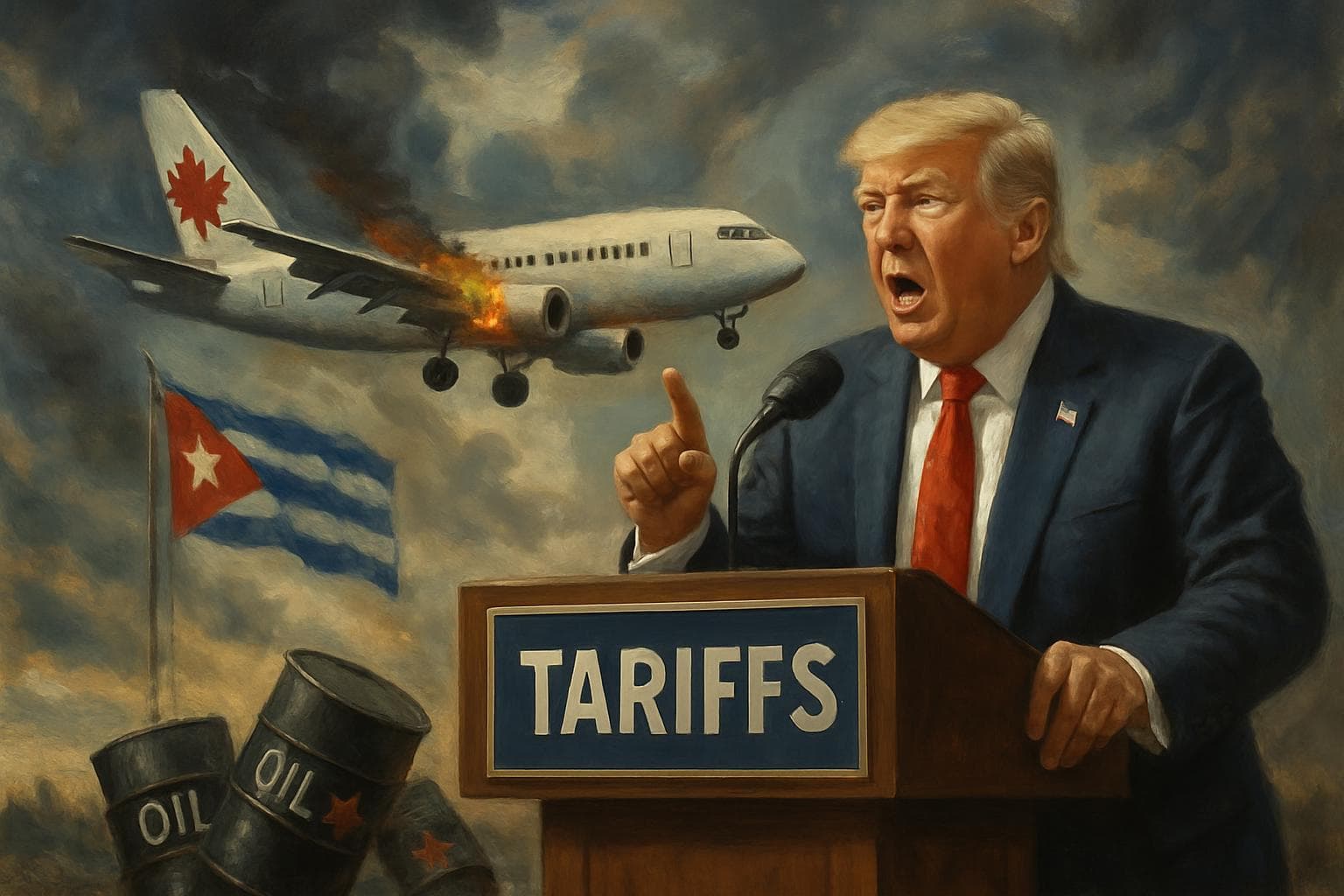
In a move that could further strain international relations, President Donald Trump has announced potential tariffs on Canadian planes and countries supplying oil to Cuba. The announcement comes amid ongoing tensions between the US and its northern neighbor, as well as efforts to destabilize Cuba's communist regime.
Tariffs on Canadian Aircraft
President Trump has threatened to impose a 50% tariff on Canadian planes, retaliating against what he describes as Canada's "wrongful" refusal to certify aircraft manufactured by the US firm Gulfstream. Although Trump initially suggested decertifying all Canadian aircraft, including those from Bombardier, the White House later clarified that this was not the case. Bombardier, a major Canadian aircraft manufacturer, acknowledged the President's statements and is in communication with the Canadian government.
Targeting Cuba's Oil Supply
On Thursday, Trump signed an executive order to levy tariffs on countries that provide oil to Cuba, intensifying pressure on the island's communist leadership. The order, which declares a national emergency, allows US secretaries of state and commerce to assess tariffs against these countries. The White House has yet to specify the tariff rates or identify the targeted nations. The administration cites Cuba's ties to hostile powers, including Russia and Hezbollah, as justification for the new policy.
Mexico's Response and Cuba's Economic Struggles
Mexico, a significant oil supplier to Cuba, has paused its shipments amid US pressure. Mexican official Claudia Sheinbaum emphasized that Mexico's state oil company, Pemex, would continue to fulfill contractual obligations for humanitarian reasons. Despite this, Cuba faces severe economic challenges, having lost access to Venezuelan oil, its primary supplier, following the arrest of Venezuelan leader Nicolás Maduro by US forces. The island nation, already grappling with gasoline rationing and electricity blackouts, now has only 15 to 20 days' worth of oil reserves.
Broader Implications
The US administration's actions are part of a broader strategy to weaken Cuba's government, which has ruled for over six decades. The economic pressure, coupled with declining tourism, threatens to exacerbate the island's financial woes. President Trump has openly predicted the fall of Cuba's government, asserting that the loss of Venezuelan support will lead to its collapse.
WHAT THIS MIGHT MEAN
The escalation of tariffs on Canadian planes and countries supplying oil to Cuba could have significant geopolitical repercussions. For Canada, the threat of tariffs may strain trade relations and complicate negotiations on other bilateral issues. In Cuba, the economic pressure could lead to increased instability, potentially prompting humanitarian concerns and international intervention. Experts suggest that the US's aggressive stance might push Cuba to seek alternative alliances, potentially deepening ties with other adversarial nations. As the situation unfolds, the global community will be watching closely to see how these tensions impact regional stability and international trade dynamics.
Related Articles
Spain's Sánchez Stands Firm Against Trump's Trade Threat Over Iran Stance
Violence Erupts Across Mexico Following Death of Drug Lord El Mencho

Cuba Faces Widespread Blackout Amid Deepening Fuel Crisis
Senate Blocks Resolution to Limit Trump's Military Actions in Iran

Tech Giants Pledge to Cover AI Data Center Energy Costs Amid Rising Electricity Concerns

Congress Subpoenas Attorney General Bondi in Epstein Investigation
Trump Escalates Trade Tensions with Canada and Cuba Over Tariffs
In This Article
 Ethan Brooks| Published
 HIGHLIGHTS
- President Trump has threatened 50% tariffs on Canadian planes, citing Canada's refusal to certify US-made Gulfstream aircraft.
- An executive order was signed to impose tariffs on countries supplying oil to Cuba, aiming to pressure its communist government.
- Mexico's oil shipments to Cuba have paused, with Mexico citing sovereign decisions amid US pressure.
- The US accuses Cuba of hosting adversaries like Russia and Hezbollah, declaring it a national security threat.
- Cuba faces economic strain with limited oil supplies after losing Venezuelan oil, its primary source.
In a move that could further strain international relations, President Donald Trump has announced potential tariffs on Canadian planes and countries supplying oil to Cuba. The announcement comes amid ongoing tensions between the US and its northern neighbor, as well as efforts to destabilize Cuba's communist regime.
Tariffs on Canadian Aircraft
President Trump has threatened to impose a 50% tariff on Canadian planes, retaliating against what he describes as Canada's "wrongful" refusal to certify aircraft manufactured by the US firm Gulfstream. Although Trump initially suggested decertifying all Canadian aircraft, including those from Bombardier, the White House later clarified that this was not the case. Bombardier, a major Canadian aircraft manufacturer, acknowledged the President's statements and is in communication with the Canadian government.
Targeting Cuba's Oil Supply
On Thursday, Trump signed an executive order to levy tariffs on countries that provide oil to Cuba, intensifying pressure on the island's communist leadership. The order, which declares a national emergency, allows US secretaries of state and commerce to assess tariffs against these countries. The White House has yet to specify the tariff rates or identify the targeted nations. The administration cites Cuba's ties to hostile powers, including Russia and Hezbollah, as justification for the new policy.
Mexico's Response and Cuba's Economic Struggles
Mexico, a significant oil supplier to Cuba, has paused its shipments amid US pressure. Mexican official Claudia Sheinbaum emphasized that Mexico's state oil company, Pemex, would continue to fulfill contractual obligations for humanitarian reasons. Despite this, Cuba faces severe economic challenges, having lost access to Venezuelan oil, its primary supplier, following the arrest of Venezuelan leader Nicolás Maduro by US forces. The island nation, already grappling with gasoline rationing and electricity blackouts, now has only 15 to 20 days' worth of oil reserves.
Broader Implications
The US administration's actions are part of a broader strategy to weaken Cuba's government, which has ruled for over six decades. The economic pressure, coupled with declining tourism, threatens to exacerbate the island's financial woes. President Trump has openly predicted the fall of Cuba's government, asserting that the loss of Venezuelan support will lead to its collapse.
WHAT THIS MIGHT MEAN
The escalation of tariffs on Canadian planes and countries supplying oil to Cuba could have significant geopolitical repercussions. For Canada, the threat of tariffs may strain trade relations and complicate negotiations on other bilateral issues. In Cuba, the economic pressure could lead to increased instability, potentially prompting humanitarian concerns and international intervention. Experts suggest that the US's aggressive stance might push Cuba to seek alternative alliances, potentially deepening ties with other adversarial nations. As the situation unfolds, the global community will be watching closely to see how these tensions impact regional stability and international trade dynamics.
Related Articles
Spain's Sánchez Stands Firm Against Trump's Trade Threat Over Iran Stance
Violence Erupts Across Mexico Following Death of Drug Lord El Mencho
Cuba Faces Widespread Blackout Amid Deepening Fuel Crisis
Senate Blocks Resolution to Limit Trump's Military Actions in Iran
Tech Giants Pledge to Cover AI Data Center Energy Costs Amid Rising Electricity Concerns
Congress Subpoenas Attorney General Bondi in Epstein Investigation