
Trump Unveils $12 Billion Aid Package to Support US Farmers Amid Trade Tensions
In This Article
HIGHLIGHTS
- President Trump announced a $12 billion aid package to support US farmers affected by trade disputes, especially with China.
- The package includes $11 billion in one-time payments for row crops, with an additional $1 billion for specialty crops.
- The aid aims to stabilize farmers amid low crop prices and trade tensions, with funds expected to be distributed by February 28.
- Trump emphasized the need for a "level playing field" for farmers, criticizing protectionist policies of other nations.
- The announcement comes as farmers face challenges from inflation and trade barriers, with China recently resuming some soybean purchases.
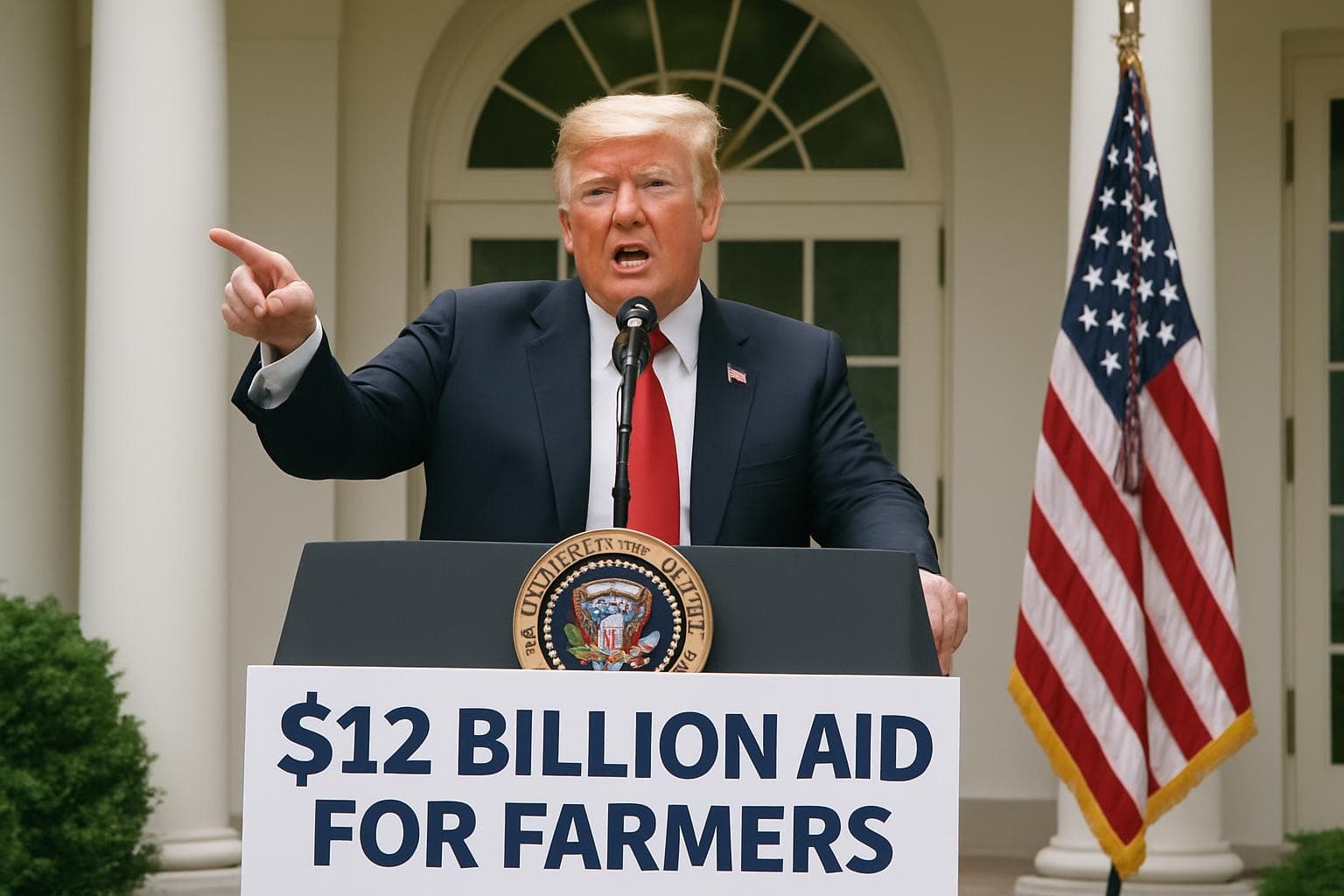
In a bid to bolster the agricultural sector amid ongoing trade disputes, President Donald Trump has announced a $12 billion aid package aimed at supporting American farmers. The announcement, made during a White House event, comes as farmers grapple with low crop prices and the fallout from trade tensions, particularly with China.
Aid Package Details
The package allocates $11 billion for one-time payments to farmers of row crops such as corn, cotton, and soybeans, under the Farmer Bridge Assistance program. An additional $1 billion is reserved for specialty crops not covered by the program. Agriculture Secretary Brooke Rollins stated that the funds are expected to be distributed by February 28, providing much-needed certainty as farmers plan for the upcoming planting season.
Trade Disputes and Economic Impact
The aid package is a response to the economic strain caused by trade disputes, notably with China, which had halted soybean imports from the US earlier this year. Although China has recently resumed some purchases, the trade tensions have left a significant impact on American farmers. Trump criticized the protectionist policies of other countries, asserting that farmers desire a "level playing field" rather than aid.
Political and Economic Context
The announcement follows a history of trade-related challenges for US farmers, exacerbated by inflation and restrictions on essential resources. Trump highlighted these issues, attributing the farmers' difficulties to "crippling restrictions" and the "worst inflation in modern history." Despite these challenges, Trump praised the tariff regime as crucial for the economy, while the US Supreme Court reviews the scope of presidential authority under the International Emergency Economic Powers Act.
Farmers' Response and Future Outlook
While the aid package aims to provide immediate relief, farmers have expressed a preference for stable market conditions over government assistance. The agriculture sector remains hopeful for a resolution to trade disputes that would restore access to international markets and ensure long-term sustainability.
WHAT THIS MIGHT MEAN
The $12 billion aid package represents a significant intervention in the agricultural sector, but its long-term effectiveness hinges on resolving trade disputes with key partners like China. If trade tensions persist, farmers may continue to face market instability, potentially necessitating further government support. Conversely, a resolution could lead to renewed export opportunities and economic recovery for the sector. Experts suggest that the administration's ability to negotiate favorable trade terms will be critical in determining the future landscape for US agriculture. As the Supreme Court reviews the president's tariff authority, the outcome could also influence future trade policy and economic strategies.
Images from the Web
Related Articles

Spain's Sánchez Stands Firm Against Trump's Trade Threat Over Iran Stance
US Supreme Court Ruling Sparks Trade Uncertainty in Asia and Beyond
Senate Blocks Resolution to Limit Trump's Military Actions in Iran
Trump's New Tariff Strategy Sparks Global Trade Uncertainty

US-Iran Tensions Escalate Amid Renewed Nuclear Talks and Protests

Greenland Politely Declines Trump's Hospital Ship Offer Amid Healthcare Debate
Trump Unveils $12 Billion Aid Package to Support US Farmers Amid Trade Tensions
In This Article
 Ethan Brooks| Published
 HIGHLIGHTS
- President Trump announced a $12 billion aid package to support US farmers affected by trade disputes, especially with China.
- The package includes $11 billion in one-time payments for row crops, with an additional $1 billion for specialty crops.
- The aid aims to stabilize farmers amid low crop prices and trade tensions, with funds expected to be distributed by February 28.
- Trump emphasized the need for a "level playing field" for farmers, criticizing protectionist policies of other nations.
- The announcement comes as farmers face challenges from inflation and trade barriers, with China recently resuming some soybean purchases.
In a bid to bolster the agricultural sector amid ongoing trade disputes, President Donald Trump has announced a $12 billion aid package aimed at supporting American farmers. The announcement, made during a White House event, comes as farmers grapple with low crop prices and the fallout from trade tensions, particularly with China.
Aid Package Details
The package allocates $11 billion for one-time payments to farmers of row crops such as corn, cotton, and soybeans, under the Farmer Bridge Assistance program. An additional $1 billion is reserved for specialty crops not covered by the program. Agriculture Secretary Brooke Rollins stated that the funds are expected to be distributed by February 28, providing much-needed certainty as farmers plan for the upcoming planting season.
Trade Disputes and Economic Impact
The aid package is a response to the economic strain caused by trade disputes, notably with China, which had halted soybean imports from the US earlier this year. Although China has recently resumed some purchases, the trade tensions have left a significant impact on American farmers. Trump criticized the protectionist policies of other countries, asserting that farmers desire a "level playing field" rather than aid.
Political and Economic Context
The announcement follows a history of trade-related challenges for US farmers, exacerbated by inflation and restrictions on essential resources. Trump highlighted these issues, attributing the farmers' difficulties to "crippling restrictions" and the "worst inflation in modern history." Despite these challenges, Trump praised the tariff regime as crucial for the economy, while the US Supreme Court reviews the scope of presidential authority under the International Emergency Economic Powers Act.
Farmers' Response and Future Outlook
While the aid package aims to provide immediate relief, farmers have expressed a preference for stable market conditions over government assistance. The agriculture sector remains hopeful for a resolution to trade disputes that would restore access to international markets and ensure long-term sustainability.
WHAT THIS MIGHT MEAN
The $12 billion aid package represents a significant intervention in the agricultural sector, but its long-term effectiveness hinges on resolving trade disputes with key partners like China. If trade tensions persist, farmers may continue to face market instability, potentially necessitating further government support. Conversely, a resolution could lead to renewed export opportunities and economic recovery for the sector. Experts suggest that the administration's ability to negotiate favorable trade terms will be critical in determining the future landscape for US agriculture. As the Supreme Court reviews the president's tariff authority, the outcome could also influence future trade policy and economic strategies.
Images from the Web
Related Articles
Spain's Sánchez Stands Firm Against Trump's Trade Threat Over Iran Stance
US Supreme Court Ruling Sparks Trade Uncertainty in Asia and Beyond
Senate Blocks Resolution to Limit Trump's Military Actions in Iran
Trump's New Tariff Strategy Sparks Global Trade Uncertainty
US-Iran Tensions Escalate Amid Renewed Nuclear Talks and Protests
Greenland Politely Declines Trump's Hospital Ship Offer Amid Healthcare Debate