
Trump's "Alligator Alcatraz" Sparks Controversy Amid Immigration Crackdown
In This Article
HIGHLIGHTS
- President Trump visited the new "Alligator Alcatraz" detention center in Florida, designed to hold up to 3,000 migrants.
- The facility, located in the Everglades, has sparked environmental concerns from local communities and activists.
- Florida Governor Ron DeSantis plans to use state resources to expedite deportations, with potential federal reimbursement.
- The detention center's harsh conditions are intended to deter illegal immigration, according to Trump and DeSantis.
- Local residents, including Betty Osceola of the Miccosukee community, express fears about the site's environmental impact.
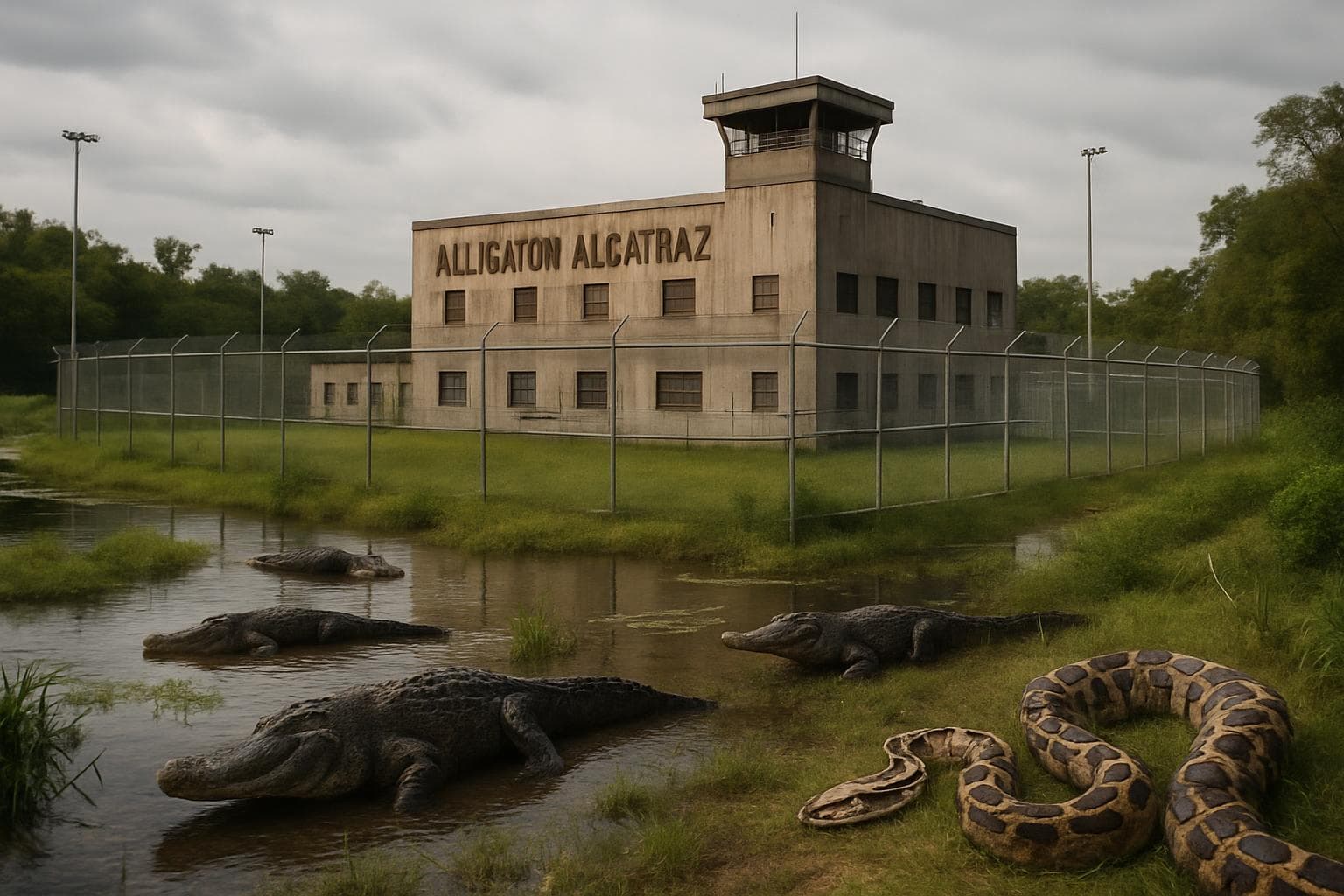
President Donald Trump recently toured the newly established "Alligator Alcatraz" detention center in the Florida Everglades, a facility designed to hold up to 3,000 migrants as part of his administration's intensified immigration policies. The center, situated in a remote area abundant with alligators and pythons, has become a focal point of controversy due to its potential environmental impact and the harsh conditions it presents to detainees.
A Model for Future Detention Centers
Accompanied by Florida Governor Ron DeSantis, Trump praised the facility as a model for future detention centers, emphasizing its role in deterring illegal immigration. "You'll have a lot of people that will deport on their own because they don't want to end up in an Alligator Alcatraz," DeSantis remarked. The governor plans to deputize members of the state's National Guard to act as immigration judges, facilitating rapid deportations.
Environmental Concerns and Local Opposition
The detention center's location in the Everglades has raised significant environmental concerns. Local residents and environmental groups fear the impact on the fragile ecosystem. Betty Osceola, a member of the Miccosukee Native American community, voiced her apprehensions, stating, "I have serious concerns about the environmental damage." The site, previously a disused airstrip, is now surrounded by swampland, posing risks to endangered species.
Financial and Legal Implications
The facility's construction and operation are estimated to cost $450 million, with initial funding coming from Florida taxpayers. Governor DeSantis expects reimbursement from the Department of Homeland Security, which will oversee the center's operations. Critics argue that the harsh conditions at "Alligator Alcatraz" are inhumane, particularly for individuals whose only offense is being undocumented.
WHAT THIS MIGHT MEAN
The establishment of "Alligator Alcatraz" could set a precedent for similar facilities across the United States, particularly in states with Republican leadership. If successful in deterring illegal immigration, other states may adopt similar measures, intensifying the national debate over immigration policies. However, ongoing environmental concerns and legal challenges could impede the facility's operations, prompting further scrutiny from both domestic and international observers. As the situation unfolds, the balance between immigration enforcement and human rights will remain a contentious issue.
Related Articles
Cuba Faces Widespread Blackout Amid Deepening Fuel Crisis

UK Faces Dilemmas Amid Iran Conflict and China Spying Allegations

China Sets Lowest GDP Growth Target in Decades Amid Economic Challenges

Tech Giants Pledge to Cover AI Data Center Energy Costs Amid Rising Electricity Concerns

Congress Subpoenas Attorney General Bondi in Epstein Investigation

Google Faces Legal Battle Over AI Chatbot's Alleged Role in Tragic Death
Trump's "Alligator Alcatraz" Sparks Controversy Amid Immigration Crackdown
In This Article
 Leila Hassan| Published
 HIGHLIGHTS
- President Trump visited the new "Alligator Alcatraz" detention center in Florida, designed to hold up to 3,000 migrants.
- The facility, located in the Everglades, has sparked environmental concerns from local communities and activists.
- Florida Governor Ron DeSantis plans to use state resources to expedite deportations, with potential federal reimbursement.
- The detention center's harsh conditions are intended to deter illegal immigration, according to Trump and DeSantis.
- Local residents, including Betty Osceola of the Miccosukee community, express fears about the site's environmental impact.
President Donald Trump recently toured the newly established "Alligator Alcatraz" detention center in the Florida Everglades, a facility designed to hold up to 3,000 migrants as part of his administration's intensified immigration policies. The center, situated in a remote area abundant with alligators and pythons, has become a focal point of controversy due to its potential environmental impact and the harsh conditions it presents to detainees.
A Model for Future Detention Centers
Accompanied by Florida Governor Ron DeSantis, Trump praised the facility as a model for future detention centers, emphasizing its role in deterring illegal immigration. "You'll have a lot of people that will deport on their own because they don't want to end up in an Alligator Alcatraz," DeSantis remarked. The governor plans to deputize members of the state's National Guard to act as immigration judges, facilitating rapid deportations.
Environmental Concerns and Local Opposition
The detention center's location in the Everglades has raised significant environmental concerns. Local residents and environmental groups fear the impact on the fragile ecosystem. Betty Osceola, a member of the Miccosukee Native American community, voiced her apprehensions, stating, "I have serious concerns about the environmental damage." The site, previously a disused airstrip, is now surrounded by swampland, posing risks to endangered species.
Financial and Legal Implications
The facility's construction and operation are estimated to cost $450 million, with initial funding coming from Florida taxpayers. Governor DeSantis expects reimbursement from the Department of Homeland Security, which will oversee the center's operations. Critics argue that the harsh conditions at "Alligator Alcatraz" are inhumane, particularly for individuals whose only offense is being undocumented.
WHAT THIS MIGHT MEAN
The establishment of "Alligator Alcatraz" could set a precedent for similar facilities across the United States, particularly in states with Republican leadership. If successful in deterring illegal immigration, other states may adopt similar measures, intensifying the national debate over immigration policies. However, ongoing environmental concerns and legal challenges could impede the facility's operations, prompting further scrutiny from both domestic and international observers. As the situation unfolds, the balance between immigration enforcement and human rights will remain a contentious issue.
Related Articles
Cuba Faces Widespread Blackout Amid Deepening Fuel Crisis
UK Faces Dilemmas Amid Iran Conflict and China Spying Allegations
China Sets Lowest GDP Growth Target in Decades Amid Economic Challenges
Tech Giants Pledge to Cover AI Data Center Energy Costs Amid Rising Electricity Concerns
Congress Subpoenas Attorney General Bondi in Epstein Investigation
Google Faces Legal Battle Over AI Chatbot's Alleged Role in Tragic Death