
Trump's Budget Bill Passes Amidst Political and Economic Controversy
In This Article
HIGHLIGHTS
- Donald Trump secured a significant legislative victory with the passage of a major budget bill, despite narrow Republican majorities in Congress.
- The bill includes $150 billion for border security and $4.5 trillion in tax cuts, but is projected to add over $3 trillion to the US federal debt.
- Democrats have criticized the bill for favoring the wealthy and cutting social programs like Medicaid, which could impact low-income Americans.
- The legislation's passage without Democratic support highlights deep partisan divides and sets the stage for contentious midterm elections.
- Critics warn that the bill's fiscal implications could lead to increased interest rates and a growing burden on the federal government.
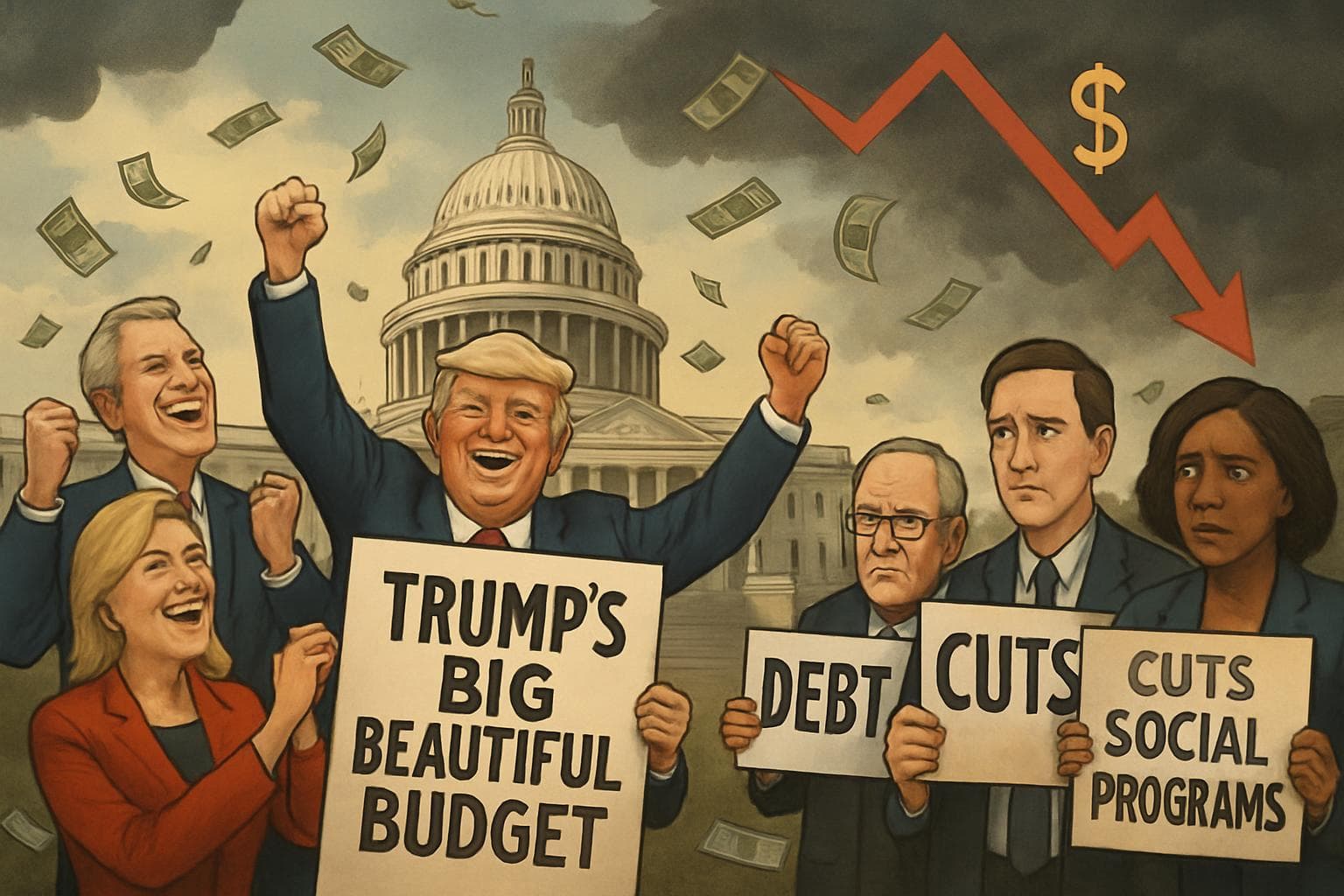
In a significant political achievement, President Donald Trump has successfully navigated a major budget bill through Congress, marking a key victory for his administration. The legislation, which Trump has dubbed the "big, beautiful bill," encompasses a wide array of his campaign promises, including substantial tax cuts and increased funding for border security. However, the bill's passage has sparked intense debate over its long-term economic and social implications.
Legislative Victory Amidst Narrow Margins
Despite narrow Republican majorities in both the House of Representatives and the Senate, Trump's administration managed to secure the bill's passage, overcoming internal party divisions. The legislation allocates $150 billion for border security and immigration enforcement, alongside $4.5 trillion in tax cuts over the next decade. These cuts, some of which were initially enacted during Trump's first term, are now set to become permanent.
Economic Concerns and Debt Projections
While the White House argues that the tax cuts will stimulate economic growth and offset the increased federal debt, external projections suggest otherwise. Critics, including Republican Senator Rand Paul, warn that the bill could add over $3 trillion to the national debt, potentially leading to higher interest rates and a fiscal crisis. The legislation also raises the federal debt ceiling by $5 trillion, a move that has drawn skepticism from fiscal conservatives.
Democratic Outrage and Social Program Cuts
The bill's passage has been met with fierce opposition from Democrats, who argue that it disproportionately benefits the wealthy while undermining essential social programs. Cuts to Medicaid and other social benefits have been a focal point of Democratic criticism. Congresswoman Alexandria Ocasio-Cortez highlighted the bill's contradictions, noting that while it provides permanent tax breaks for billionaires, it allows tax breaks for low-income earners to expire within three years.
Political Implications and Future Battles
The partisan nature of the bill's passage, with no Democratic support, underscores the deep political divides in Washington. As Democrats prepare for the upcoming midterm elections, they are likely to use the bill's controversial elements as a rallying point against Republicans. Statements from Democratic leaders, including Ken Martin of the Democratic National Committee, emphasize the party's commitment to challenging what they describe as one of the worst bills in the nation's history.
WHAT THIS MIGHT MEAN
Looking ahead, the passage of Trump's budget bill could have significant political and economic repercussions. The increased federal debt may lead to higher interest rates, impacting both government spending and the broader economy. Politically, the bill's controversial elements, particularly the cuts to social programs, are likely to be central issues in the upcoming midterm elections. Democrats are expected to leverage these points in their campaigns, potentially reshaping the political landscape. As the fiscal implications of the bill unfold, both parties may face pressure to address the growing national debt and its impact on future economic stability.
Related Articles
Trump's New Tariff Strategy Sparks Global Trade Uncertainty

Tech Giants Pledge to Cover AI Data Center Energy Costs Amid Rising Electricity Concerns
Senate Blocks Resolution to Limit Trump's Military Actions in Iran
Trump Raises Import Tariffs to 15% After Supreme Court Setback

Spain's Sánchez Stands Firm Against Trump's Trade Threat Over Iran Stance
Congress Subpoenas Attorney General Bondi in Epstein Investigation
Trump's Budget Bill Passes Amidst Political and Economic Controversy
In This Article
 Daniel Rivera| Published
 HIGHLIGHTS
- Donald Trump secured a significant legislative victory with the passage of a major budget bill, despite narrow Republican majorities in Congress.
- The bill includes $150 billion for border security and $4.5 trillion in tax cuts, but is projected to add over $3 trillion to the US federal debt.
- Democrats have criticized the bill for favoring the wealthy and cutting social programs like Medicaid, which could impact low-income Americans.
- The legislation's passage without Democratic support highlights deep partisan divides and sets the stage for contentious midterm elections.
- Critics warn that the bill's fiscal implications could lead to increased interest rates and a growing burden on the federal government.
In a significant political achievement, President Donald Trump has successfully navigated a major budget bill through Congress, marking a key victory for his administration. The legislation, which Trump has dubbed the "big, beautiful bill," encompasses a wide array of his campaign promises, including substantial tax cuts and increased funding for border security. However, the bill's passage has sparked intense debate over its long-term economic and social implications.
Legislative Victory Amidst Narrow Margins
Despite narrow Republican majorities in both the House of Representatives and the Senate, Trump's administration managed to secure the bill's passage, overcoming internal party divisions. The legislation allocates $150 billion for border security and immigration enforcement, alongside $4.5 trillion in tax cuts over the next decade. These cuts, some of which were initially enacted during Trump's first term, are now set to become permanent.
Economic Concerns and Debt Projections
While the White House argues that the tax cuts will stimulate economic growth and offset the increased federal debt, external projections suggest otherwise. Critics, including Republican Senator Rand Paul, warn that the bill could add over $3 trillion to the national debt, potentially leading to higher interest rates and a fiscal crisis. The legislation also raises the federal debt ceiling by $5 trillion, a move that has drawn skepticism from fiscal conservatives.
Democratic Outrage and Social Program Cuts
The bill's passage has been met with fierce opposition from Democrats, who argue that it disproportionately benefits the wealthy while undermining essential social programs. Cuts to Medicaid and other social benefits have been a focal point of Democratic criticism. Congresswoman Alexandria Ocasio-Cortez highlighted the bill's contradictions, noting that while it provides permanent tax breaks for billionaires, it allows tax breaks for low-income earners to expire within three years.
Political Implications and Future Battles
The partisan nature of the bill's passage, with no Democratic support, underscores the deep political divides in Washington. As Democrats prepare for the upcoming midterm elections, they are likely to use the bill's controversial elements as a rallying point against Republicans. Statements from Democratic leaders, including Ken Martin of the Democratic National Committee, emphasize the party's commitment to challenging what they describe as one of the worst bills in the nation's history.
WHAT THIS MIGHT MEAN
Looking ahead, the passage of Trump's budget bill could have significant political and economic repercussions. The increased federal debt may lead to higher interest rates, impacting both government spending and the broader economy. Politically, the bill's controversial elements, particularly the cuts to social programs, are likely to be central issues in the upcoming midterm elections. Democrats are expected to leverage these points in their campaigns, potentially reshaping the political landscape. As the fiscal implications of the bill unfold, both parties may face pressure to address the growing national debt and its impact on future economic stability.
Related Articles
Trump's New Tariff Strategy Sparks Global Trade Uncertainty
Tech Giants Pledge to Cover AI Data Center Energy Costs Amid Rising Electricity Concerns
Senate Blocks Resolution to Limit Trump's Military Actions in Iran
Trump Raises Import Tariffs to 15% After Supreme Court Setback
Spain's Sánchez Stands Firm Against Trump's Trade Threat Over Iran Stance
Congress Subpoenas Attorney General Bondi in Epstein Investigation