
Trump's Federal Takeover of DC Police Sparks Controversy Amid Crime Claims
In This Article
HIGHLIGHTS
- President Trump has deployed 800 National Guard troops to Washington DC and taken control of the city's police force, citing a "public safety emergency."
- Despite Trump's claims of rampant crime, official statistics show violent crime in DC is at a 30-year low, with a 32% drop in homicides from 2023 to 2024.
- Mayor Muriel Bowser and other DC officials have condemned Trump's actions as an assault on the city's political independence and based on misleading crime narratives.
- The federal takeover of the police is set to last 30 days, invoking the District of Columbia Home Rule Act, which allows presidential control under emergency conditions.
- Protests erupted in DC following the announcement, with residents and activists criticizing the move as politically motivated rather than a genuine crime-fighting effort.
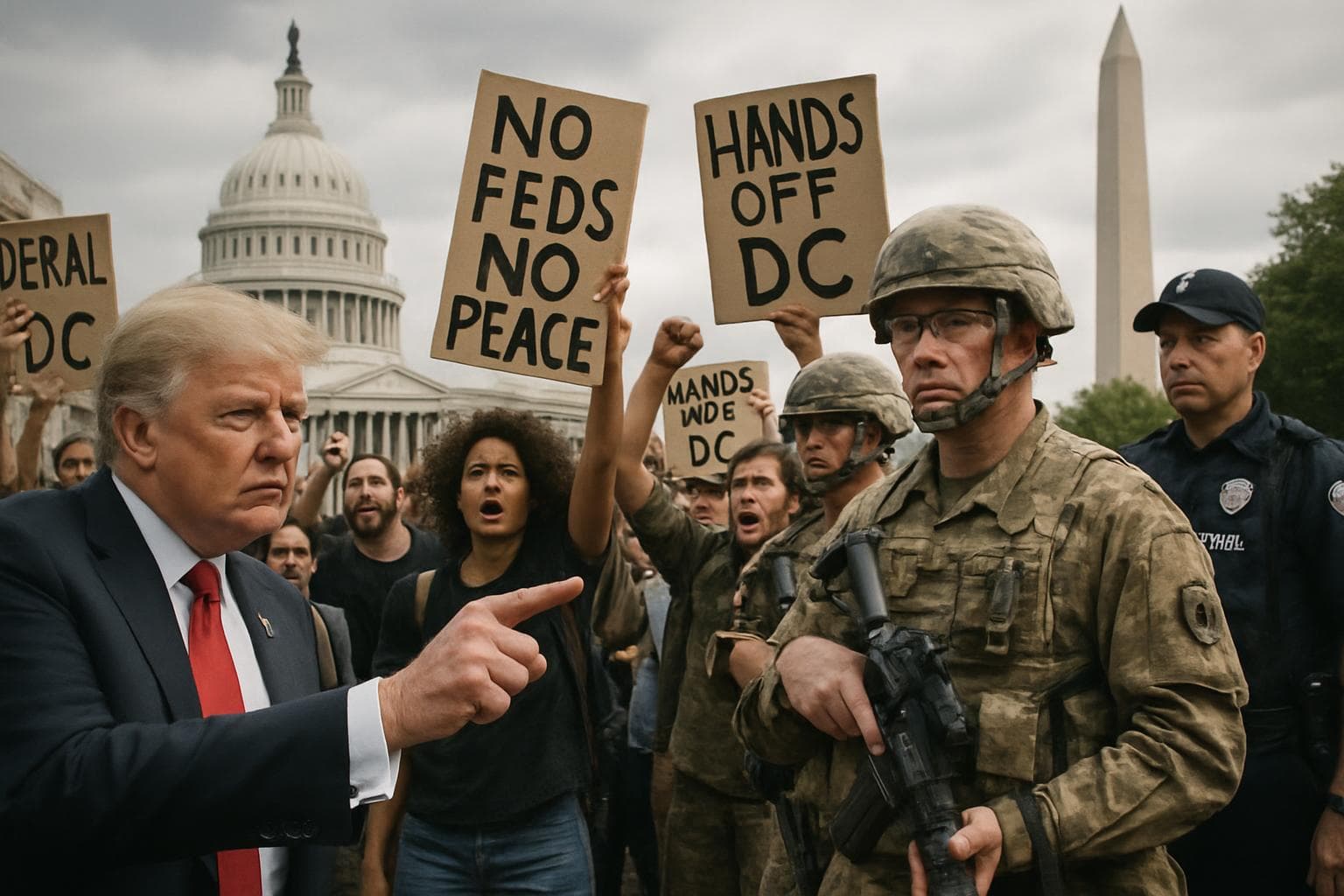
President Donald Trump has taken the unprecedented step of deploying the National Guard to Washington DC and assuming control of the city's police force, citing a "public safety emergency." This move, announced at a White House press conference, has been met with significant backlash from local officials and residents who argue that Trump's portrayal of the city as lawless is misleading.
National Guard Deployment and Federal Control
On Monday, Trump declared a public safety emergency, deploying 800 National Guard troops to support federal law enforcement in the capital. The president also invoked the District of Columbia Home Rule Act to place the city's police department under federal control, a measure that can last up to 30 days without congressional approval. US Attorney General Pam Bondi will oversee the police force during this period.
Crime Statistics and Local Response
Trump's justification for these actions hinges on claims of rampant crime in DC, which he described as "one of the most dangerous cities anywhere in the world." However, data from the Metropolitan Police Department contradicts this narrative, showing a 32% decrease in homicides from 2023 to 2024, marking the lowest violent crime rate in 30 years. Mayor Muriel Bowser has strongly refuted Trump's claims, labeling them as hyperbolic and politically motivated.
Public Reaction and Protests
The announcement has sparked protests across the city, with residents and activists decrying the federal intervention as an attack on DC's autonomy. Keya Chatterjee, executive director of Free DC, emphasized that the move is more about political control than public safety. Meanwhile, some residents, like Lamont Mitchell, express mixed feelings, acknowledging the need for safety but criticizing the approach as inhumane.
Legal and Political Implications
The federal takeover, expected to last 30 days, has raised questions about the limits of presidential power under the Home Rule Act. Critics argue that Trump's actions set a dangerous precedent for federal intervention in local governance, particularly in a city with a predominantly Democratic leadership.
WHAT THIS MIGHT MEAN
The federal control of Washington DC's police force could have significant legal and political ramifications. If Congress does not intervene, the president's actions may embolden similar federal takeovers in other cities, particularly those with Democratic leadership. Legal experts warn that this could undermine local governance and set a troubling precedent for future administrations. Politically, the move may galvanize opposition among DC residents and leaders, potentially leading to legal challenges and increased calls for DC statehood to ensure greater autonomy.
Related Articles
Spain's Sánchez Stands Firm Against Trump's Trade Threat Over Iran Stance
Congress Subpoenas Attorney General Bondi in Epstein Investigation
Senate Blocks Resolution to Limit Trump's Military Actions in Iran

US-Iran Tensions Escalate Amid Renewed Nuclear Talks and Protests

Greenland Politely Declines Trump's Hospital Ship Offer Amid Healthcare Debate

Tech Giants Pledge to Cover AI Data Center Energy Costs Amid Rising Electricity Concerns
Trump's Federal Takeover of DC Police Sparks Controversy Amid Crime Claims
In This Article
 Ethan Brooks| Published
 HIGHLIGHTS
- President Trump has deployed 800 National Guard troops to Washington DC and taken control of the city's police force, citing a "public safety emergency."
- Despite Trump's claims of rampant crime, official statistics show violent crime in DC is at a 30-year low, with a 32% drop in homicides from 2023 to 2024.
- Mayor Muriel Bowser and other DC officials have condemned Trump's actions as an assault on the city's political independence and based on misleading crime narratives.
- The federal takeover of the police is set to last 30 days, invoking the District of Columbia Home Rule Act, which allows presidential control under emergency conditions.
- Protests erupted in DC following the announcement, with residents and activists criticizing the move as politically motivated rather than a genuine crime-fighting effort.
President Donald Trump has taken the unprecedented step of deploying the National Guard to Washington DC and assuming control of the city's police force, citing a "public safety emergency." This move, announced at a White House press conference, has been met with significant backlash from local officials and residents who argue that Trump's portrayal of the city as lawless is misleading.
National Guard Deployment and Federal Control
On Monday, Trump declared a public safety emergency, deploying 800 National Guard troops to support federal law enforcement in the capital. The president also invoked the District of Columbia Home Rule Act to place the city's police department under federal control, a measure that can last up to 30 days without congressional approval. US Attorney General Pam Bondi will oversee the police force during this period.
Crime Statistics and Local Response
Trump's justification for these actions hinges on claims of rampant crime in DC, which he described as "one of the most dangerous cities anywhere in the world." However, data from the Metropolitan Police Department contradicts this narrative, showing a 32% decrease in homicides from 2023 to 2024, marking the lowest violent crime rate in 30 years. Mayor Muriel Bowser has strongly refuted Trump's claims, labeling them as hyperbolic and politically motivated.
Public Reaction and Protests
The announcement has sparked protests across the city, with residents and activists decrying the federal intervention as an attack on DC's autonomy. Keya Chatterjee, executive director of Free DC, emphasized that the move is more about political control than public safety. Meanwhile, some residents, like Lamont Mitchell, express mixed feelings, acknowledging the need for safety but criticizing the approach as inhumane.
Legal and Political Implications
The federal takeover, expected to last 30 days, has raised questions about the limits of presidential power under the Home Rule Act. Critics argue that Trump's actions set a dangerous precedent for federal intervention in local governance, particularly in a city with a predominantly Democratic leadership.
WHAT THIS MIGHT MEAN
The federal control of Washington DC's police force could have significant legal and political ramifications. If Congress does not intervene, the president's actions may embolden similar federal takeovers in other cities, particularly those with Democratic leadership. Legal experts warn that this could undermine local governance and set a troubling precedent for future administrations. Politically, the move may galvanize opposition among DC residents and leaders, potentially leading to legal challenges and increased calls for DC statehood to ensure greater autonomy.
Related Articles
Spain's Sánchez Stands Firm Against Trump's Trade Threat Over Iran Stance
Congress Subpoenas Attorney General Bondi in Epstein Investigation
Senate Blocks Resolution to Limit Trump's Military Actions in Iran
US-Iran Tensions Escalate Amid Renewed Nuclear Talks and Protests
Greenland Politely Declines Trump's Hospital Ship Offer Amid Healthcare Debate
Tech Giants Pledge to Cover AI Data Center Energy Costs Amid Rising Electricity Concerns