
Trump to Decide on US Role in Israel-Iran Conflict Amid Nuclear Tensions
In This Article
HIGHLIGHTS
- President Trump is expected to decide on US involvement in the Israel-Iran conflict within two weeks, amid ongoing diplomatic efforts.
- Trump has denied reports of approving an attack on Iran, emphasizing strategic ambiguity and potential negotiations.
- The Fordow uranium enrichment site in Iran remains a focal point, with US officials debating the effectiveness of the Massive Ordnance Penetrator.
- Iran has warned against US involvement, stating it would escalate tensions in the region.
- Israeli Prime Minister Netanyahu has expressed gratitude to Trump for his support, highlighting the geopolitical stakes.
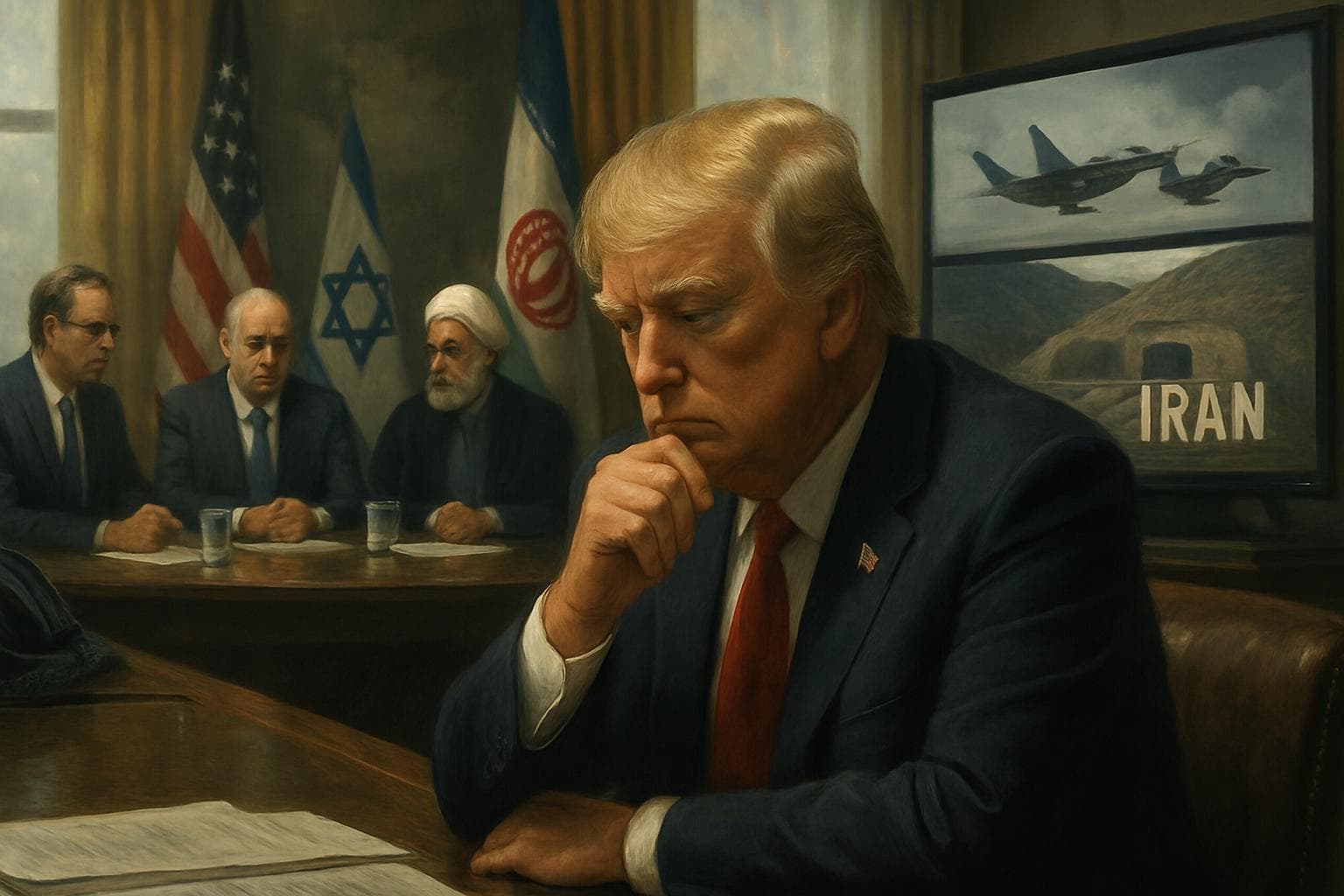
In a rapidly evolving geopolitical landscape, President Donald Trump is poised to make a critical decision regarding US involvement in the ongoing Israel-Iran conflict within the next two weeks. This announcement comes amidst heightened tensions over Iran's nuclear ambitions and strategic ambiguity from the White House.
Diplomatic Maneuvering and Strategic Ambiguity
During a recent White House press briefing, Press Secretary Karoline Leavitt conveyed President Trump's message, emphasizing the potential for negotiations with Iran. "Based on the fact that there's a substantial chance of negotiations that may or may not take place with Iran in the near future, I will make my decision whether or not to go within the next two weeks," Leavitt stated. This statement underscores the administration's cautious approach, balancing diplomatic efforts with military readiness.
Despite reports from the Wall Street Journal suggesting Trump had approved plans to attack Iran, the President has publicly denied these claims, asserting that the publication has "no idea" about his intentions. The President's decision hinges on whether the Massive Ordnance Penetrator (MOP) could effectively target Iran's Fordow uranium enrichment site, a facility deeply embedded in a mountainside and beyond the reach of Israel's current military capabilities.
The Fordow Factor
The Fordow site remains a contentious issue, with US officials debating the efficacy of the GBU-57, a 13.6-tonne bomb, in neutralizing the facility. Some defense experts argue that only a tactical nuclear weapon could achieve this, given Fordow's fortified location. This debate reflects broader concerns within Trump's cabinet and the Pentagon about the potential consequences of direct US military action.
Iran, for its part, has issued stern warnings against US involvement, with Deputy Foreign Minister Abbas Araqchi stating that such actions would "cause hell" in the region. Iran's mission to the UN further emphasized their stance, declaring, "Iran does NOT negotiate under duress, shall NOT accept peace under duress, and certainly NOT with a has-been warmonger clinging to relevance."
Regional and Global Implications
As diplomatic channels remain open, European foreign ministers are set to meet with their Iranian counterpart in Switzerland, seeking a peaceful resolution. Meanwhile, Israeli Prime Minister Benjamin Netanyahu has praised Trump as "a great friend of Israel," underscoring the high stakes involved for regional allies.
WHAT THIS MIGHT MEAN
The coming weeks will be pivotal in determining the US's role in the Israel-Iran conflict. Should diplomatic efforts falter, and Trump opts for military action, the geopolitical ramifications could be significant, potentially destabilizing the region further. Conversely, successful negotiations could de-escalate tensions and pave the way for a diplomatic solution to Iran's nuclear program. As the world watches, the decisions made in Washington will undoubtedly shape the future of Middle Eastern geopolitics.
Related Articles
US and Israel Intensify Military Campaign as Iran's Capabilities Dwindle
Intensified US-Israel Strikes on Iran Spark Global Outcry

Senate Blocks Resolution to Limit Trump's Military Actions in Iran
Spain's Sánchez Stands Firm Against Trump's Trade Threat Over Iran Stance
Iran Postpones Khamenei Funeral Amid Escalating US-Israeli Strikes
Canada Calls for De-escalation Amid US-Israel Strikes on Iran
Trump to Decide on US Role in Israel-Iran Conflict Amid Nuclear Tensions
In This Article
 Ethan Brooks| Published
 HIGHLIGHTS
- President Trump is expected to decide on US involvement in the Israel-Iran conflict within two weeks, amid ongoing diplomatic efforts.
- Trump has denied reports of approving an attack on Iran, emphasizing strategic ambiguity and potential negotiations.
- The Fordow uranium enrichment site in Iran remains a focal point, with US officials debating the effectiveness of the Massive Ordnance Penetrator.
- Iran has warned against US involvement, stating it would escalate tensions in the region.
- Israeli Prime Minister Netanyahu has expressed gratitude to Trump for his support, highlighting the geopolitical stakes.
In a rapidly evolving geopolitical landscape, President Donald Trump is poised to make a critical decision regarding US involvement in the ongoing Israel-Iran conflict within the next two weeks. This announcement comes amidst heightened tensions over Iran's nuclear ambitions and strategic ambiguity from the White House.
Diplomatic Maneuvering and Strategic Ambiguity
During a recent White House press briefing, Press Secretary Karoline Leavitt conveyed President Trump's message, emphasizing the potential for negotiations with Iran. "Based on the fact that there's a substantial chance of negotiations that may or may not take place with Iran in the near future, I will make my decision whether or not to go within the next two weeks," Leavitt stated. This statement underscores the administration's cautious approach, balancing diplomatic efforts with military readiness.
Despite reports from the Wall Street Journal suggesting Trump had approved plans to attack Iran, the President has publicly denied these claims, asserting that the publication has "no idea" about his intentions. The President's decision hinges on whether the Massive Ordnance Penetrator (MOP) could effectively target Iran's Fordow uranium enrichment site, a facility deeply embedded in a mountainside and beyond the reach of Israel's current military capabilities.
The Fordow Factor
The Fordow site remains a contentious issue, with US officials debating the efficacy of the GBU-57, a 13.6-tonne bomb, in neutralizing the facility. Some defense experts argue that only a tactical nuclear weapon could achieve this, given Fordow's fortified location. This debate reflects broader concerns within Trump's cabinet and the Pentagon about the potential consequences of direct US military action.
Iran, for its part, has issued stern warnings against US involvement, with Deputy Foreign Minister Abbas Araqchi stating that such actions would "cause hell" in the region. Iran's mission to the UN further emphasized their stance, declaring, "Iran does NOT negotiate under duress, shall NOT accept peace under duress, and certainly NOT with a has-been warmonger clinging to relevance."
Regional and Global Implications
As diplomatic channels remain open, European foreign ministers are set to meet with their Iranian counterpart in Switzerland, seeking a peaceful resolution. Meanwhile, Israeli Prime Minister Benjamin Netanyahu has praised Trump as "a great friend of Israel," underscoring the high stakes involved for regional allies.
WHAT THIS MIGHT MEAN
The coming weeks will be pivotal in determining the US's role in the Israel-Iran conflict. Should diplomatic efforts falter, and Trump opts for military action, the geopolitical ramifications could be significant, potentially destabilizing the region further. Conversely, successful negotiations could de-escalate tensions and pave the way for a diplomatic solution to Iran's nuclear program. As the world watches, the decisions made in Washington will undoubtedly shape the future of Middle Eastern geopolitics.
Related Articles
US and Israel Intensify Military Campaign as Iran's Capabilities Dwindle
Intensified US-Israel Strikes on Iran Spark Global Outcry
Senate Blocks Resolution to Limit Trump's Military Actions in Iran
Spain's Sánchez Stands Firm Against Trump's Trade Threat Over Iran Stance
Iran Postpones Khamenei Funeral Amid Escalating US-Israeli Strikes
Canada Calls for De-escalation Amid US-Israel Strikes on Iran