
Trump Announces Major Trade Deal with Japan Amid Political Uncertainty for PM Ishiba
In This Article
HIGHLIGHTS
- President Trump announced a trade deal with Japan, proposing a 15% tariff on Japanese imports, primarily affecting the automotive sector.
- Japan's Prime Minister Shigeru Ishiba faces political pressure following electoral losses, with speculation about his potential resignation.
- The agreement includes Japan's commitment to invest $550 billion in the US, aligning with Trump's economic revival narrative.
- The deal does not address US tariffs on Japanese steel and aluminum, nor does it specify changes to Japanese tariffs on US goods.
- Japanese automakers saw a stock surge following the announcement, with the Nikkei 225 index rising over 3%.
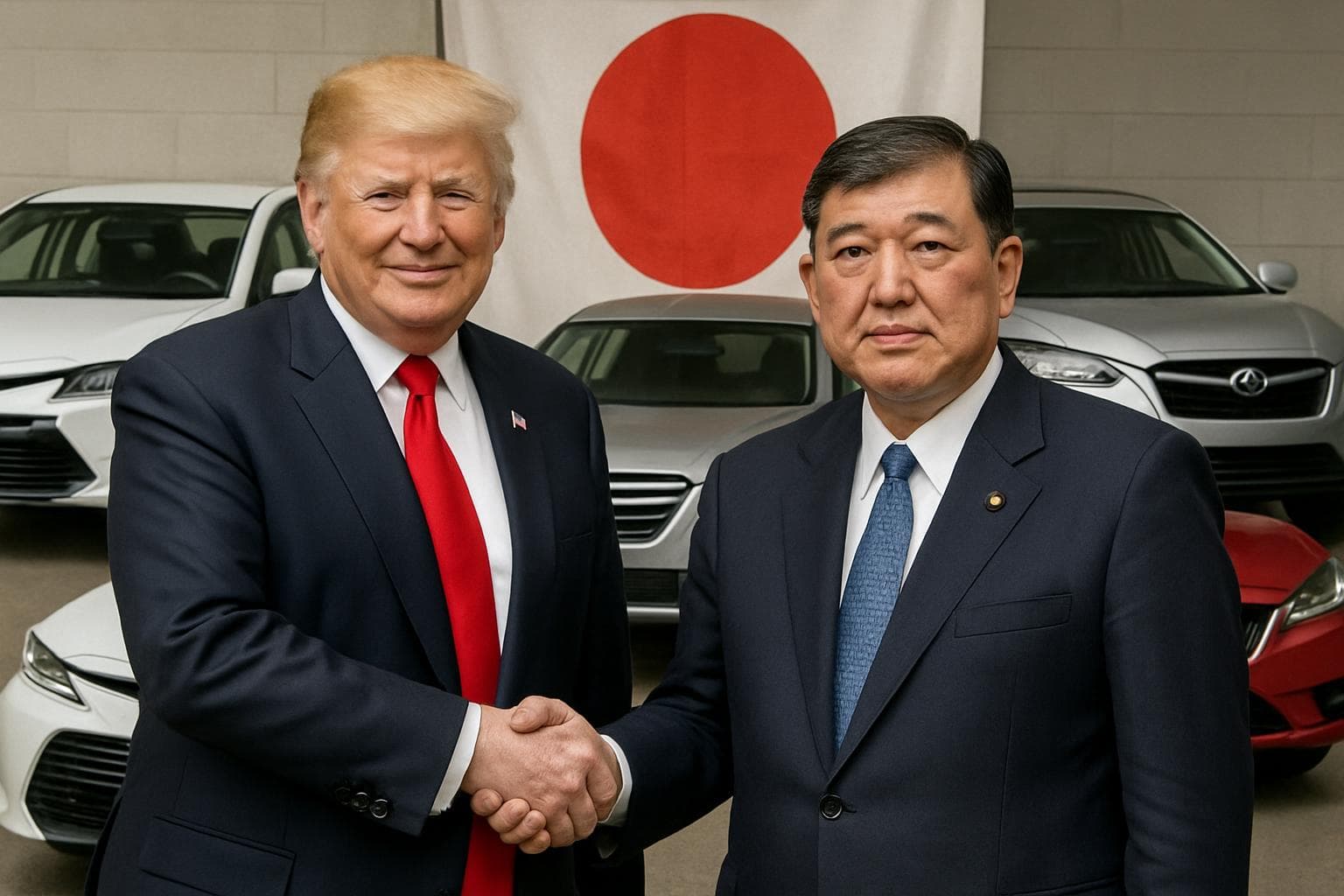
In a significant development, US President Donald Trump has announced a trade agreement with Japan, one of America's key trading partners. The deal, which Trump described as "massive," proposes a 15% tariff on Japanese imports to the US, notably impacting the automotive industry. This marks a reduction from the previously threatened 25% tariff, a move that has been welcomed by Japanese automakers, as evidenced by a rise in the Nikkei 225 index.
Trade Deal Details and Economic Impact
The agreement, which Trump claims to be one of the largest in history, includes a commitment from Japan to invest $550 billion into the US economy. This aligns with Trump's broader strategy of revitalizing American manufacturing and job creation. However, the specifics of Japanese tariffs on US goods remain unclear, with no reductions confirmed on the Japanese side.
Political Repercussions for Prime Minister Ishiba
The announcement comes at a politically sensitive time for Japan's Prime Minister Shigeru Ishiba, who is under mounting pressure following his party's electoral defeats. Speculation is rife about his potential resignation, with reports suggesting he may step down by the end of the month. Ishiba has emphasized the importance of national interests in the trade negotiations, which have been a focal point of his administration.
Market Reactions and Future Prospects
Following the announcement, shares in Japanese automotive giants such as Toyota, Nissan, and Honda surged, reflecting market optimism. The Nikkei 225 index rose by more than 3%, signaling investor confidence in the deal's potential benefits for Japan's economy.
Unresolved Issues and Ongoing Negotiations
Despite the positive market response, several issues remain unresolved. The deal does not address existing US tariffs on Japanese steel and aluminum, nor does it include any reference to defense spending. Japan's top tariff negotiator, Ryosei Akazawa, confirmed these exclusions, indicating that further negotiations may be necessary to address these areas.
WHAT THIS MIGHT MEAN
The announced trade deal between the US and Japan could have significant implications for both economies. For the US, the proposed Japanese investment could bolster manufacturing and job creation, aligning with President Trump's economic agenda. However, the lack of clarity on Japanese tariffs and unresolved issues like steel and aluminum tariffs suggest that further negotiations may be needed to finalize the agreement.
Politically, the deal places additional pressure on Prime Minister Ishiba, whose leadership is already under scrutiny following electoral losses. His ability to navigate these challenges could determine his political future and the stability of his administration. As the situation unfolds, both countries will need to balance economic interests with political realities, potentially reshaping their bilateral relationship in the process.
Related Articles
Trump's New Tariff Strategy Sparks Global Trade Uncertainty
Trump Raises Import Tariffs to 15% After Supreme Court Setback

Tech Giants Pledge to Cover AI Data Center Energy Costs Amid Rising Electricity Concerns
US Supreme Court Ruling Sparks Trade Uncertainty in Asia and Beyond

Congress Subpoenas Attorney General Bondi in Epstein Investigation
Cuba Faces Widespread Blackout Amid Deepening Fuel Crisis
Trump Announces Major Trade Deal with Japan Amid Political Uncertainty for PM Ishiba
In This Article
 Daniel Rivera| Published
 HIGHLIGHTS
- President Trump announced a trade deal with Japan, proposing a 15% tariff on Japanese imports, primarily affecting the automotive sector.
- Japan's Prime Minister Shigeru Ishiba faces political pressure following electoral losses, with speculation about his potential resignation.
- The agreement includes Japan's commitment to invest $550 billion in the US, aligning with Trump's economic revival narrative.
- The deal does not address US tariffs on Japanese steel and aluminum, nor does it specify changes to Japanese tariffs on US goods.
- Japanese automakers saw a stock surge following the announcement, with the Nikkei 225 index rising over 3%.
In a significant development, US President Donald Trump has announced a trade agreement with Japan, one of America's key trading partners. The deal, which Trump described as "massive," proposes a 15% tariff on Japanese imports to the US, notably impacting the automotive industry. This marks a reduction from the previously threatened 25% tariff, a move that has been welcomed by Japanese automakers, as evidenced by a rise in the Nikkei 225 index.
Trade Deal Details and Economic Impact
The agreement, which Trump claims to be one of the largest in history, includes a commitment from Japan to invest $550 billion into the US economy. This aligns with Trump's broader strategy of revitalizing American manufacturing and job creation. However, the specifics of Japanese tariffs on US goods remain unclear, with no reductions confirmed on the Japanese side.
Political Repercussions for Prime Minister Ishiba
The announcement comes at a politically sensitive time for Japan's Prime Minister Shigeru Ishiba, who is under mounting pressure following his party's electoral defeats. Speculation is rife about his potential resignation, with reports suggesting he may step down by the end of the month. Ishiba has emphasized the importance of national interests in the trade negotiations, which have been a focal point of his administration.
Market Reactions and Future Prospects
Following the announcement, shares in Japanese automotive giants such as Toyota, Nissan, and Honda surged, reflecting market optimism. The Nikkei 225 index rose by more than 3%, signaling investor confidence in the deal's potential benefits for Japan's economy.
Unresolved Issues and Ongoing Negotiations
Despite the positive market response, several issues remain unresolved. The deal does not address existing US tariffs on Japanese steel and aluminum, nor does it include any reference to defense spending. Japan's top tariff negotiator, Ryosei Akazawa, confirmed these exclusions, indicating that further negotiations may be necessary to address these areas.
WHAT THIS MIGHT MEAN
The announced trade deal between the US and Japan could have significant implications for both economies. For the US, the proposed Japanese investment could bolster manufacturing and job creation, aligning with President Trump's economic agenda. However, the lack of clarity on Japanese tariffs and unresolved issues like steel and aluminum tariffs suggest that further negotiations may be needed to finalize the agreement.
Politically, the deal places additional pressure on Prime Minister Ishiba, whose leadership is already under scrutiny following electoral losses. His ability to navigate these challenges could determine his political future and the stability of his administration. As the situation unfolds, both countries will need to balance economic interests with political realities, potentially reshaping their bilateral relationship in the process.
Related Articles
Trump's New Tariff Strategy Sparks Global Trade Uncertainty
Trump Raises Import Tariffs to 15% After Supreme Court Setback
Tech Giants Pledge to Cover AI Data Center Energy Costs Amid Rising Electricity Concerns
US Supreme Court Ruling Sparks Trade Uncertainty in Asia and Beyond
Congress Subpoenas Attorney General Bondi in Epstein Investigation
Cuba Faces Widespread Blackout Amid Deepening Fuel Crisis