
Trump's New Tariffs Escalate Global Trade Tensions
In This Article
HIGHLIGHTS
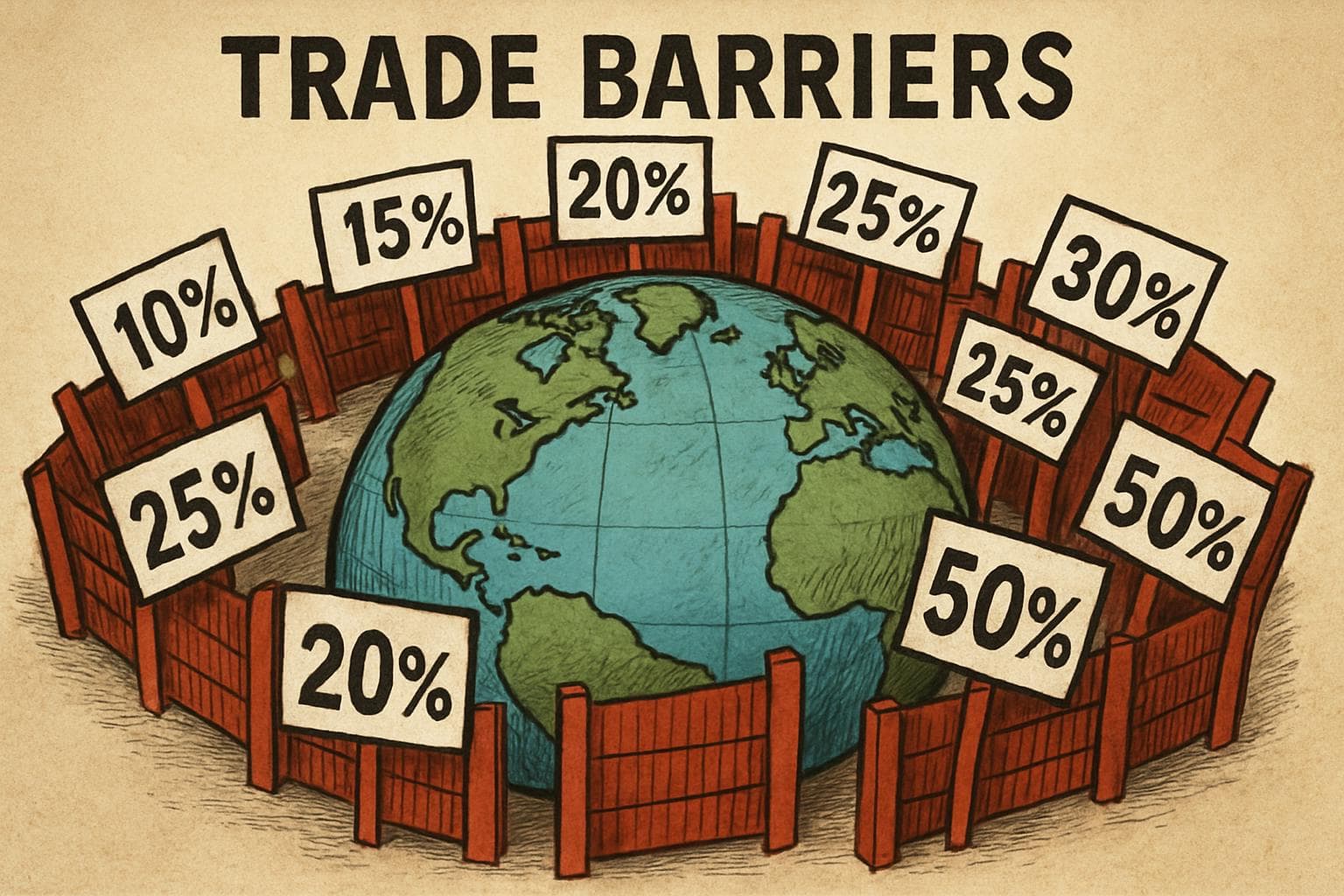
- President Trump has implemented new tariffs on dozens of countries, with rates ranging from 10% to 50%, as part of an escalating trade war.
- India faces a potential 50% tariff due to its oil purchases from Russia, with a 21-day window to respond.
- The European Union has negotiated a 15% tariff, while Taiwan and South Korea have secured exemptions for major semiconductor companies.
- Brazil's total tariff rate has reached 50%, partly due to an additional levy linked to former President Bolsonaro's prosecution.
- Trump's trade policies aim to reshape the global trading system, impacting export-dependent economies in Southeast Asia and beyond.
In a significant escalation of his trade war, US President Donald Trump has imposed a new wave of tariffs on countries worldwide, effective immediately. These "reciprocal" tariffs, ranging from 10% to 50%, are part of Trump's strategy to reshape the global trading system, which he argues has been unfair to the United States.
Impact on Global Trade
The tariffs, announced just before a previous deadline on August 1, have sent shockwaves through international markets. India, facing a potential 50% tariff due to its oil purchases from Russia, has 21 days to respond. Meanwhile, the European Union has negotiated a 15% tariff, a significant reduction from the initial threat. Taiwan and South Korea have managed to secure exemptions for major semiconductor companies like TSMC and Samsung, which have substantial investments in the US.
Regional Reactions and Negotiations
Countries are scrambling to negotiate deals with Washington to avoid the steep tariffs. Brazil's total tariff rate has reached 50%, exacerbated by an additional levy linked to the prosecution of former President Jair Bolsonaro. The Swiss government, blindsided by a 39% levy, is holding urgent meetings to reverse the decision. Export-dependent economies in Southeast Asia, such as Laos and Myanmar, are particularly hard-hit, facing tariffs as high as 40%.
Strategic Moves and Economic Implications
Trump's trade policies are seen as a move to pressure foreign companies to invest in the US. Apple, for instance, announced a $100 billion investment in the US following pressure from the White House. The tariffs also target countries with close trade ties to China, as Trump seeks to counterbalance China's influence in global trade.
WHAT THIS MIGHT MEAN
The implementation of these tariffs could lead to significant shifts in global trade dynamics. Countries may seek to strengthen regional trade agreements to mitigate the impact of US tariffs. The ongoing negotiations could result in new trade deals that reshape international economic relations. Experts warn that prolonged trade tensions could lead to increased costs for consumers and potential job losses in affected industries. As countries respond to these tariffs, the global trade landscape may undergo substantial changes, with long-term implications for international economic stability.
Related Articles
China Sets Lowest GDP Growth Target in Decades Amid Economic Challenges

UK Faces Dilemmas Amid Iran Conflict and China Spying Allegations
Tech Giants Pledge to Cover AI Data Center Energy Costs Amid Rising Electricity Concerns
Cuba Faces Widespread Blackout Amid Deepening Fuel Crisis
Russian LNG Tanker Sinks in Mediterranean Amid Accusations of Ukrainian Drone Attack
Spain's Sánchez Stands Firm Against Trump's Trade Threat Over Iran Stance
Trump's New Tariffs Escalate Global Trade Tensions
In This Article
 Daniel Rivera| Published
 HIGHLIGHTS
- President Trump has implemented new tariffs on dozens of countries, with rates ranging from 10% to 50%, as part of an escalating trade war.
- India faces a potential 50% tariff due to its oil purchases from Russia, with a 21-day window to respond.
- The European Union has negotiated a 15% tariff, while Taiwan and South Korea have secured exemptions for major semiconductor companies.
- Brazil's total tariff rate has reached 50%, partly due to an additional levy linked to former President Bolsonaro's prosecution.
- Trump's trade policies aim to reshape the global trading system, impacting export-dependent economies in Southeast Asia and beyond.
In a significant escalation of his trade war, US President Donald Trump has imposed a new wave of tariffs on countries worldwide, effective immediately. These "reciprocal" tariffs, ranging from 10% to 50%, are part of Trump's strategy to reshape the global trading system, which he argues has been unfair to the United States.
Impact on Global Trade
The tariffs, announced just before a previous deadline on August 1, have sent shockwaves through international markets. India, facing a potential 50% tariff due to its oil purchases from Russia, has 21 days to respond. Meanwhile, the European Union has negotiated a 15% tariff, a significant reduction from the initial threat. Taiwan and South Korea have managed to secure exemptions for major semiconductor companies like TSMC and Samsung, which have substantial investments in the US.
Regional Reactions and Negotiations
Countries are scrambling to negotiate deals with Washington to avoid the steep tariffs. Brazil's total tariff rate has reached 50%, exacerbated by an additional levy linked to the prosecution of former President Jair Bolsonaro. The Swiss government, blindsided by a 39% levy, is holding urgent meetings to reverse the decision. Export-dependent economies in Southeast Asia, such as Laos and Myanmar, are particularly hard-hit, facing tariffs as high as 40%.
Strategic Moves and Economic Implications
Trump's trade policies are seen as a move to pressure foreign companies to invest in the US. Apple, for instance, announced a $100 billion investment in the US following pressure from the White House. The tariffs also target countries with close trade ties to China, as Trump seeks to counterbalance China's influence in global trade.
WHAT THIS MIGHT MEAN
The implementation of these tariffs could lead to significant shifts in global trade dynamics. Countries may seek to strengthen regional trade agreements to mitigate the impact of US tariffs. The ongoing negotiations could result in new trade deals that reshape international economic relations. Experts warn that prolonged trade tensions could lead to increased costs for consumers and potential job losses in affected industries. As countries respond to these tariffs, the global trade landscape may undergo substantial changes, with long-term implications for international economic stability.
Related Articles
China Sets Lowest GDP Growth Target in Decades Amid Economic Challenges
UK Faces Dilemmas Amid Iran Conflict and China Spying Allegations
Tech Giants Pledge to Cover AI Data Center Energy Costs Amid Rising Electricity Concerns
Cuba Faces Widespread Blackout Amid Deepening Fuel Crisis
Russian LNG Tanker Sinks in Mediterranean Amid Accusations of Ukrainian Drone Attack
Spain's Sánchez Stands Firm Against Trump's Trade Threat Over Iran Stance