
Global Tensions Rise as Trump Targets Europe with Tariff Threats at Davos Summit
In This Article
HIGHLIGHTS
- Donald Trump threatens new tariffs on eight European countries unless they support his Greenland acquisition.
- The World Economic Forum in Davos sees the largest-ever US delegation, including key figures like Marco Rubio and Scott Bessent.
- European stock markets are reacting negatively to Trump's tariff threats, with significant drops in futures indices.
- The Davos summit focuses on free trade and geopolitical cooperation amid global economic tensions.
- The US markets remain closed for Martin Luther King Jr. Day, adding to the uncertainty in global financial markets.
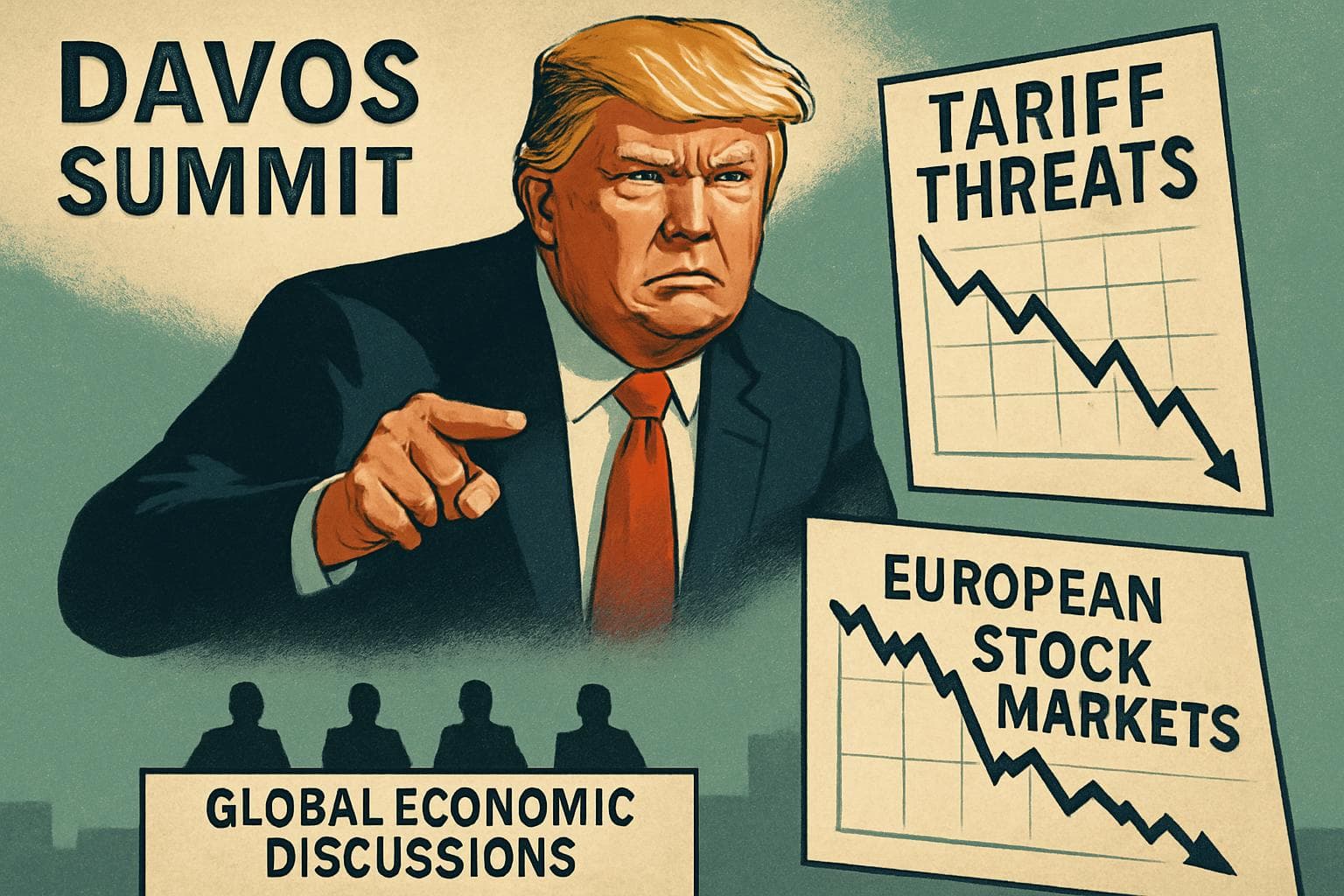
As the World Economic Forum (WEF) convenes in Davos, Switzerland, this week, global leaders are met with heightened tensions following US President Donald Trump's renewed tariff threats. Trump has announced plans to impose new trade levies on eight European countries, including Denmark, France, and Germany, unless they support his controversial ambition to acquire Greenland. The tariffs, set to begin at 10% on February 1 and potentially rising to 25% by June, have already sent ripples through European stock markets, with futures indices showing significant declines.
Davos Summit and US Presence
The Davos summit, themed around a "spirit of dialogue," is hosting a record number of US delegates, including Secretary of State Marco Rubio and Treasury Secretary Scott Bessent. Despite the forum's emphasis on free trade and international cooperation, Trump's policies have cast a shadow over proceedings. His presence is expected to dominate discussions, particularly concerning his economic coercion tactics aimed at Europe.
Market Reactions and Economic Impact
European markets have reacted swiftly to Trump's threats, with futures for the European Stoxx 50 index down 1.51% and the French Cac 40 poised to fall by 2.1%. In contrast, Asian markets have shown mixed responses, with Japan's Nikkei 225 slipping by 0.7%. Meanwhile, the US markets remain closed for Martin Luther King Jr. Day, adding to the uncertainty. Commodities like gold and silver have surged, reflecting investor anxiety.
Global Cooperation and Challenges
The WEF summit is a critical platform for addressing global challenges, including geopolitical cooperation and the defense of Ukraine. However, Trump's disruptive approach has raised concerns about the future of international relations and economic stability. The forum's traditional focus on green and global development agendas appears overshadowed by hard-nosed business issues, as suggested by the US administration's influence.
WHAT THIS MIGHT MEAN
The unfolding events at Davos could have significant implications for global trade relations. If Trump's tariff threats materialize, they may lead to a trade war with Europe, further destabilizing international markets. Experts suggest that the WEF could serve as a venue for behind-the-scenes negotiations, potentially averting a full-blown economic conflict. However, the success of such diplomacy remains uncertain, given the current geopolitical climate. As the summit progresses, the world will be watching closely to see if dialogue can overcome disruption.
Related Articles

Greenland Politely Declines Trump's Hospital Ship Offer Amid Healthcare Debate
Senate Blocks Resolution to Limit Trump's Military Actions in Iran
Spain's Sánchez Stands Firm Against Trump's Trade Threat Over Iran Stance
US Supreme Court Ruling Sparks Trade Uncertainty in Asia and Beyond
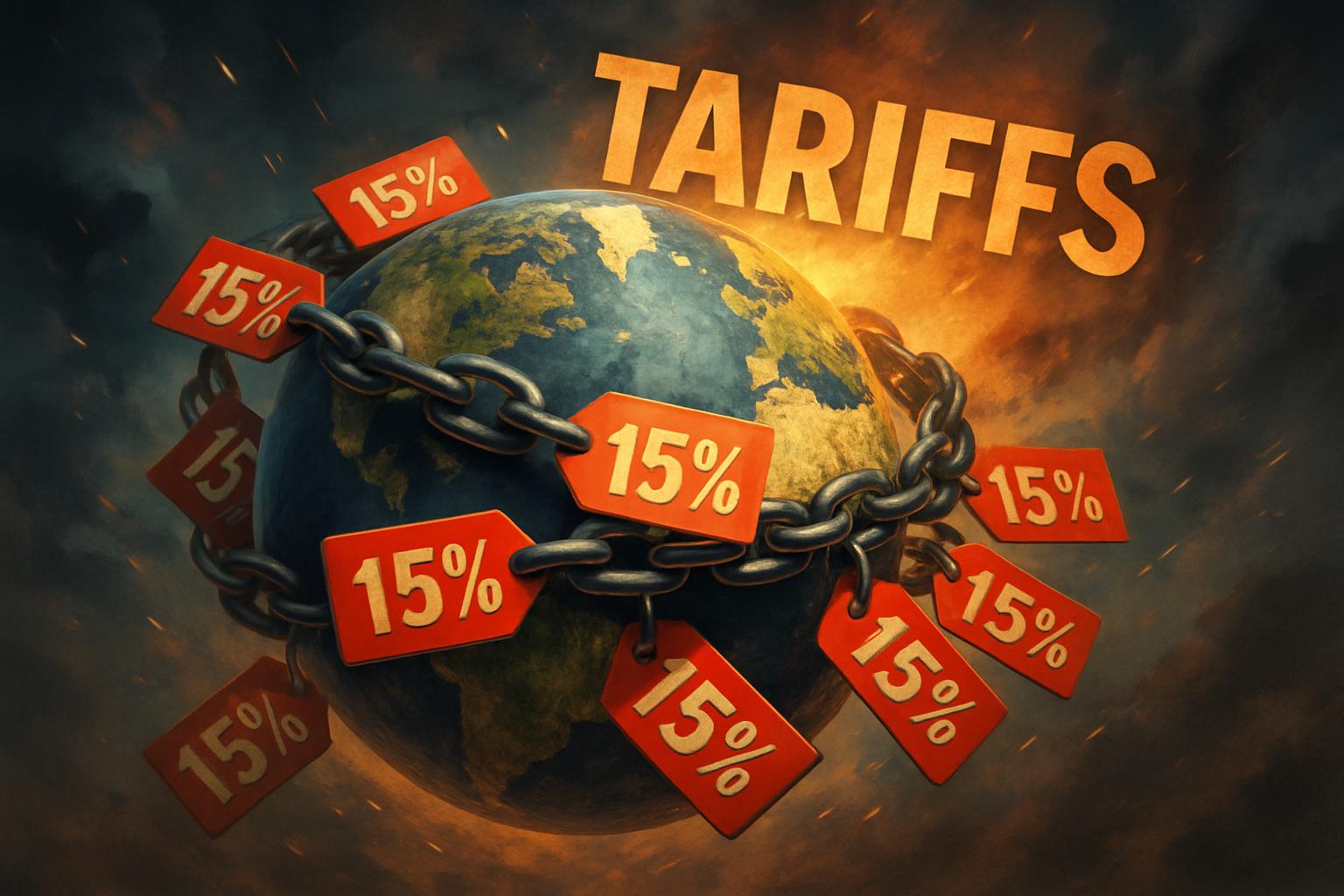
Trump's New Tariff Strategy Sparks Global Trade Uncertainty

US-Iran Tensions Escalate Amid Renewed Nuclear Talks and Protests
Global Tensions Rise as Trump Targets Europe with Tariff Threats at Davos Summit
In This Article
 Ethan Brooks| Published
 HIGHLIGHTS
- Donald Trump threatens new tariffs on eight European countries unless they support his Greenland acquisition.
- The World Economic Forum in Davos sees the largest-ever US delegation, including key figures like Marco Rubio and Scott Bessent.
- European stock markets are reacting negatively to Trump's tariff threats, with significant drops in futures indices.
- The Davos summit focuses on free trade and geopolitical cooperation amid global economic tensions.
- The US markets remain closed for Martin Luther King Jr. Day, adding to the uncertainty in global financial markets.
As the World Economic Forum (WEF) convenes in Davos, Switzerland, this week, global leaders are met with heightened tensions following US President Donald Trump's renewed tariff threats. Trump has announced plans to impose new trade levies on eight European countries, including Denmark, France, and Germany, unless they support his controversial ambition to acquire Greenland. The tariffs, set to begin at 10% on February 1 and potentially rising to 25% by June, have already sent ripples through European stock markets, with futures indices showing significant declines.
Davos Summit and US Presence
The Davos summit, themed around a "spirit of dialogue," is hosting a record number of US delegates, including Secretary of State Marco Rubio and Treasury Secretary Scott Bessent. Despite the forum's emphasis on free trade and international cooperation, Trump's policies have cast a shadow over proceedings. His presence is expected to dominate discussions, particularly concerning his economic coercion tactics aimed at Europe.
Market Reactions and Economic Impact
European markets have reacted swiftly to Trump's threats, with futures for the European Stoxx 50 index down 1.51% and the French Cac 40 poised to fall by 2.1%. In contrast, Asian markets have shown mixed responses, with Japan's Nikkei 225 slipping by 0.7%. Meanwhile, the US markets remain closed for Martin Luther King Jr. Day, adding to the uncertainty. Commodities like gold and silver have surged, reflecting investor anxiety.
Global Cooperation and Challenges
The WEF summit is a critical platform for addressing global challenges, including geopolitical cooperation and the defense of Ukraine. However, Trump's disruptive approach has raised concerns about the future of international relations and economic stability. The forum's traditional focus on green and global development agendas appears overshadowed by hard-nosed business issues, as suggested by the US administration's influence.
WHAT THIS MIGHT MEAN
The unfolding events at Davos could have significant implications for global trade relations. If Trump's tariff threats materialize, they may lead to a trade war with Europe, further destabilizing international markets. Experts suggest that the WEF could serve as a venue for behind-the-scenes negotiations, potentially averting a full-blown economic conflict. However, the success of such diplomacy remains uncertain, given the current geopolitical climate. As the summit progresses, the world will be watching closely to see if dialogue can overcome disruption.
Related Articles
Greenland Politely Declines Trump's Hospital Ship Offer Amid Healthcare Debate
Senate Blocks Resolution to Limit Trump's Military Actions in Iran
Spain's Sánchez Stands Firm Against Trump's Trade Threat Over Iran Stance
US Supreme Court Ruling Sparks Trade Uncertainty in Asia and Beyond
Trump's New Tariff Strategy Sparks Global Trade Uncertainty
US-Iran Tensions Escalate Amid Renewed Nuclear Talks and Protests