
Tuvalu Citizens Seek Australian Climate Visa Amid Rising Sea Levels
In This Article
HIGHLIGHTS
- Over a third of Tuvalu's population has applied for a new Australian climate visa, with 4,052 citizens entering the ballot.
- The Pacific Engagement visa allows 280 Tuvaluans annually to migrate to Australia, offering permanent residency and access to public services.
- The visa is part of the Australia-Tuvalu Falepili Union, a landmark agreement addressing climate change displacement and regional security.
- Concerns arise over potential brain drain from Tuvalu as skilled workers may leave, impacting the nation's future workforce.
- Scientists predict Tuvalu could become uninhabitable by 2050 due to rising sea levels, prompting urgent migration solutions.
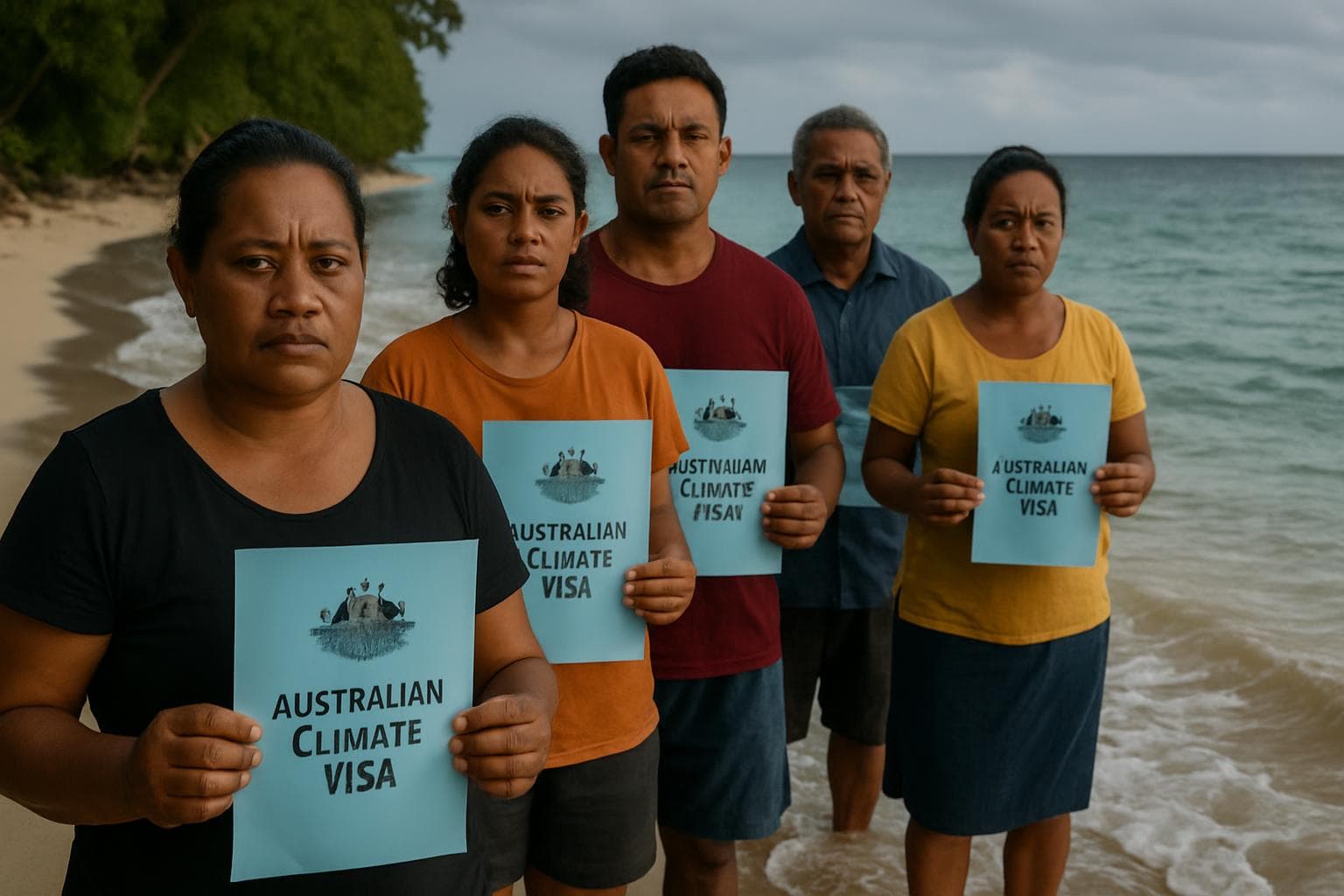
In a pioneering move to address climate change displacement, over a third of Tuvalu's population has applied for a new Australian climate visa. The Pacific Engagement visa, part of the Australia-Tuvalu Falepili Union, offers a lifeline to Tuvaluans as rising sea levels threaten their homeland. With 4,052 citizens entering the ballot, the program is already oversubscribed, highlighting the urgent need for migration solutions.
A Landmark Agreement
The Australia-Tuvalu Falepili Union, signed in 2024, represents a groundbreaking commitment to support Tuvalu in the face of climate change. The agreement not only provides a pathway for 280 Tuvaluans annually to gain permanent residency in Australia but also includes provisions for defense against natural disasters and other threats. "For the first time, there is a country that has committed legally to recognize the future statehood and sovereignty of Tuvalu," stated Prime Minister Feleti Teo.
Implications of Climate-Induced Migration
The Pacific Engagement visa allows successful applicants to live, work, and study in Australia with access to public services such as Medicare and education subsidies. However, experts warn of potential negative impacts on Tuvalu's workforce. University of Sydney geographer John Connell expressed concerns about a possible brain drain, noting that the loss of skilled professionals could hinder the nation's development.
Urgency of the Situation
Scientists have long warned of Tuvalu's vulnerability to climate change, predicting that much of the island could be submerged by 2050. With two of its nine coral atolls already disappearing, the urgency for viable migration solutions is clear. The Australian government's initiative is seen as a vital response to the looming crisis, offering Tuvaluans a chance for a secure future.
WHAT THIS MIGHT MEAN
The introduction of the Pacific Engagement visa marks a significant step in addressing climate-induced migration, but it also raises questions about the long-term sustainability of such programs. As Tuvalu faces the threat of becoming uninhabitable, the international community may need to consider broader strategies for climate refugees. The success of this initiative could set a precedent for other nations, potentially influencing global policies on climate migration.
Additionally, the Falepili Union strengthens Australia's influence in the Pacific region, countering geopolitical tensions and fostering regional stability. However, the potential exodus of skilled workers from Tuvalu could challenge the island's economic and social structures, necessitating careful management to ensure a balanced approach to migration and development.
Related Articles

Australia Bars IS-Linked Citizen from Returning Amidst Repatriation Debate

Controversy Surrounds Queen Elizabeth II Commemorative Coins in Australia

Canada and Australia Forge Strategic Partnership Amid Global Uncertainty

Israeli President Herzog's Visit to Australia Sparks Controversy Amid Calls for Unity

Canada Calls for De-escalation Amid US-Israel Strikes on Iran

Trump's New Tariff Strategy Sparks Global Trade Uncertainty
Tuvalu Citizens Seek Australian Climate Visa Amid Rising Sea Levels
In This Article
HIGHLIGHTS
- Over a third of Tuvalu's population has applied for a new Australian climate visa, with 4,052 citizens entering the ballot.
- The Pacific Engagement visa allows 280 Tuvaluans annually to migrate to Australia, offering permanent residency and access to public services.
- The visa is part of the Australia-Tuvalu Falepili Union, a landmark agreement addressing climate change displacement and regional security.
- Concerns arise over potential brain drain from Tuvalu as skilled workers may leave, impacting the nation's future workforce.
- Scientists predict Tuvalu could become uninhabitable by 2050 due to rising sea levels, prompting urgent migration solutions.
In a pioneering move to address climate change displacement, over a third of Tuvalu's population has applied for a new Australian climate visa. The Pacific Engagement visa, part of the Australia-Tuvalu Falepili Union, offers a lifeline to Tuvaluans as rising sea levels threaten their homeland. With 4,052 citizens entering the ballot, the program is already oversubscribed, highlighting the urgent need for migration solutions.
A Landmark Agreement
The Australia-Tuvalu Falepili Union, signed in 2024, represents a groundbreaking commitment to support Tuvalu in the face of climate change. The agreement not only provides a pathway for 280 Tuvaluans annually to gain permanent residency in Australia but also includes provisions for defense against natural disasters and other threats. "For the first time, there is a country that has committed legally to recognize the future statehood and sovereignty of Tuvalu," stated Prime Minister Feleti Teo.
Implications of Climate-Induced Migration
The Pacific Engagement visa allows successful applicants to live, work, and study in Australia with access to public services such as Medicare and education subsidies. However, experts warn of potential negative impacts on Tuvalu's workforce. University of Sydney geographer John Connell expressed concerns about a possible brain drain, noting that the loss of skilled professionals could hinder the nation's development.
Urgency of the Situation
Scientists have long warned of Tuvalu's vulnerability to climate change, predicting that much of the island could be submerged by 2050. With two of its nine coral atolls already disappearing, the urgency for viable migration solutions is clear. The Australian government's initiative is seen as a vital response to the looming crisis, offering Tuvaluans a chance for a secure future.
WHAT THIS MIGHT MEAN
The introduction of the Pacific Engagement visa marks a significant step in addressing climate-induced migration, but it also raises questions about the long-term sustainability of such programs. As Tuvalu faces the threat of becoming uninhabitable, the international community may need to consider broader strategies for climate refugees. The success of this initiative could set a precedent for other nations, potentially influencing global policies on climate migration.
Additionally, the Falepili Union strengthens Australia's influence in the Pacific region, countering geopolitical tensions and fostering regional stability. However, the potential exodus of skilled workers from Tuvalu could challenge the island's economic and social structures, necessitating careful management to ensure a balanced approach to migration and development.
Related Articles
Australia Bars IS-Linked Citizen from Returning Amidst Repatriation Debate
Controversy Surrounds Queen Elizabeth II Commemorative Coins in Australia
Canada and Australia Forge Strategic Partnership Amid Global Uncertainty
Israeli President Herzog's Visit to Australia Sparks Controversy Amid Calls for Unity
Canada Calls for De-escalation Amid US-Israel Strikes on Iran
Trump's New Tariff Strategy Sparks Global Trade Uncertainty