
Chaotic Decision-Making and Political Divisions Marred UK's Covid-19 Response, Inquiry Finds
In This Article
HIGHLIGHTS
- The UK Covid-19 Inquiry criticized Northern Ireland's pandemic response as "chaotic" due to political divisions within the Stormont executive.
- Baroness Heather Hallett's report highlighted that the UK government's decision-making was often "too little, too late," impacting public health outcomes.
- Former Prime Minister Boris Johnson and his adviser Dominic Cummings were criticized for fostering a "toxic and chaotic culture" in Downing Street.
- The report suggested that earlier and more decisive interventions could have saved thousands of lives across the UK.
- Political disputes and leaks within Northern Ireland's power-sharing government hindered effective pandemic response efforts.
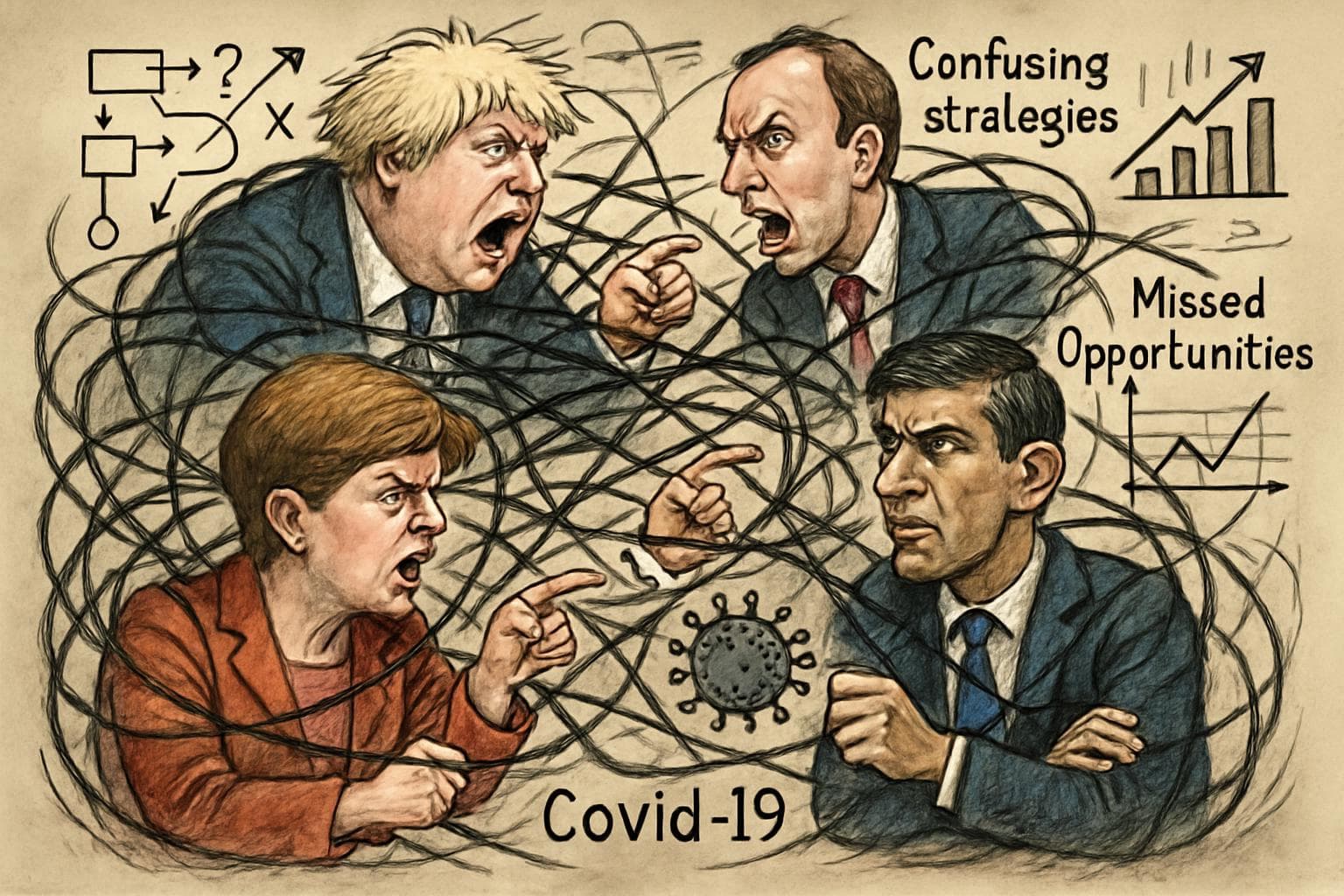
The UK Covid-19 Inquiry has delivered a scathing assessment of the government's handling of the pandemic, highlighting significant failures in decision-making and leadership. The inquiry, led by Baroness Heather Hallett, found that political divisions and a lack of coherent strategy severely undermined the response efforts across the UK, with Northern Ireland's Stormont executive particularly criticized for its "chaotic" approach.
Political Divisions in Northern Ireland
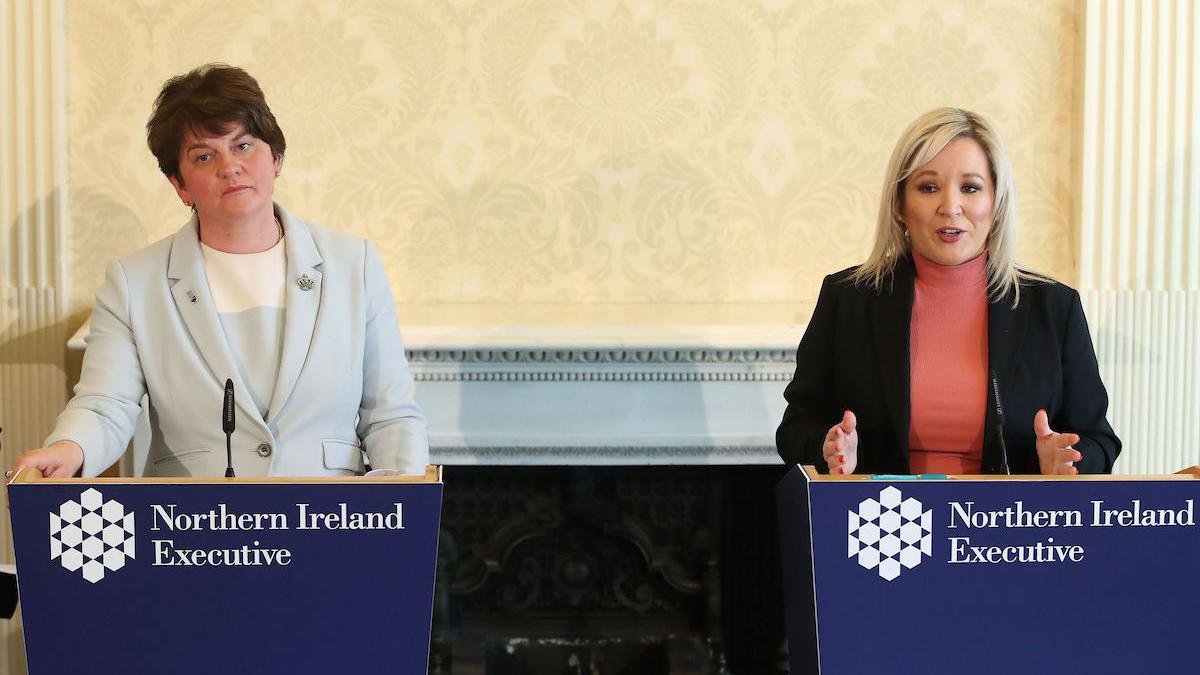
The inquiry's report painted a troubling picture of Northern Ireland's pandemic response, which was marred by political infighting and leaks. The power-sharing executive, composed of ministers from the Democratic Unionist Party (DUP) and Sinn Féin, struggled to present a united front. Baroness Hallett noted that the strained relationships between ministers led to an incoherent approach, with critical decisions often delayed or compromised by political disputes. The report cited the attendance of Sinn Féin's Michelle O'Neill at a controversial funeral as a flashpoint that exacerbated tensions within the executive.
Leadership Failures in Downing Street
The inquiry did not spare the UK government, particularly former Prime Minister Boris Johnson and his chief adviser Dominic Cummings. The report criticized the "toxic and chaotic culture" within Downing Street, which hindered effective decision-making. Testimonies revealed a workplace environment where junior staff, particularly women, were marginalized. Cummings was singled out for contributing to this culture with his offensive language and behavior, while Johnson was criticized for failing to manage the situation effectively.
Missed Opportunities and Delayed Interventions
A central theme of the report was the government's failure to act swiftly during critical moments of the pandemic. It described February 2020 as a "lost month," with delays in implementing lockdown measures contributing to a higher death toll. The report estimated that imposing a lockdown a week earlier in March 2020 could have saved approximately 23,000 lives. Similar criticisms were directed at the Welsh and Scottish governments for their delayed responses.
Recommendations for Future Crises
The inquiry concluded with recommendations for future emergencies, emphasizing the need for earlier and more decisive interventions. It suggested the establishment of central taskforces in each UK nation to streamline decision-making processes and improve transparency.
WHAT THIS MIGHT MEAN
The findings of the UK Covid-19 Inquiry could have significant implications for future public health policy and political accountability. The report's recommendations may prompt reforms in how emergency decisions are made, potentially leading to the establishment of dedicated taskforces to ensure more timely and effective responses. Politically, the inquiry's criticism of key figures like Boris Johnson and Dominic Cummings could influence public perception and future leadership evaluations. In Northern Ireland, the report may reignite discussions about the effectiveness of the power-sharing executive, potentially leading to calls for structural changes to prevent political divisions from hindering crisis management in the future.
Images from the Web
Related Articles
Diplomatic Tensions Rise as Trump Criticizes Starmer's Iran Policy
Tragedy Strikes County Armagh: Three Dead in Multi-Vehicle Collision
UK Government to Reform Asylum Seeker Support and Employment Policies

UK Faces Dilemmas Amid Iran Conflict and China Spying Allegations
UK Reinforces Military Presence in Cyprus Amid Middle East Tensions
UK-Iran Tensions: Starmer Defends Cautious Approach Amid Trump Criticism
Chaotic Decision-Making and Political Divisions Marred UK's Covid-19 Response, Inquiry Finds
In This Article
 Ethan Brooks| Published
 HIGHLIGHTS
- The UK Covid-19 Inquiry criticized Northern Ireland's pandemic response as "chaotic" due to political divisions within the Stormont executive.
- Baroness Heather Hallett's report highlighted that the UK government's decision-making was often "too little, too late," impacting public health outcomes.
- Former Prime Minister Boris Johnson and his adviser Dominic Cummings were criticized for fostering a "toxic and chaotic culture" in Downing Street.
- The report suggested that earlier and more decisive interventions could have saved thousands of lives across the UK.
- Political disputes and leaks within Northern Ireland's power-sharing government hindered effective pandemic response efforts.
The UK Covid-19 Inquiry has delivered a scathing assessment of the government's handling of the pandemic, highlighting significant failures in decision-making and leadership. The inquiry, led by Baroness Heather Hallett, found that political divisions and a lack of coherent strategy severely undermined the response efforts across the UK, with Northern Ireland's Stormont executive particularly criticized for its "chaotic" approach.
Political Divisions in Northern Ireland
The inquiry's report painted a troubling picture of Northern Ireland's pandemic response, which was marred by political infighting and leaks. The power-sharing executive, composed of ministers from the Democratic Unionist Party (DUP) and Sinn Féin, struggled to present a united front. Baroness Hallett noted that the strained relationships between ministers led to an incoherent approach, with critical decisions often delayed or compromised by political disputes. The report cited the attendance of Sinn Féin's Michelle O'Neill at a controversial funeral as a flashpoint that exacerbated tensions within the executive.
Leadership Failures in Downing Street
The inquiry did not spare the UK government, particularly former Prime Minister Boris Johnson and his chief adviser Dominic Cummings. The report criticized the "toxic and chaotic culture" within Downing Street, which hindered effective decision-making. Testimonies revealed a workplace environment where junior staff, particularly women, were marginalized. Cummings was singled out for contributing to this culture with his offensive language and behavior, while Johnson was criticized for failing to manage the situation effectively.
Missed Opportunities and Delayed Interventions
A central theme of the report was the government's failure to act swiftly during critical moments of the pandemic. It described February 2020 as a "lost month," with delays in implementing lockdown measures contributing to a higher death toll. The report estimated that imposing a lockdown a week earlier in March 2020 could have saved approximately 23,000 lives. Similar criticisms were directed at the Welsh and Scottish governments for their delayed responses.
Recommendations for Future Crises
The inquiry concluded with recommendations for future emergencies, emphasizing the need for earlier and more decisive interventions. It suggested the establishment of central taskforces in each UK nation to streamline decision-making processes and improve transparency.
WHAT THIS MIGHT MEAN
The findings of the UK Covid-19 Inquiry could have significant implications for future public health policy and political accountability. The report's recommendations may prompt reforms in how emergency decisions are made, potentially leading to the establishment of dedicated taskforces to ensure more timely and effective responses. Politically, the inquiry's criticism of key figures like Boris Johnson and Dominic Cummings could influence public perception and future leadership evaluations. In Northern Ireland, the report may reignite discussions about the effectiveness of the power-sharing executive, potentially leading to calls for structural changes to prevent political divisions from hindering crisis management in the future.
Images from the Web
Related Articles
Diplomatic Tensions Rise as Trump Criticizes Starmer's Iran Policy
Tragedy Strikes County Armagh: Three Dead in Multi-Vehicle Collision
UK Government to Reform Asylum Seeker Support and Employment Policies
UK Faces Dilemmas Amid Iran Conflict and China Spying Allegations
UK Reinforces Military Presence in Cyprus Amid Middle East Tensions
UK-Iran Tensions: Starmer Defends Cautious Approach Amid Trump Criticism