
UK Economy Surpasses Expectations with 0.3% Growth in November
In This Article
HIGHLIGHTS
- The UK economy grew by 0.3% in November 2025, surpassing forecasts of 0.1%, driven by a rebound in car production and the services sector.
- Jaguar Land Rover's recovery from a cyber-attack significantly boosted manufacturing output, which rose by 2.1% in November.
- Despite the economic growth, the construction sector saw a decline of 1.3%, marking its largest three-month fall in nearly three years.
- The Office for National Statistics reported a 0.1% growth over the three months to November, indicating a slight economic improvement.
- Economists predict continued growth momentum, with potential interest rate cuts from the Bank of England anticipated later in the year.
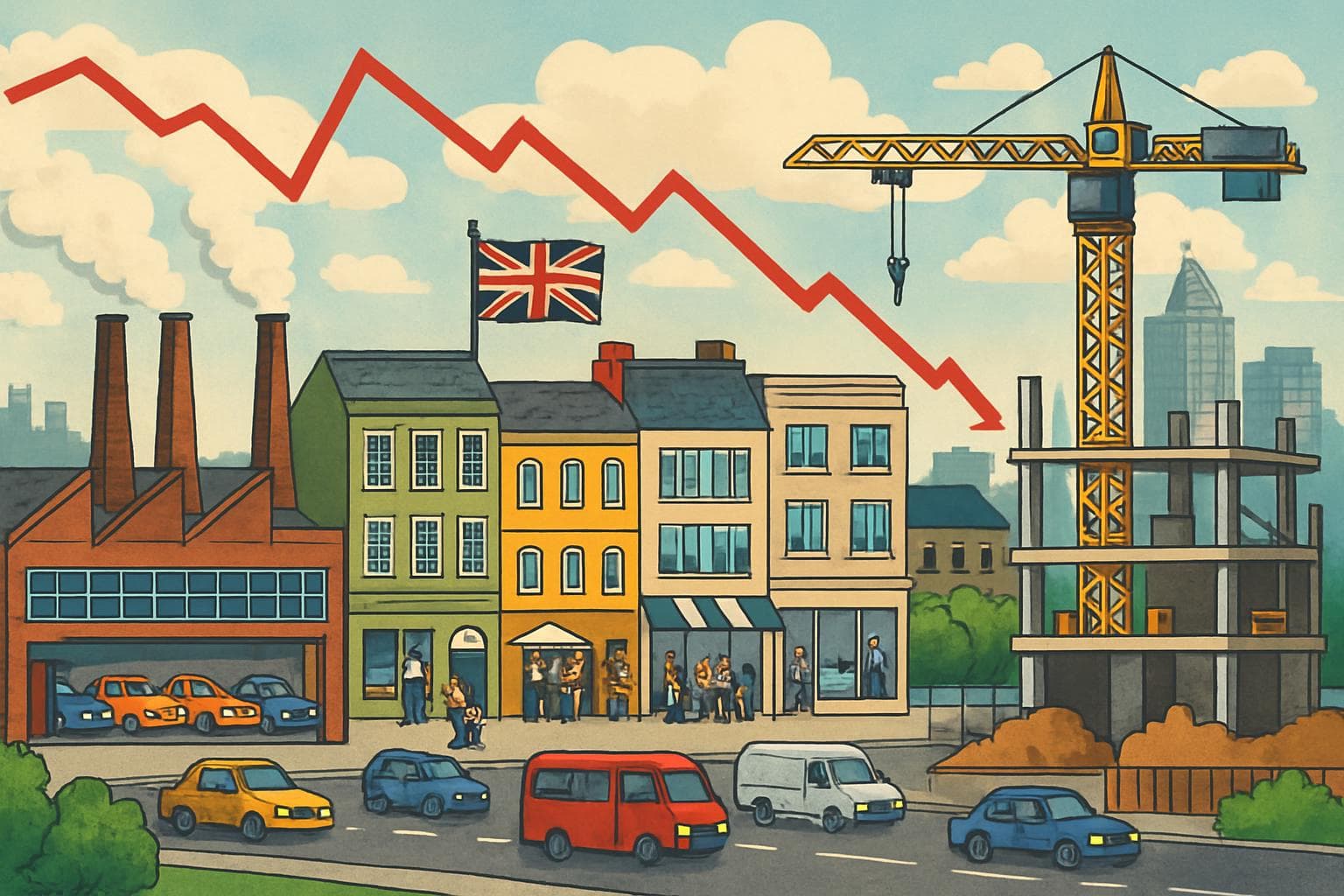
The UK economy experienced a stronger-than-expected growth of 0.3% in November 2025, according to the Office for National Statistics (ONS). This growth, which exceeded analysts' predictions of a 0.1% increase, was largely driven by a resurgence in car production and a boost in the services sector.
Manufacturing and Services Drive Growth
A significant contributor to this economic upturn was the recovery of Jaguar Land Rover (JLR) from a debilitating cyber-attack earlier in the year. The carmaker's return to full production led to a remarkable 25.5% increase in motor vehicle output, propelling overall manufacturing growth by 2.1% in November. The services sector also saw a 0.3% rise, bolstered by activities in accounting and tax consultancy, as businesses prepared for the budget announcement by Chancellor Rachel Reeves.
Challenges in Construction
Despite these positive developments, the construction sector faced setbacks, with output declining by 1.3% in November. This marks the sector's largest three-month fall in nearly three years, raising concerns about the government's anticipated building boom. A Treasury spokesperson emphasized ongoing efforts to reverse years of underinvestment in infrastructure to support economic growth.
Economic Outlook and Interest Rates
Economists, including Yael Selfin of KPMG UK, suggest that the UK economy has "found its footing" and expect growth momentum to continue. The National Institute of Economic and Social Research (NIESR) forecasts a 1.4% growth for 2025, surpassing the previous year's performance. Meanwhile, the Bank of England's borrowing costs have dropped to their lowest in over a year, fueling hopes for future interest rate cuts.
WHAT THIS MIGHT MEAN
Looking ahead, the UK's economic trajectory appears cautiously optimistic. The rebound in manufacturing and services suggests a potential for sustained growth, although challenges in the construction sector may temper this outlook. Economists anticipate that the easing of uncertainty following the budget could further bolster economic confidence, potentially leading to increased investment and consumer spending.
The Bank of England's interest rate policy will be closely watched, with markets currently predicting a rate cut by mid-2026. Such a move could provide additional support to the economy, particularly if inflation and unemployment data align with expectations. As the UK navigates these economic waters, the government's fiscal strategies and infrastructure investments will play a crucial role in shaping the nation's financial future.
Related Articles

Trump's New Tariff Strategy Sparks Global Trade Uncertainty

US Supreme Court Ruling on Tariffs Sparks Uncertainty for UK and Global Trade
Middle East Conflict Drives UK Energy Prices to New Highs

Canada and Australia Forge Strategic Partnership Amid Global Uncertainty

UK Government to Reform Asylum Seeker Support and Employment Policies

UK Faces Dilemmas Amid Iran Conflict and China Spying Allegations
UK Economy Surpasses Expectations with 0.3% Growth in November
In This Article
 Daniel Rivera| Published
 HIGHLIGHTS
- The UK economy grew by 0.3% in November 2025, surpassing forecasts of 0.1%, driven by a rebound in car production and the services sector.
- Jaguar Land Rover's recovery from a cyber-attack significantly boosted manufacturing output, which rose by 2.1% in November.
- Despite the economic growth, the construction sector saw a decline of 1.3%, marking its largest three-month fall in nearly three years.
- The Office for National Statistics reported a 0.1% growth over the three months to November, indicating a slight economic improvement.
- Economists predict continued growth momentum, with potential interest rate cuts from the Bank of England anticipated later in the year.
The UK economy experienced a stronger-than-expected growth of 0.3% in November 2025, according to the Office for National Statistics (ONS). This growth, which exceeded analysts' predictions of a 0.1% increase, was largely driven by a resurgence in car production and a boost in the services sector.
Manufacturing and Services Drive Growth
A significant contributor to this economic upturn was the recovery of Jaguar Land Rover (JLR) from a debilitating cyber-attack earlier in the year. The carmaker's return to full production led to a remarkable 25.5% increase in motor vehicle output, propelling overall manufacturing growth by 2.1% in November. The services sector also saw a 0.3% rise, bolstered by activities in accounting and tax consultancy, as businesses prepared for the budget announcement by Chancellor Rachel Reeves.
Challenges in Construction
Despite these positive developments, the construction sector faced setbacks, with output declining by 1.3% in November. This marks the sector's largest three-month fall in nearly three years, raising concerns about the government's anticipated building boom. A Treasury spokesperson emphasized ongoing efforts to reverse years of underinvestment in infrastructure to support economic growth.
Economic Outlook and Interest Rates
Economists, including Yael Selfin of KPMG UK, suggest that the UK economy has "found its footing" and expect growth momentum to continue. The National Institute of Economic and Social Research (NIESR) forecasts a 1.4% growth for 2025, surpassing the previous year's performance. Meanwhile, the Bank of England's borrowing costs have dropped to their lowest in over a year, fueling hopes for future interest rate cuts.
WHAT THIS MIGHT MEAN
Looking ahead, the UK's economic trajectory appears cautiously optimistic. The rebound in manufacturing and services suggests a potential for sustained growth, although challenges in the construction sector may temper this outlook. Economists anticipate that the easing of uncertainty following the budget could further bolster economic confidence, potentially leading to increased investment and consumer spending.
The Bank of England's interest rate policy will be closely watched, with markets currently predicting a rate cut by mid-2026. Such a move could provide additional support to the economy, particularly if inflation and unemployment data align with expectations. As the UK navigates these economic waters, the government's fiscal strategies and infrastructure investments will play a crucial role in shaping the nation's financial future.
Related Articles
Trump's New Tariff Strategy Sparks Global Trade Uncertainty
US Supreme Court Ruling on Tariffs Sparks Uncertainty for UK and Global Trade
Middle East Conflict Drives UK Energy Prices to New Highs
Canada and Australia Forge Strategic Partnership Amid Global Uncertainty
UK Government to Reform Asylum Seeker Support and Employment Policies
UK Faces Dilemmas Amid Iran Conflict and China Spying Allegations