
UK Economy Outpaces Expectations with 0.3% Growth Amidst Challenges
In This Article
HIGHLIGHTS
- The UK economy grew by 0.3% from April to June, outperforming forecasts of 0.1% growth, according to the Office for National Statistics.
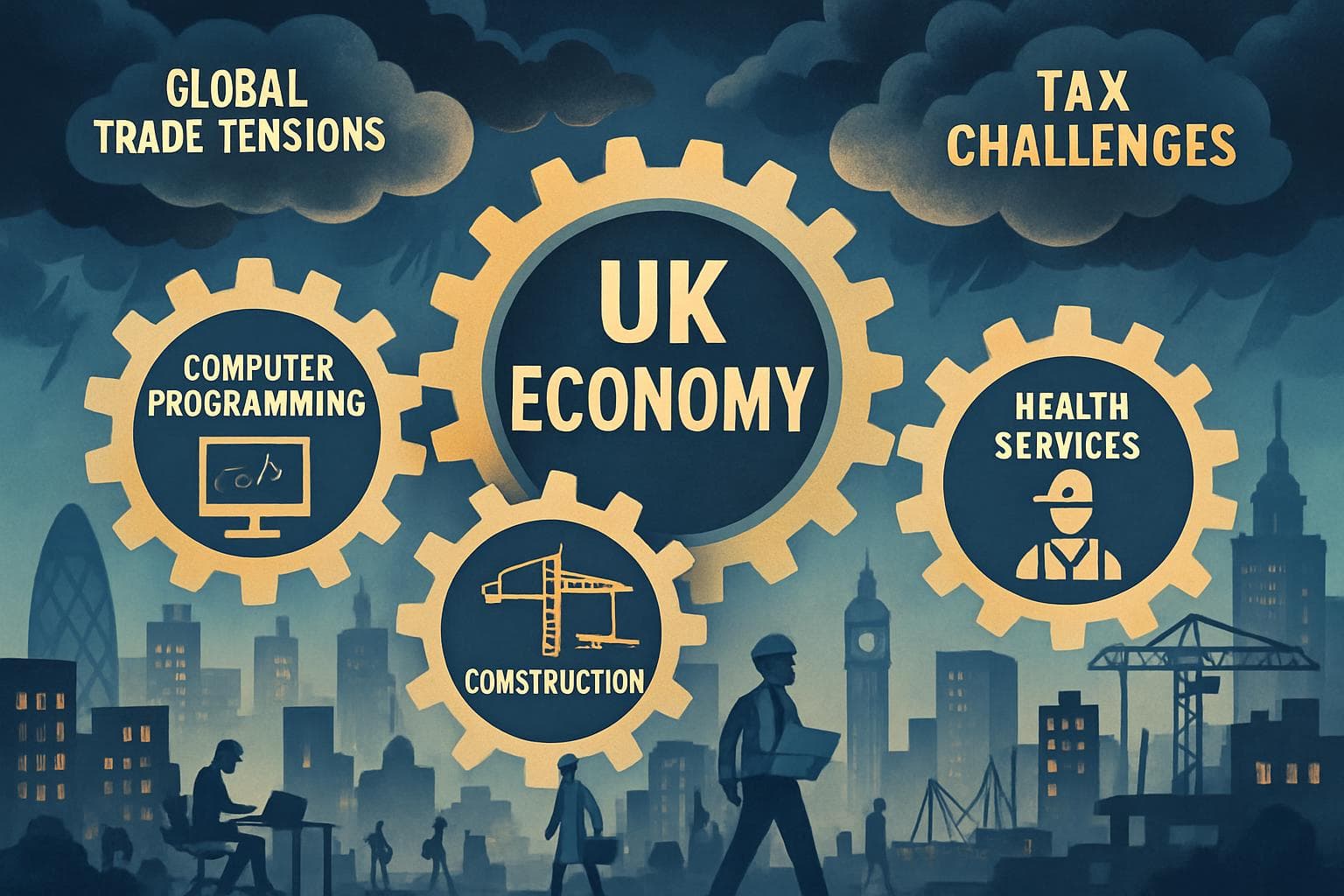
- Growth was driven by the service sector and construction industry, with notable contributions from computer programming and health services.
- Despite the positive figures, concerns remain about the impact of tax rises and global trade uncertainties on future growth.
- The UK economy was the fastest-growing among G7 nations in the first half of the year, though challenges persist.
- Chancellor Rachel Reeves faces pressure to address economic challenges in the upcoming autumn budget amid speculation of further tax increases.
The UK economy demonstrated resilience by expanding 0.3% between April and June, surpassing expectations of a near-stagnant 0.1% growth, according to the Office for National Statistics (ONS). This performance, while slower than the 0.7% growth in the first quarter, highlights the economy's ability to withstand pressures from tax increases and global trade tensions.
Service Sector and Construction Drive Growth
The service sector, particularly computer programming, health services, and vehicle rentals, played a pivotal role in driving economic growth. The construction industry also contributed significantly, expanding by 1.2% due to favorable weather conditions that boosted activity. Despite these gains, retailing initially dragged on growth but showed signs of recovery towards the end of the quarter.
Global Context and Domestic Challenges
Compared to other G7 economies, the UK maintained its position as the fastest-growing economy in the first half of the year. However, experts caution that sustaining this momentum may prove challenging. Ruth Gregory, Deputy Chief UK Economist at Capital Economics, noted that the global economic environment and domestic tax policies could hinder future growth. "The weak global economy will remain a drag on UK growth for a while yet," she stated.
Chancellor's Dilemma Ahead of Autumn Budget
Chancellor Rachel Reeves acknowledged the positive GDP figures but emphasized the need for continued efforts to ensure widespread economic benefits. With the autumn budget approaching, Reeves faces the daunting task of addressing a potential £40 billion deficit while managing public expectations around tax policies. Business leaders have expressed concerns over the impact of recent tax hikes, particularly the £25 billion increase in employer national insurance contributions.
WHAT THIS MIGHT MEAN
Looking ahead, the UK government must navigate a complex economic landscape. The upcoming autumn budget will be a critical moment for Chancellor Reeves, who must balance fiscal responsibility with the need to stimulate growth. Potential tax increases could dampen consumer confidence, further complicating recovery efforts. Meanwhile, the Bank of England's cautious stance on interest rates suggests that monetary policy may remain tight until inflation trends towards the 2% target. As the UK continues to grapple with global trade uncertainties and domestic fiscal challenges, maintaining economic momentum will require strategic policy decisions and careful management of public finances.
Related Articles
Trump's New Tariff Strategy Sparks Global Trade Uncertainty

US Supreme Court Ruling on Tariffs Sparks Uncertainty for UK and Global Trade
Middle East Conflict Drives UK Energy Prices to New Highs

Canada and Australia Forge Strategic Partnership Amid Global Uncertainty
UK Government to Reform Asylum Seeker Support and Employment Policies

UK Faces Dilemmas Amid Iran Conflict and China Spying Allegations
UK Economy Outpaces Expectations with 0.3% Growth Amidst Challenges
In This Article
 Daniel Rivera| Published
 HIGHLIGHTS
- The UK economy grew by 0.3% from April to June, outperforming forecasts of 0.1% growth, according to the Office for National Statistics.
- Growth was driven by the service sector and construction industry, with notable contributions from computer programming and health services.
- Despite the positive figures, concerns remain about the impact of tax rises and global trade uncertainties on future growth.
- The UK economy was the fastest-growing among G7 nations in the first half of the year, though challenges persist.
- Chancellor Rachel Reeves faces pressure to address economic challenges in the upcoming autumn budget amid speculation of further tax increases.
The UK economy demonstrated resilience by expanding 0.3% between April and June, surpassing expectations of a near-stagnant 0.1% growth, according to the Office for National Statistics (ONS). This performance, while slower than the 0.7% growth in the first quarter, highlights the economy's ability to withstand pressures from tax increases and global trade tensions.
Service Sector and Construction Drive Growth
The service sector, particularly computer programming, health services, and vehicle rentals, played a pivotal role in driving economic growth. The construction industry also contributed significantly, expanding by 1.2% due to favorable weather conditions that boosted activity. Despite these gains, retailing initially dragged on growth but showed signs of recovery towards the end of the quarter.
Global Context and Domestic Challenges
Compared to other G7 economies, the UK maintained its position as the fastest-growing economy in the first half of the year. However, experts caution that sustaining this momentum may prove challenging. Ruth Gregory, Deputy Chief UK Economist at Capital Economics, noted that the global economic environment and domestic tax policies could hinder future growth. "The weak global economy will remain a drag on UK growth for a while yet," she stated.
Chancellor's Dilemma Ahead of Autumn Budget
Chancellor Rachel Reeves acknowledged the positive GDP figures but emphasized the need for continued efforts to ensure widespread economic benefits. With the autumn budget approaching, Reeves faces the daunting task of addressing a potential £40 billion deficit while managing public expectations around tax policies. Business leaders have expressed concerns over the impact of recent tax hikes, particularly the £25 billion increase in employer national insurance contributions.
WHAT THIS MIGHT MEAN
Looking ahead, the UK government must navigate a complex economic landscape. The upcoming autumn budget will be a critical moment for Chancellor Reeves, who must balance fiscal responsibility with the need to stimulate growth. Potential tax increases could dampen consumer confidence, further complicating recovery efforts. Meanwhile, the Bank of England's cautious stance on interest rates suggests that monetary policy may remain tight until inflation trends towards the 2% target. As the UK continues to grapple with global trade uncertainties and domestic fiscal challenges, maintaining economic momentum will require strategic policy decisions and careful management of public finances.
Related Articles
Trump's New Tariff Strategy Sparks Global Trade Uncertainty
US Supreme Court Ruling on Tariffs Sparks Uncertainty for UK and Global Trade
Middle East Conflict Drives UK Energy Prices to New Highs
Canada and Australia Forge Strategic Partnership Amid Global Uncertainty
UK Government to Reform Asylum Seeker Support and Employment Policies
UK Faces Dilemmas Amid Iran Conflict and China Spying Allegations