
UK Government Faces Backlash Over Proposed Terrorism Ban on Palestine Action
In This Article
HIGHLIGHTS
- Two Palestine Action members charged with criminal damage after protesting at Elbit Systems in Bristol.
- UK government seeks to classify Palestine Action as a terrorist organization under the Terrorism Act 2000.
- Legal proceedings are underway to challenge the proposed ban on Palestine Action.
- The protest highlights ongoing tensions over UK-Israel military relations and public dissent.
- Historical parallels drawn with past civil disobedience movements, questioning the impact of increased repression.
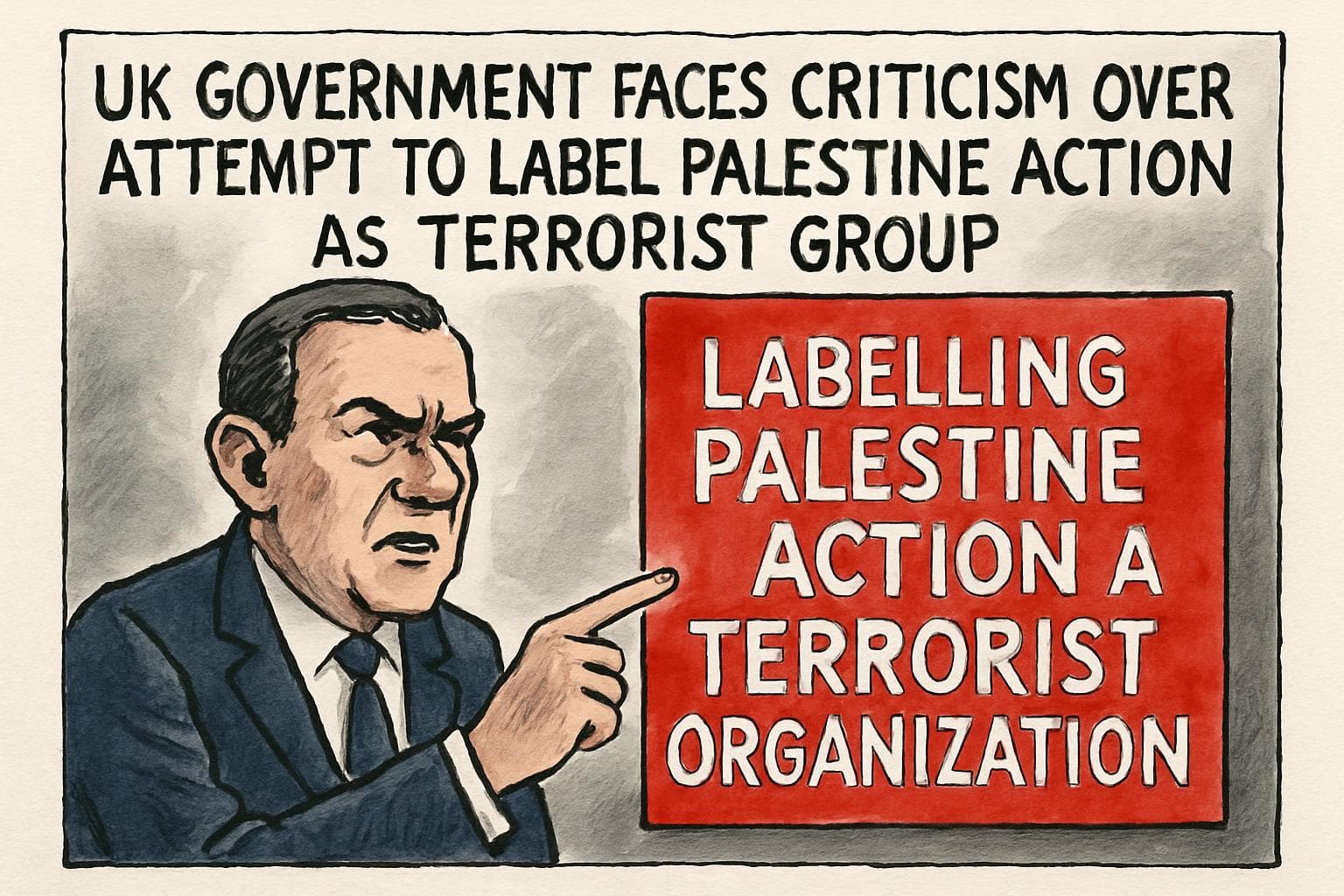
In a controversial move, the UK government is attempting to classify Palestine Action, a direct action protest group, as a terrorist organization under the Terrorism Act 2000. This development follows the arrest and charging of two members, India Kalff and Jordan Woodgate, for criminal damage after they blocked the entrance to Elbit Systems' facility in Bristol. Elbit Systems, a defense firm, is accused by Palestine Action of supplying weapons to the Israeli military, a claim the company denies.
The charges against Kalff and Woodgate come amid heightened scrutiny of Palestine Action's activities, with the group actively challenging the government's bid to proscribe it. A court hearing is set to determine whether the ban can be temporarily blocked, pending further legal proceedings.
Historical Context and Public Reaction
The proposed ban has sparked significant debate, drawing comparisons to past civil disobedience movements such as the Greenham Common protests in the 1980s. Critics argue that redefining nonviolent protest as a national security threat could backfire, potentially increasing public support for the cause. Dr. Lynne Jones, a former protester, highlights the historical precedent of increased repression leading to greater public sympathy.
Legal and Political Implications
The legal ramifications of classifying Palestine Action as a terrorist group are profound. If the ban is enacted, individuals supporting the group could face severe penalties, including up to 14 years in prison. This move has raised concerns about the broader implications for civil liberties and the right to protest in the UK.
Personal Stories and Human Impact
The personal impact of the proposed ban is significant, as illustrated by the story of a mother whose daughter is currently imprisoned for her involvement with Palestine Action. She describes the emotional and practical support her daughter receives from the group, questioning the morality of criminalizing such support.
WHAT THIS MIGHT MEAN
If the UK government succeeds in classifying Palestine Action as a terrorist organization, it could set a precedent for how other protest groups are treated under national security laws. This move may deter some activists but could also galvanize others, leading to increased public demonstrations and legal challenges. Experts warn that such actions might strain UK-Israel relations further and provoke international scrutiny over the UK's approach to civil liberties and protest rights. As the legal battle unfolds, the outcome will likely influence future government policies on protest and dissent.
Related Articles

UK Government to Reform Asylum Seeker Support and Employment Policies

UK Faces Dilemmas Amid Iran Conflict and China Spying Allegations

UK Reinforces Military Presence in Cyprus Amid Middle East Tensions

UK-Iran Tensions: Starmer Defends Cautious Approach Amid Trump Criticism

Persistent Safety Concerns in Nottingham Maternity Services Amidst Calls for Systemic Reform

Diplomatic Tensions Rise as Trump Criticizes Starmer's Iran Policy
UK Government Faces Backlash Over Proposed Terrorism Ban on Palestine Action
In This Article
 Ethan Brooks| Published
 HIGHLIGHTS
- Two Palestine Action members charged with criminal damage after protesting at Elbit Systems in Bristol.
- UK government seeks to classify Palestine Action as a terrorist organization under the Terrorism Act 2000.
- Legal proceedings are underway to challenge the proposed ban on Palestine Action.
- The protest highlights ongoing tensions over UK-Israel military relations and public dissent.
- Historical parallels drawn with past civil disobedience movements, questioning the impact of increased repression.
In a controversial move, the UK government is attempting to classify Palestine Action, a direct action protest group, as a terrorist organization under the Terrorism Act 2000. This development follows the arrest and charging of two members, India Kalff and Jordan Woodgate, for criminal damage after they blocked the entrance to Elbit Systems' facility in Bristol. Elbit Systems, a defense firm, is accused by Palestine Action of supplying weapons to the Israeli military, a claim the company denies.
The charges against Kalff and Woodgate come amid heightened scrutiny of Palestine Action's activities, with the group actively challenging the government's bid to proscribe it. A court hearing is set to determine whether the ban can be temporarily blocked, pending further legal proceedings.
Historical Context and Public Reaction
The proposed ban has sparked significant debate, drawing comparisons to past civil disobedience movements such as the Greenham Common protests in the 1980s. Critics argue that redefining nonviolent protest as a national security threat could backfire, potentially increasing public support for the cause. Dr. Lynne Jones, a former protester, highlights the historical precedent of increased repression leading to greater public sympathy.
Legal and Political Implications
The legal ramifications of classifying Palestine Action as a terrorist group are profound. If the ban is enacted, individuals supporting the group could face severe penalties, including up to 14 years in prison. This move has raised concerns about the broader implications for civil liberties and the right to protest in the UK.
Personal Stories and Human Impact
The personal impact of the proposed ban is significant, as illustrated by the story of a mother whose daughter is currently imprisoned for her involvement with Palestine Action. She describes the emotional and practical support her daughter receives from the group, questioning the morality of criminalizing such support.
WHAT THIS MIGHT MEAN
If the UK government succeeds in classifying Palestine Action as a terrorist organization, it could set a precedent for how other protest groups are treated under national security laws. This move may deter some activists but could also galvanize others, leading to increased public demonstrations and legal challenges. Experts warn that such actions might strain UK-Israel relations further and provoke international scrutiny over the UK's approach to civil liberties and protest rights. As the legal battle unfolds, the outcome will likely influence future government policies on protest and dissent.
Related Articles
UK Government to Reform Asylum Seeker Support and Employment Policies
UK Faces Dilemmas Amid Iran Conflict and China Spying Allegations
UK Reinforces Military Presence in Cyprus Amid Middle East Tensions
UK-Iran Tensions: Starmer Defends Cautious Approach Amid Trump Criticism
Persistent Safety Concerns in Nottingham Maternity Services Amidst Calls for Systemic Reform
Diplomatic Tensions Rise as Trump Criticizes Starmer's Iran Policy