
UK and France Conduct Joint Airstrike on IS Arms Cache in Syria
In This Article
HIGHLIGHTS
- UK and French forces conducted a joint airstrike on an underground IS arms cache in Syria near Palmyra.
- The operation involved RAF Typhoon jets using Paveway IV guided bombs, with no civilian casualties reported.
- UK Defence Secretary John Healey emphasized the UK's commitment to combating IS resurgence alongside allies.
- The United Nations estimates that IS still has between 5,000 and 7,000 fighters in Syria and Iraq.
- Syria recently joined the US-led coalition against IS, becoming the 90th member.
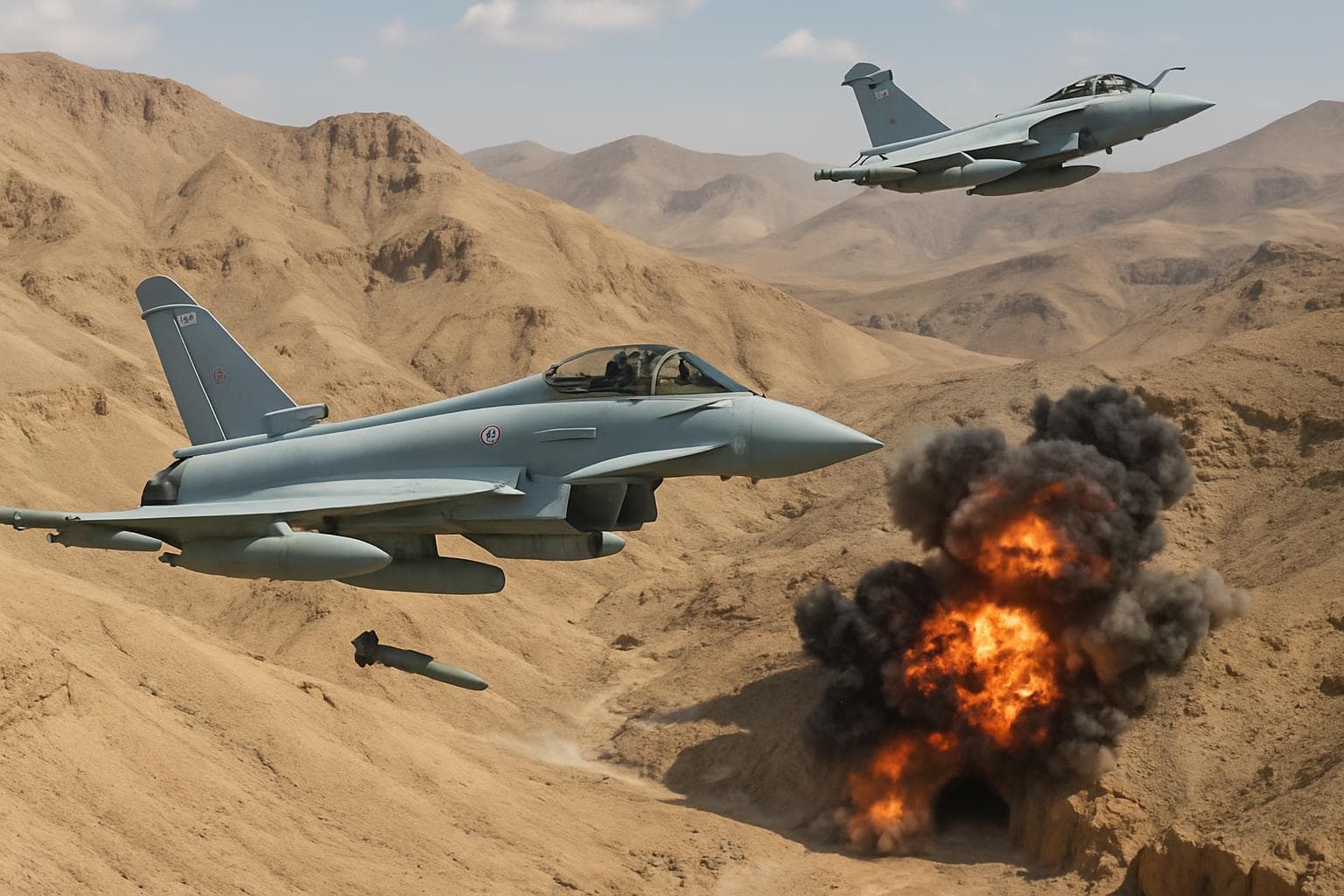
In a coordinated military operation, British and French aircraft launched a successful airstrike on an underground arms facility used by the Islamic State (IS) in Syria. The UK Ministry of Defence confirmed that the strike targeted a site in the mountainous region north of Palmyra, a historic city in central Syria. The operation, which took place on Saturday evening, involved the use of RAF Typhoon FGR4 jets equipped with Paveway IV guided bombs to destroy access tunnels leading to the facility.
According to the Ministry of Defence, the intelligence-led mission aimed to disrupt IS's ability to store weapons and explosives. Initial assessments indicate that the target was successfully engaged, with no civilian casualties reported. The Typhoon jets were supported by a Voyager refuelling tanker, ensuring the operation's success.
UK Defence Secretary John Healey highlighted the importance of this mission, stating, "This action shows our UK leadership and determination to stand shoulder to shoulder with our allies to stamp out any resurgence of Daesh and their dangerous ideologies in the Middle East." He praised the professionalism and courage of the armed forces involved, noting their role in maintaining global security.
The international coalition, which includes the United States and now Syria under President Ahmed al-Sharaa, continues to combat IS remnants. Despite IS's territorial defeat in 2019, the United Nations estimates that the group still has between 5,000 and 7,000 fighters in Syria and Iraq. The coalition's efforts aim to eliminate these remaining elements and prevent the flow of foreign militants to the region.
WHAT THIS MIGHT MEAN
The recent airstrike underscores the ongoing threat posed by IS in the Middle East, despite its territorial losses. As the international coalition intensifies its efforts, the focus will likely remain on intelligence-driven operations to dismantle IS's infrastructure and prevent its resurgence. The involvement of Syria in the coalition marks a significant step in regional cooperation against terrorism.
Looking ahead, the coalition's success will depend on sustained military pressure and effective collaboration among member states. The continued presence of IS fighters in Syria and Iraq poses a challenge, necessitating vigilance and strategic planning to ensure long-term stability in the region.
Related Articles

UK-Iran Tensions: Starmer Defends Cautious Approach Amid Trump Criticism

UK Faces Dilemmas Amid Iran Conflict and China Spying Allegations
UK Reinforces Military Presence in Cyprus Amid Middle East Tensions

Intensified US-Israel Strikes on Iran Spark Global Outcry
Iran Postpones Khamenei Funeral Amid Escalating US-Israeli Strikes
Canada Calls for De-escalation Amid US-Israel Strikes on Iran
UK and France Conduct Joint Airstrike on IS Arms Cache in Syria
In This Article
 Ethan Brooks| Published
 HIGHLIGHTS
- UK and French forces conducted a joint airstrike on an underground IS arms cache in Syria near Palmyra.
- The operation involved RAF Typhoon jets using Paveway IV guided bombs, with no civilian casualties reported.
- UK Defence Secretary John Healey emphasized the UK's commitment to combating IS resurgence alongside allies.
- The United Nations estimates that IS still has between 5,000 and 7,000 fighters in Syria and Iraq.
- Syria recently joined the US-led coalition against IS, becoming the 90th member.
In a coordinated military operation, British and French aircraft launched a successful airstrike on an underground arms facility used by the Islamic State (IS) in Syria. The UK Ministry of Defence confirmed that the strike targeted a site in the mountainous region north of Palmyra, a historic city in central Syria. The operation, which took place on Saturday evening, involved the use of RAF Typhoon FGR4 jets equipped with Paveway IV guided bombs to destroy access tunnels leading to the facility.
According to the Ministry of Defence, the intelligence-led mission aimed to disrupt IS's ability to store weapons and explosives. Initial assessments indicate that the target was successfully engaged, with no civilian casualties reported. The Typhoon jets were supported by a Voyager refuelling tanker, ensuring the operation's success.
UK Defence Secretary John Healey highlighted the importance of this mission, stating, "This action shows our UK leadership and determination to stand shoulder to shoulder with our allies to stamp out any resurgence of Daesh and their dangerous ideologies in the Middle East." He praised the professionalism and courage of the armed forces involved, noting their role in maintaining global security.
The international coalition, which includes the United States and now Syria under President Ahmed al-Sharaa, continues to combat IS remnants. Despite IS's territorial defeat in 2019, the United Nations estimates that the group still has between 5,000 and 7,000 fighters in Syria and Iraq. The coalition's efforts aim to eliminate these remaining elements and prevent the flow of foreign militants to the region.
WHAT THIS MIGHT MEAN
The recent airstrike underscores the ongoing threat posed by IS in the Middle East, despite its territorial losses. As the international coalition intensifies its efforts, the focus will likely remain on intelligence-driven operations to dismantle IS's infrastructure and prevent its resurgence. The involvement of Syria in the coalition marks a significant step in regional cooperation against terrorism.
Looking ahead, the coalition's success will depend on sustained military pressure and effective collaboration among member states. The continued presence of IS fighters in Syria and Iraq poses a challenge, necessitating vigilance and strategic planning to ensure long-term stability in the region.
Related Articles
UK-Iran Tensions: Starmer Defends Cautious Approach Amid Trump Criticism
UK Faces Dilemmas Amid Iran Conflict and China Spying Allegations
UK Reinforces Military Presence in Cyprus Amid Middle East Tensions
Intensified US-Israel Strikes on Iran Spark Global Outcry
Iran Postpones Khamenei Funeral Amid Escalating US-Israeli Strikes
Canada Calls for De-escalation Amid US-Israel Strikes on Iran