
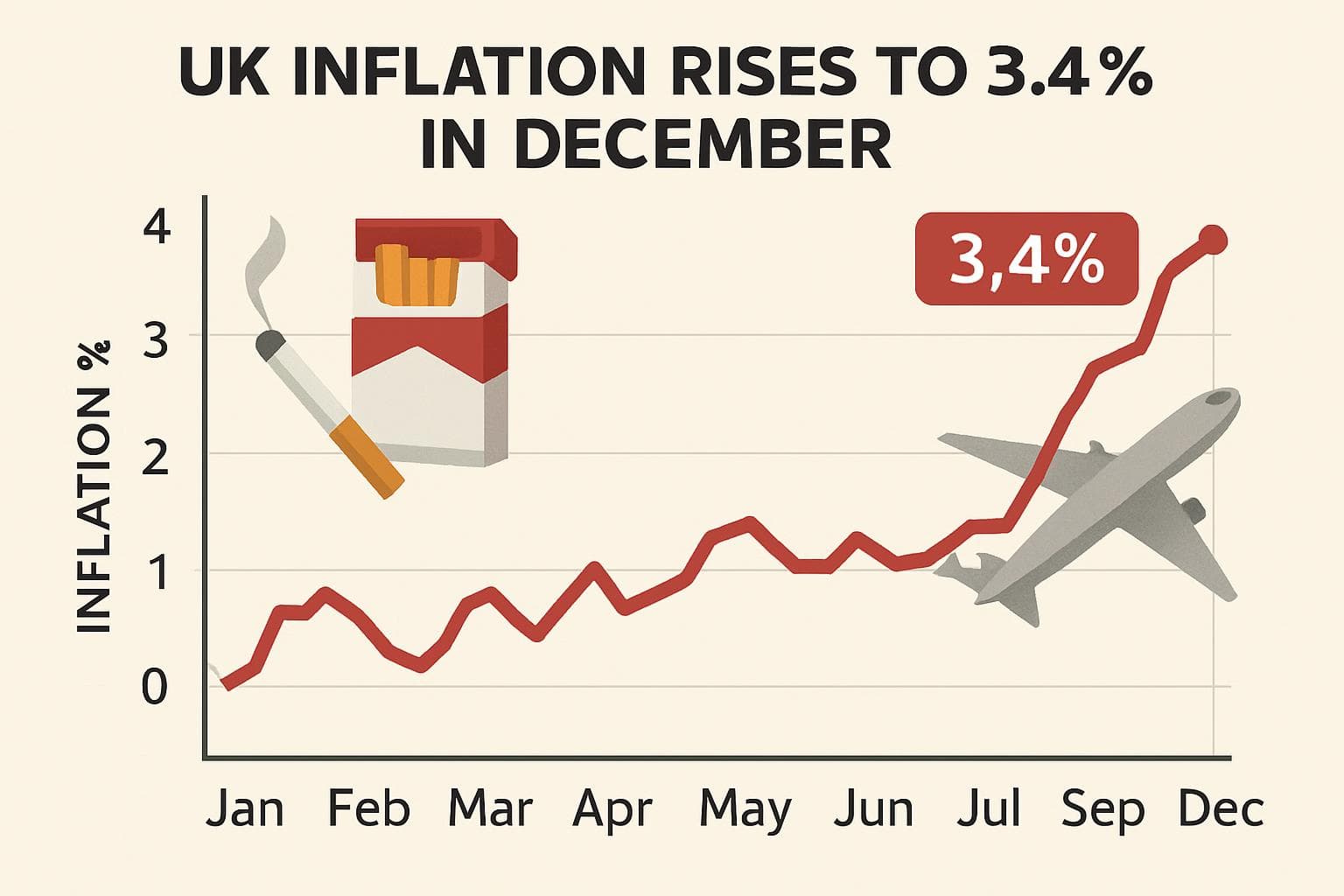
UK Inflation Rises to 3.4% in December Amid Tobacco and Airfare Price Hikes
In This Article
HIGHLIGHTS
- UK inflation rose to 3.4% in December, surpassing forecasts and marking the first increase in five months.
- Tobacco and airfares were significant contributors to the inflation rise, with tobacco duty increases noted in the recent Budget.
- The Bank of England is expected to maintain interest rates at 3.75% in February, with potential cuts anticipated later in the year.
- Chancellor Rachel Reeves emphasized measures to alleviate the cost of living, including energy bill relief and wage increases.
- Shadow Chancellor Mel Stride criticized the government for economic mismanagement, citing a high tax burden and irresponsible borrowing.
The United Kingdom experienced a rise in inflation to 3.4% in December, marking the first increase in five months, according to the Office for National Statistics (ONS). This uptick, driven by higher tobacco prices and seasonal airfare increases, exceeded the expectations of City economists who had predicted a modest rise to 3.3%.
Economic Factors Behind Inflation
The ONS highlighted that the inflation rate, measured by the consumer prices index (CPI), rose from 3.2% in November. Tobacco prices, influenced by duty hikes in the recent Budget, and the traditional surge in airfares during the Christmas period were primary contributors. Grant Fitzner, ONS chief economist, noted, "Inflation ticked up a little in December, driven partly by higher tobacco prices."
Political Reactions and Economic Policies
Chancellor Rachel Reeves reiterated her commitment to reducing the cost of living, emphasizing measures such as a £150 reduction in energy bills and freezes on rail fares and prescription charges. Reeves stated, "My number one focus is to cut the cost of living... This is the year that Britain turns a corner."
Meanwhile, Shadow Chancellor Mel Stride criticized the government's handling of the economy, attributing the inflation rise to "economic mismanagement" and a "record-high tax burden."
Bank of England's Stance on Interest Rates
The inflation increase suggests that the Bank of England will likely maintain interest rates at 3.75% during its February meeting. However, economists, including KPMG UK's chief economist Yael Selfin, anticipate potential rate cuts later in the year if inflationary pressures ease. Selfin remarked, "Despite services inflation increasing in December, this was not reflective of domestically generated price pressures."
WHAT THIS MIGHT MEAN
Looking ahead, the Bank of England's monetary policy committee is expected to closely monitor inflation trends, particularly the impact of volatile categories like airfares and tobacco prices. If inflationary pressures subside, interest rate cuts could be on the horizon by April, providing relief to consumers and businesses.
Politically, the government's handling of inflation and economic policies will remain under scrutiny. Chancellor Reeves' measures to alleviate the cost of living will be pivotal in shaping public perception and economic stability. Meanwhile, opposition voices like Mel Stride will continue to challenge the government's fiscal strategies, potentially influencing future policy adjustments.
Related Articles
UK Inflation Drops to 3% in January, Sparking Interest Rate Cut Speculation
UK Achieves Record Budget Surplus Amid Calls for Fiscal Policy Reform
Trump Raises Import Tariffs to 15% After Supreme Court Setback
UK Faces Rising Youth Unemployment Amid Minimum Wage and Interest Rate Debates

Breakthrough Drug Offers Hope for Children with Severe Epilepsy

Arrest of Andrew Mountbatten-Windsor Captured in Iconic Photograph
UK Inflation Rises to 3.4% in December Amid Tobacco and Airfare Price Hikes
In This Article
 Daniel Rivera| Published
 HIGHLIGHTS
- UK inflation rose to 3.4% in December, surpassing forecasts and marking the first increase in five months.
- Tobacco and airfares were significant contributors to the inflation rise, with tobacco duty increases noted in the recent Budget.
- The Bank of England is expected to maintain interest rates at 3.75% in February, with potential cuts anticipated later in the year.
- Chancellor Rachel Reeves emphasized measures to alleviate the cost of living, including energy bill relief and wage increases.
- Shadow Chancellor Mel Stride criticized the government for economic mismanagement, citing a high tax burden and irresponsible borrowing.
The United Kingdom experienced a rise in inflation to 3.4% in December, marking the first increase in five months, according to the Office for National Statistics (ONS). This uptick, driven by higher tobacco prices and seasonal airfare increases, exceeded the expectations of City economists who had predicted a modest rise to 3.3%.
Economic Factors Behind Inflation
The ONS highlighted that the inflation rate, measured by the consumer prices index (CPI), rose from 3.2% in November. Tobacco prices, influenced by duty hikes in the recent Budget, and the traditional surge in airfares during the Christmas period were primary contributors. Grant Fitzner, ONS chief economist, noted, "Inflation ticked up a little in December, driven partly by higher tobacco prices."
Political Reactions and Economic Policies
Chancellor Rachel Reeves reiterated her commitment to reducing the cost of living, emphasizing measures such as a £150 reduction in energy bills and freezes on rail fares and prescription charges. Reeves stated, "My number one focus is to cut the cost of living... This is the year that Britain turns a corner."
Meanwhile, Shadow Chancellor Mel Stride criticized the government's handling of the economy, attributing the inflation rise to "economic mismanagement" and a "record-high tax burden."
Bank of England's Stance on Interest Rates
The inflation increase suggests that the Bank of England will likely maintain interest rates at 3.75% during its February meeting. However, economists, including KPMG UK's chief economist Yael Selfin, anticipate potential rate cuts later in the year if inflationary pressures ease. Selfin remarked, "Despite services inflation increasing in December, this was not reflective of domestically generated price pressures."
WHAT THIS MIGHT MEAN
Looking ahead, the Bank of England's monetary policy committee is expected to closely monitor inflation trends, particularly the impact of volatile categories like airfares and tobacco prices. If inflationary pressures subside, interest rate cuts could be on the horizon by April, providing relief to consumers and businesses.
Politically, the government's handling of inflation and economic policies will remain under scrutiny. Chancellor Reeves' measures to alleviate the cost of living will be pivotal in shaping public perception and economic stability. Meanwhile, opposition voices like Mel Stride will continue to challenge the government's fiscal strategies, potentially influencing future policy adjustments.
Related Articles
UK Inflation Drops to 3% in January, Sparking Interest Rate Cut Speculation
UK Achieves Record Budget Surplus Amid Calls for Fiscal Policy Reform
Trump Raises Import Tariffs to 15% After Supreme Court Setback
UK Faces Rising Youth Unemployment Amid Minimum Wage and Interest Rate Debates
Breakthrough Drug Offers Hope for Children with Severe Epilepsy
Arrest of Andrew Mountbatten-Windsor Captured in Iconic Photograph