
UK Labour Market Faces Challenges as Wage Growth Slows and Employment Declines
In This Article
HIGHLIGHTS
- UK wage growth slowed to 4.5% between September and November, marking the slowest private sector pay increase in five years.
- The number of employees on UK payrolls fell by 184,000 in December compared to the previous year, with significant declines in retail and hospitality sectors.
- The unemployment rate remained steady at 5.1% in the three months to November, despite a weakening labour market.
- Public sector wages increased, attributed to earlier pay rises compared to the previous year.
- Economists anticipate the Bank of England may cut interest rates twice this year due to the weaker job market and inflation concerns.
The UK labour market is showing signs of strain as wage growth slows and employment figures decline, according to the latest data from the Office for National Statistics (ONS). Between September and November, wage growth eased to 4.5%, the slowest rate in five years for the private sector, while public sector wages saw an increase due to earlier pay rises.
Employment Decline in Key Sectors
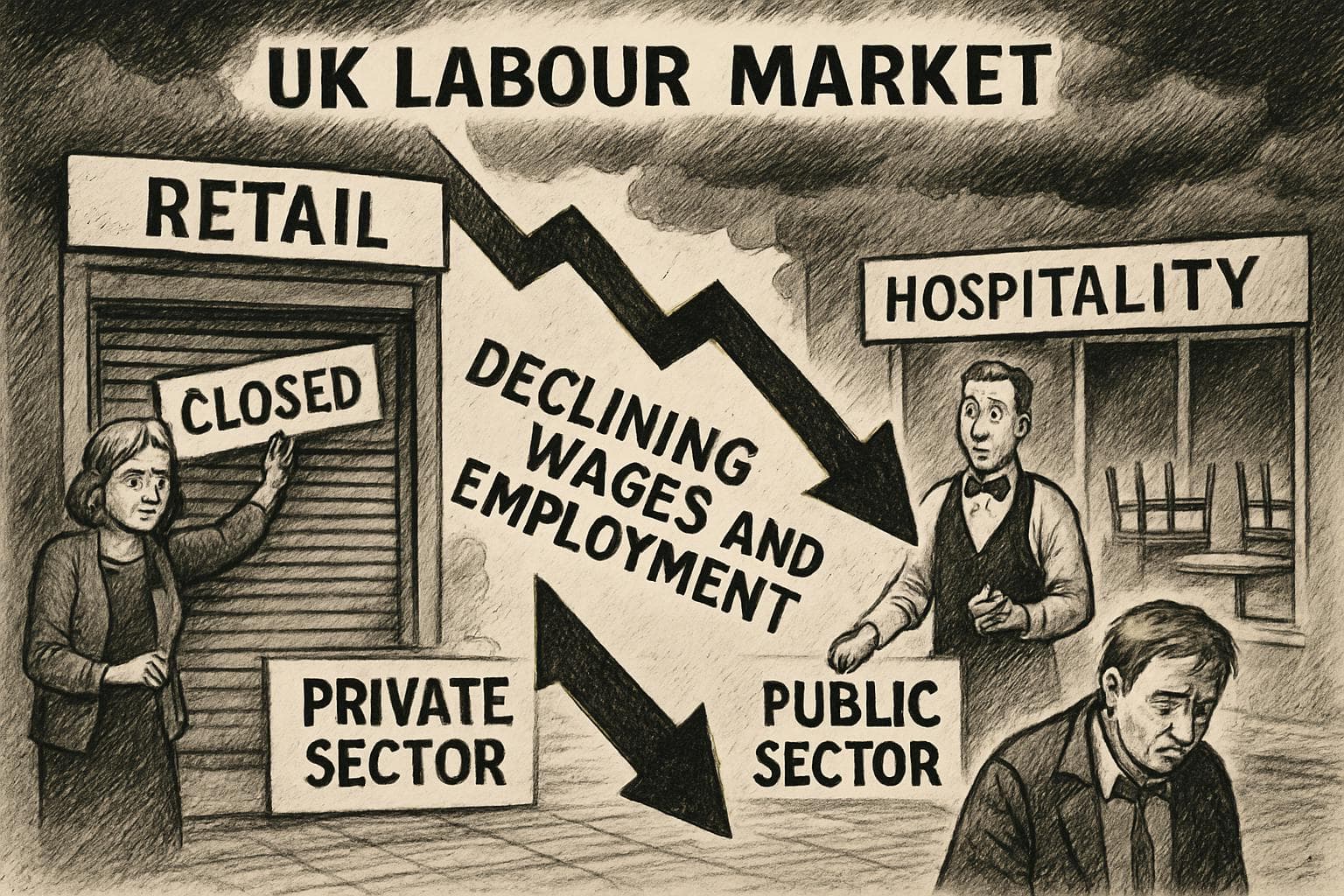
The number of employees on UK payrolls fell by 184,000 in December compared to the previous year, bringing the total to 30.2 million. This decline was most pronounced in the retail and hospitality sectors, where hiring activity remains weak. Despite the approach of the Christmas season, traditionally a time for increased hiring, these sectors have not seen the expected uptick in employment.
Unemployment and Economic Outlook
The unemployment rate held steady at 5.1% in the three months leading to November, with 1.8 million people unemployed. The number of job vacancies has also fallen below pre-pandemic levels, reflecting a cautious approach by employers in the face of economic uncertainty. The Chancellor, Rachel Reeves, has faced criticism for her tax-raising measures, which some argue have contributed to employer hesitancy.
Public Sector Wage Growth
In contrast to the private sector, public sector wages have risen, largely due to pay increases being implemented earlier than in the previous year. Liz McKeown, director of economic statistics at the ONS, highlighted the disparity, noting that while private sector wage growth has slowed, public sector pay remains elevated.
Economic Implications
City economists predict that the Bank of England may respond to the weakening job market and inflation concerns by cutting interest rates twice this year, potentially lowering them from 3.75% to 3.25%. This move aims to stimulate economic activity and address the challenges facing the labour market.
WHAT THIS MIGHT MEAN
Looking ahead, the UK labour market faces several challenges. The combination of slowing wage growth and declining employment in key sectors could lead to increased economic uncertainty. If the Bank of England decides to cut interest rates, it may provide some relief to businesses and consumers, potentially spurring investment and hiring. However, the long-term impact of these measures will depend on broader economic conditions, including global market trends and domestic policy decisions. As the situation evolves, policymakers and economists will need to closely monitor the labour market to ensure a balanced and sustainable recovery.
Related Articles

Trump's New Tariff Strategy Sparks Global Trade Uncertainty

US Supreme Court Ruling on Tariffs Sparks Uncertainty for UK and Global Trade

Middle East Conflict Drives UK Energy Prices to New Highs

Canada and Australia Forge Strategic Partnership Amid Global Uncertainty

UK Government to Reform Asylum Seeker Support and Employment Policies

UK Faces Dilemmas Amid Iran Conflict and China Spying Allegations
UK Labour Market Faces Challenges as Wage Growth Slows and Employment Declines
In This Article
 Daniel Rivera| Published
 HIGHLIGHTS
- UK wage growth slowed to 4.5% between September and November, marking the slowest private sector pay increase in five years.
- The number of employees on UK payrolls fell by 184,000 in December compared to the previous year, with significant declines in retail and hospitality sectors.
- The unemployment rate remained steady at 5.1% in the three months to November, despite a weakening labour market.
- Public sector wages increased, attributed to earlier pay rises compared to the previous year.
- Economists anticipate the Bank of England may cut interest rates twice this year due to the weaker job market and inflation concerns.
The UK labour market is showing signs of strain as wage growth slows and employment figures decline, according to the latest data from the Office for National Statistics (ONS). Between September and November, wage growth eased to 4.5%, the slowest rate in five years for the private sector, while public sector wages saw an increase due to earlier pay rises.
Employment Decline in Key Sectors
The number of employees on UK payrolls fell by 184,000 in December compared to the previous year, bringing the total to 30.2 million. This decline was most pronounced in the retail and hospitality sectors, where hiring activity remains weak. Despite the approach of the Christmas season, traditionally a time for increased hiring, these sectors have not seen the expected uptick in employment.
Unemployment and Economic Outlook
The unemployment rate held steady at 5.1% in the three months leading to November, with 1.8 million people unemployed. The number of job vacancies has also fallen below pre-pandemic levels, reflecting a cautious approach by employers in the face of economic uncertainty. The Chancellor, Rachel Reeves, has faced criticism for her tax-raising measures, which some argue have contributed to employer hesitancy.
Public Sector Wage Growth
In contrast to the private sector, public sector wages have risen, largely due to pay increases being implemented earlier than in the previous year. Liz McKeown, director of economic statistics at the ONS, highlighted the disparity, noting that while private sector wage growth has slowed, public sector pay remains elevated.
Economic Implications
City economists predict that the Bank of England may respond to the weakening job market and inflation concerns by cutting interest rates twice this year, potentially lowering them from 3.75% to 3.25%. This move aims to stimulate economic activity and address the challenges facing the labour market.
WHAT THIS MIGHT MEAN
Looking ahead, the UK labour market faces several challenges. The combination of slowing wage growth and declining employment in key sectors could lead to increased economic uncertainty. If the Bank of England decides to cut interest rates, it may provide some relief to businesses and consumers, potentially spurring investment and hiring. However, the long-term impact of these measures will depend on broader economic conditions, including global market trends and domestic policy decisions. As the situation evolves, policymakers and economists will need to closely monitor the labour market to ensure a balanced and sustainable recovery.
Related Articles
Trump's New Tariff Strategy Sparks Global Trade Uncertainty
US Supreme Court Ruling on Tariffs Sparks Uncertainty for UK and Global Trade
Middle East Conflict Drives UK Energy Prices to New Highs
Canada and Australia Forge Strategic Partnership Amid Global Uncertainty
UK Government to Reform Asylum Seeker Support and Employment Policies
UK Faces Dilemmas Amid Iran Conflict and China Spying Allegations