
UK Online Safety Act Enforces New Age Verification Rules for Adult Content
In This Article
HIGHLIGHTS
- The UK Online Safety Act mandates robust age verification for adult content sites starting Friday, with potential fines of up to £18m for non-compliance.
- Ofcom, the UK communications regulator, estimates 14 million UK adults view online pornography, and 8% of children aged 8-14 have accessed such sites.
- Social media platforms must prevent children from accessing harmful content, including pornography and material promoting self-harm.
- Concerns arise over increased VPN usage to bypass age checks, with experts predicting a rise in such technology use.
- Companies like Meta and X are implementing age estimation and ID checks to comply with the new regulations.
Starting Friday, the UK Online Safety Act will enforce stringent age verification measures on websites hosting adult content, marking a significant shift in online safety regulations. The legislation, aimed at protecting children from harmful material, mandates that platforms implement "robust" age checks or face fines of up to £18 million or 10% of their global revenue.
Regulatory Measures and Compliance
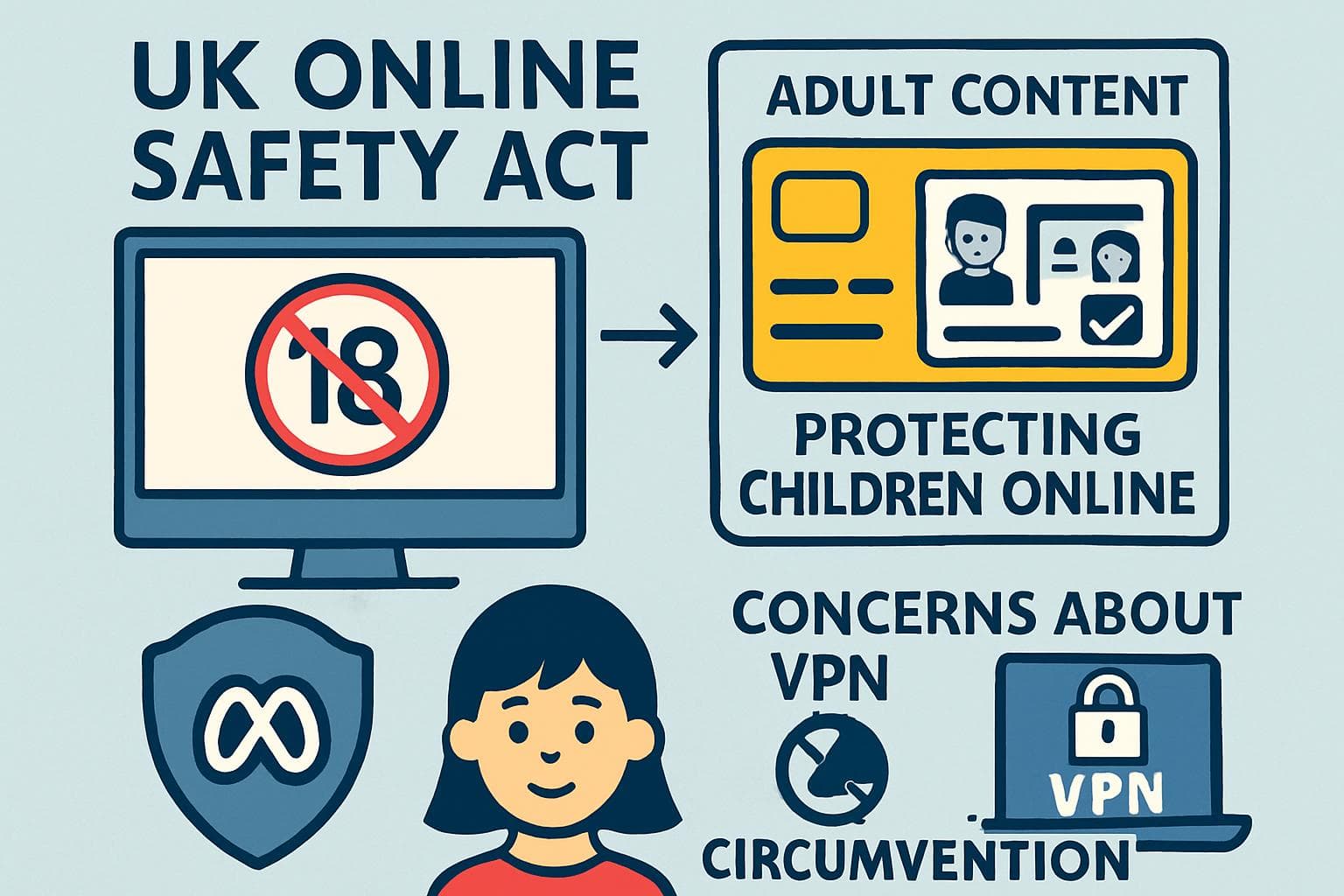
Ofcom, the UK communications regulator, is spearheading the enforcement of these new rules. The regulator has outlined several methods for age verification, including credit card checks, photo ID matching, and age estimation via selfies. These measures are designed to ensure that children, who make up 8% of visitors to adult sites, are shielded from inappropriate content. Social media giants like Facebook, Instagram, and TikTok are also required to prevent minors from accessing harmful material, such as content promoting self-harm or eating disorders.
Challenges and Concerns
Despite these efforts, concerns persist about the potential circumvention of age checks through the use of virtual private networks (VPNs). VPNs, which allow users to bypass geographical restrictions, could undermine the effectiveness of the new regulations. Katie Freeman-Tayler from Internet Matters predicts an increase in VPN usage as the rules take effect. Ofcom has warned that platforms must not promote or facilitate VPN use to bypass age checks.
Industry Response and Implementation
In response to the new regulations, companies like Meta and X are adopting advanced age verification technologies. Meta has introduced a multilayered approach, including default teen account settings, while X plans to use age estimation technology and ID checks. Mark Jones, a partner at Payne Hicks Beach, emphasized that it is Ofcom's responsibility to ensure these measures meet the requirements of the Online Safety Act.
WHAT THIS MIGHT MEAN
As the UK Online Safety Act takes effect, its success will largely depend on the effectiveness of age verification technologies and the ability of regulators to enforce compliance. The potential increase in VPN usage poses a significant challenge, potentially undermining the legislation's intent. Moving forward, Ofcom may need to explore additional measures to address this issue and ensure robust protection for children online. The response from tech companies will be crucial, as their cooperation and innovation in implementing these measures will determine the act's overall impact on online safety.
Related Articles
UK to Enforce Swift Removal of Non-Consensual Intimate Images by Tech Firms

Instagram CEO Defends Platform Amidst Addiction Allegations in Landmark Trial

Zuckerberg Defends Meta in Landmark Social Media Addiction Trial

EU Challenges Meta Over AI Chatbot Restrictions on WhatsApp

French and UK Authorities Intensify Investigations into Elon Musk's X and Grok AI

Tech Giants Pledge to Cover AI Data Center Energy Costs Amid Rising Electricity Concerns
UK Online Safety Act Enforces New Age Verification Rules for Adult Content
In This Article
 Sofia Romano| Published
 HIGHLIGHTS
- The UK Online Safety Act mandates robust age verification for adult content sites starting Friday, with potential fines of up to £18m for non-compliance.
- Ofcom, the UK communications regulator, estimates 14 million UK adults view online pornography, and 8% of children aged 8-14 have accessed such sites.
- Social media platforms must prevent children from accessing harmful content, including pornography and material promoting self-harm.
- Concerns arise over increased VPN usage to bypass age checks, with experts predicting a rise in such technology use.
- Companies like Meta and X are implementing age estimation and ID checks to comply with the new regulations.
Starting Friday, the UK Online Safety Act will enforce stringent age verification measures on websites hosting adult content, marking a significant shift in online safety regulations. The legislation, aimed at protecting children from harmful material, mandates that platforms implement "robust" age checks or face fines of up to £18 million or 10% of their global revenue.
Regulatory Measures and Compliance
Ofcom, the UK communications regulator, is spearheading the enforcement of these new rules. The regulator has outlined several methods for age verification, including credit card checks, photo ID matching, and age estimation via selfies. These measures are designed to ensure that children, who make up 8% of visitors to adult sites, are shielded from inappropriate content. Social media giants like Facebook, Instagram, and TikTok are also required to prevent minors from accessing harmful material, such as content promoting self-harm or eating disorders.
Challenges and Concerns
Despite these efforts, concerns persist about the potential circumvention of age checks through the use of virtual private networks (VPNs). VPNs, which allow users to bypass geographical restrictions, could undermine the effectiveness of the new regulations. Katie Freeman-Tayler from Internet Matters predicts an increase in VPN usage as the rules take effect. Ofcom has warned that platforms must not promote or facilitate VPN use to bypass age checks.
Industry Response and Implementation
In response to the new regulations, companies like Meta and X are adopting advanced age verification technologies. Meta has introduced a multilayered approach, including default teen account settings, while X plans to use age estimation technology and ID checks. Mark Jones, a partner at Payne Hicks Beach, emphasized that it is Ofcom's responsibility to ensure these measures meet the requirements of the Online Safety Act.
WHAT THIS MIGHT MEAN
As the UK Online Safety Act takes effect, its success will largely depend on the effectiveness of age verification technologies and the ability of regulators to enforce compliance. The potential increase in VPN usage poses a significant challenge, potentially undermining the legislation's intent. Moving forward, Ofcom may need to explore additional measures to address this issue and ensure robust protection for children online. The response from tech companies will be crucial, as their cooperation and innovation in implementing these measures will determine the act's overall impact on online safety.
Related Articles
UK to Enforce Swift Removal of Non-Consensual Intimate Images by Tech Firms
Instagram CEO Defends Platform Amidst Addiction Allegations in Landmark Trial
Zuckerberg Defends Meta in Landmark Social Media Addiction Trial
EU Challenges Meta Over AI Chatbot Restrictions on WhatsApp
French and UK Authorities Intensify Investigations into Elon Musk's X and Grok AI
Tech Giants Pledge to Cover AI Data Center Energy Costs Amid Rising Electricity Concerns