
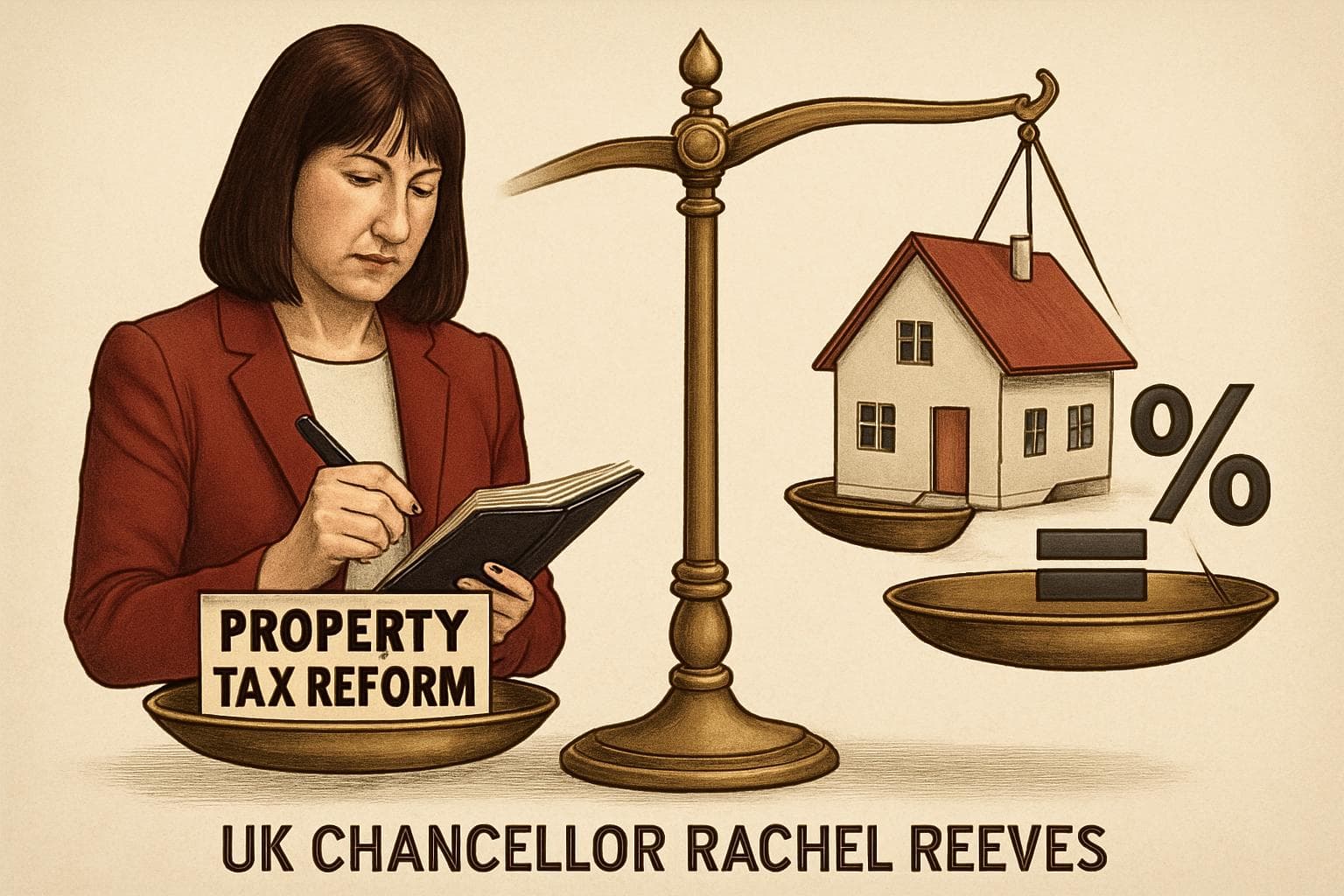
UK Chancellor Rachel Reeves Weighs Property Tax Reforms to Address Fiscal Deficit
In This Article
HIGHLIGHTS
- Chancellor Rachel Reeves is considering reforms to property taxes to address a £20bn fiscal shortfall.
- Proposed changes include removing capital gains tax exemptions on primary residences over £1.5m.
- The government is also exploring replacing stamp duty with a new national property tax.
- Critics warn that these changes could slow the housing market and discourage downsizing.
- The reforms aim to raise between £30bn and £40bn while avoiding increases in income tax, VAT, or national insurance.
As the UK government grapples with a significant fiscal shortfall, Chancellor Rachel Reeves is exploring a series of property tax reforms aimed at raising billions without increasing the three largest taxes on income and consumption. With a £20bn gap in public finances, these potential changes are seen as crucial to stabilizing the economy.
Capital Gains Tax on High-Value Homes
One of the key proposals under consideration is the removal of the capital gains tax (CGT) exemption on primary residences valued over £1.5 million. Currently, CGT is charged at 18% for basic-rate taxpayers and 24% for higher-rate taxpayers on the sale of assets like second homes and stocks. By extending this tax to high-value primary residences, the government hopes to generate substantial revenue. However, critics argue that this could deter property transactions, potentially reducing the anticipated financial gains.
Replacing Stamp Duty
Another significant reform involves the potential abolition of stamp duty, a tax levied on property purchases. Instead, a new national property tax could be introduced, payable by owner-occupiers when selling homes valued over £500,000. This shift aims to simplify the tax system and encourage property market fluidity. However, the loss of stamp duty, which raised £11.6bn last year, poses a challenge in terms of revenue replacement.
Council Tax and Wealth Taxation
The government is also examining broader changes to property wealth taxation, including the possibility of an annual levy on higher-value properties. This could involve a charge of 0.54% on homes valued over £500,000, increasing to 0.81% for those over £1 million. Such measures are part of a wider effort to reform the UK's complex and often criticized property tax system.
Balancing the Books
These proposed reforms are part of a broader strategy to raise between £30bn and £40bn, allowing Reeves to adhere to her election pledge of not raising income tax, VAT, or national insurance. Despite the potential benefits, the proposals have sparked debate over their impact on the housing market and the fairness of targeting property wealth.
WHAT THIS MIGHT MEAN
As the UK government considers these property tax reforms, several outcomes are possible. If implemented, the changes could generate significant revenue, helping to close the fiscal gap without increasing major taxes. However, the impact on the housing market remains uncertain. Critics warn that higher taxes on property could discourage transactions, particularly among older homeowners looking to downsize, potentially leading to a slowdown in the market.
Politically, these reforms could prove contentious, with opposition likely from those affected by increased taxes on high-value homes. The government will need to carefully balance the need for revenue with the potential economic and social implications of these changes. As discussions continue, the outcome will depend on the government's ability to navigate these complex issues while maintaining public support.
Related Articles

Trump's New Tariff Strategy Sparks Global Trade Uncertainty

US Supreme Court Ruling on Tariffs Sparks Uncertainty for UK and Global Trade

Middle East Conflict Drives UK Energy Prices to New Highs

Canada and Australia Forge Strategic Partnership Amid Global Uncertainty

UK Government to Reform Asylum Seeker Support and Employment Policies

UK Faces Dilemmas Amid Iran Conflict and China Spying Allegations
UK Chancellor Rachel Reeves Weighs Property Tax Reforms to Address Fiscal Deficit
In This Article
 Daniel Rivera| Published
 HIGHLIGHTS
- Chancellor Rachel Reeves is considering reforms to property taxes to address a £20bn fiscal shortfall.
- Proposed changes include removing capital gains tax exemptions on primary residences over £1.5m.
- The government is also exploring replacing stamp duty with a new national property tax.
- Critics warn that these changes could slow the housing market and discourage downsizing.
- The reforms aim to raise between £30bn and £40bn while avoiding increases in income tax, VAT, or national insurance.
As the UK government grapples with a significant fiscal shortfall, Chancellor Rachel Reeves is exploring a series of property tax reforms aimed at raising billions without increasing the three largest taxes on income and consumption. With a £20bn gap in public finances, these potential changes are seen as crucial to stabilizing the economy.
Capital Gains Tax on High-Value Homes
One of the key proposals under consideration is the removal of the capital gains tax (CGT) exemption on primary residences valued over £1.5 million. Currently, CGT is charged at 18% for basic-rate taxpayers and 24% for higher-rate taxpayers on the sale of assets like second homes and stocks. By extending this tax to high-value primary residences, the government hopes to generate substantial revenue. However, critics argue that this could deter property transactions, potentially reducing the anticipated financial gains.
Replacing Stamp Duty
Another significant reform involves the potential abolition of stamp duty, a tax levied on property purchases. Instead, a new national property tax could be introduced, payable by owner-occupiers when selling homes valued over £500,000. This shift aims to simplify the tax system and encourage property market fluidity. However, the loss of stamp duty, which raised £11.6bn last year, poses a challenge in terms of revenue replacement.
Council Tax and Wealth Taxation
The government is also examining broader changes to property wealth taxation, including the possibility of an annual levy on higher-value properties. This could involve a charge of 0.54% on homes valued over £500,000, increasing to 0.81% for those over £1 million. Such measures are part of a wider effort to reform the UK's complex and often criticized property tax system.
Balancing the Books
These proposed reforms are part of a broader strategy to raise between £30bn and £40bn, allowing Reeves to adhere to her election pledge of not raising income tax, VAT, or national insurance. Despite the potential benefits, the proposals have sparked debate over their impact on the housing market and the fairness of targeting property wealth.
WHAT THIS MIGHT MEAN
As the UK government considers these property tax reforms, several outcomes are possible. If implemented, the changes could generate significant revenue, helping to close the fiscal gap without increasing major taxes. However, the impact on the housing market remains uncertain. Critics warn that higher taxes on property could discourage transactions, particularly among older homeowners looking to downsize, potentially leading to a slowdown in the market.
Politically, these reforms could prove contentious, with opposition likely from those affected by increased taxes on high-value homes. The government will need to carefully balance the need for revenue with the potential economic and social implications of these changes. As discussions continue, the outcome will depend on the government's ability to navigate these complex issues while maintaining public support.
Related Articles
Trump's New Tariff Strategy Sparks Global Trade Uncertainty
US Supreme Court Ruling on Tariffs Sparks Uncertainty for UK and Global Trade
Middle East Conflict Drives UK Energy Prices to New Highs
Canada and Australia Forge Strategic Partnership Amid Global Uncertainty
UK Government to Reform Asylum Seeker Support and Employment Policies
UK Faces Dilemmas Amid Iran Conflict and China Spying Allegations