
UK's Recognition of Palestinian State: A Diplomatic Turning Point
In This Article
HIGHLIGHTS
- UK Prime Minister Keir Starmer announced plans to recognize a Palestinian state by September if Israel does not meet specific conditions, including a Gaza ceasefire.
- Israeli Prime Minister Benjamin Netanyahu criticized the UK's decision, viewing it as a reward for "Hamas's monstrous terrorism."
- The Palestinian state is recognized by 147 UN member states but lacks defined borders, a capital, and full sovereignty due to Israeli occupation.
- Advocates for a two-state solution urge immediate action to prevent the concept from being undermined by Israeli policies in Gaza and the West Bank.
- France and the UK are leading efforts to revive the two-state solution, emphasizing the urgency of diplomatic intervention in the Israeli-Palestinian conflict.
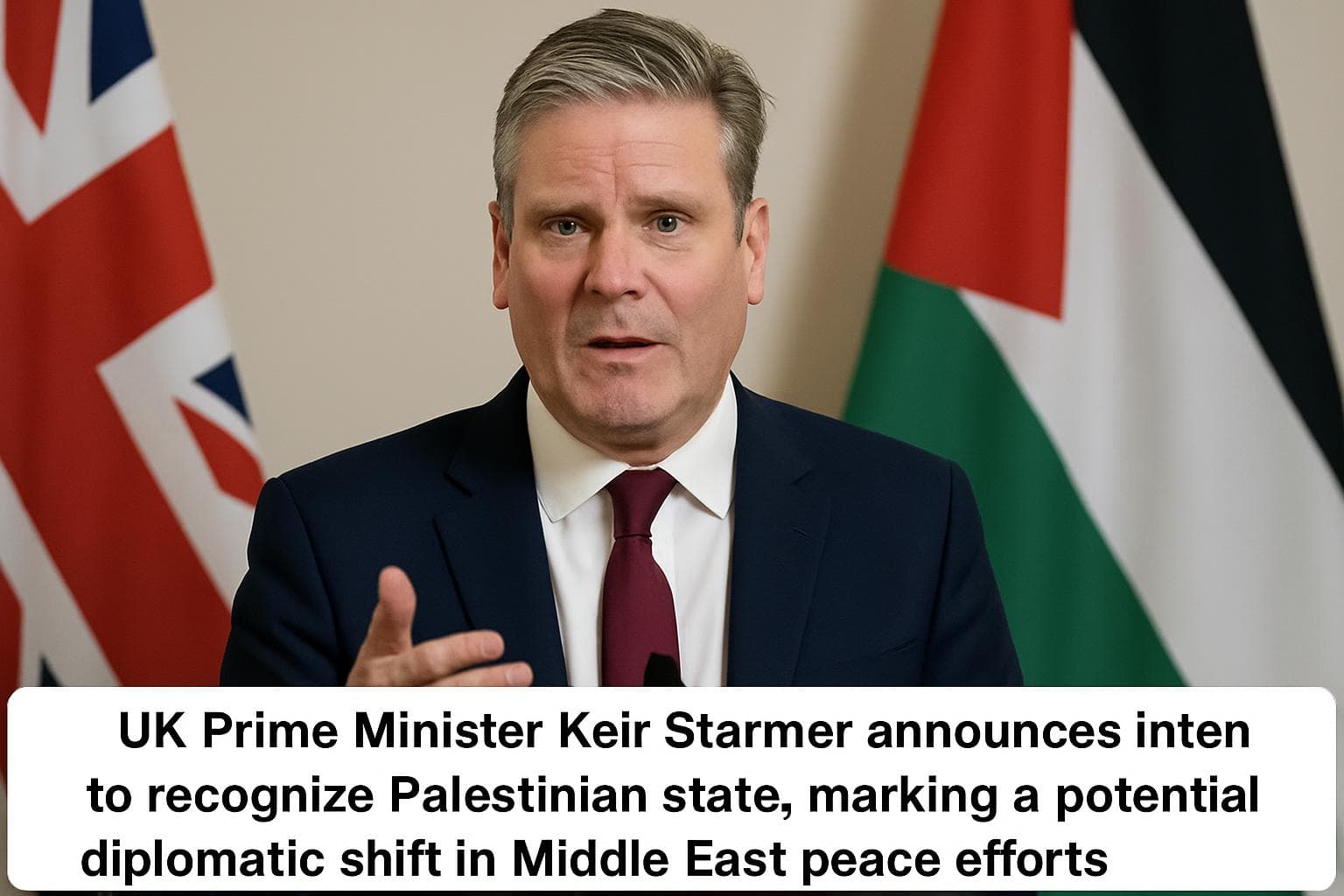
In a significant diplomatic move, UK Prime Minister Keir Starmer has announced that the United Kingdom will recognize a Palestinian state by September unless Israel agrees to a ceasefire in Gaza and revives the prospect of a two-state solution. This announcement has sparked a heated response from Israeli Prime Minister Benjamin Netanyahu, who condemned the decision as a reward for "Hamas's monstrous terrorism."
The Symbolic Weight of Recognition
The recognition of a Palestinian state carries substantial symbolic weight, despite its limited immediate impact on the ground. Palestine is acknowledged by 147 of the United Nations' 193 member states and holds the status of a "permanent observer state" at the UN. However, it lacks internationally agreed borders, a capital, and full sovereignty due to ongoing Israeli occupation in the West Bank and Gaza. The UK's move, echoed by France's similar intentions, underscores a renewed push for a two-state solution, a concept that has long been a cornerstone of Middle East diplomacy.
A Critical Juncture for the Two-State Solution
The announcement comes at a critical time as international advocates for a two-state solution, including a reformed Palestinian Authority, emphasize the urgency of action. The geopolitical landscape has shifted significantly, with Israel's policies under Netanyahu and Finance Minister Bezalel Smotrich moving further away from the two-state vision. Smotrich's recent statements about re-establishing Israeli settlements in Gaza and asserting sovereignty over the West Bank highlight the growing challenges to achieving a peaceful resolution.
International Efforts to Revive Diplomacy
In response to these developments, international leaders, including French Foreign Minister Jean-Noël Barrot, have called for a renewed diplomatic effort. Barrot warned that the two-state solution is "in mortal danger" and stressed the need for a shared vision for Gaza's postwar period. The postponed conference in New York provided a platform for these discussions, with French President Emmanuel Macron presenting a letter from Palestinian Authority President Mahmoud Abbas, outlining commitments to hold presidential elections within a year.
WHAT THIS MIGHT MEAN
The UK's decision to recognize a Palestinian state could significantly alter the diplomatic landscape in the Middle East. If Israel fails to meet the UK's conditions, the recognition may prompt other nations to follow suit, potentially increasing international pressure on Israel to reconsider its policies. However, the move also risks escalating tensions, particularly if perceived as undermining Israel's security concerns.
Experts suggest that the success of this diplomatic initiative hinges on the ability of international actors to unite in support of a viable two-state solution. The coming months will be crucial in determining whether this renewed push can overcome the entrenched obstacles that have long hindered peace efforts in the region.
Related Articles
US Ambassador's Biblical Land Remarks Spark Outcry from Arab Nations
Israeli Airstrikes in Lebanon's Bekaa Valley Leave 10 Dead Amid Rising Tensions

Middle East Conflict Drives UK Energy Prices to New Highs

UK Faces Dilemmas Amid Iran Conflict and China Spying Allegations

US and Israel Intensify Military Campaign as Iran's Capabilities Dwindle

Intensified US-Israel Strikes on Iran Spark Global Outcry
UK's Recognition of Palestinian State: A Diplomatic Turning Point
In This Article
 James Okoro| Published
 HIGHLIGHTS
- UK Prime Minister Keir Starmer announced plans to recognize a Palestinian state by September if Israel does not meet specific conditions, including a Gaza ceasefire.
- Israeli Prime Minister Benjamin Netanyahu criticized the UK's decision, viewing it as a reward for "Hamas's monstrous terrorism."
- The Palestinian state is recognized by 147 UN member states but lacks defined borders, a capital, and full sovereignty due to Israeli occupation.
- Advocates for a two-state solution urge immediate action to prevent the concept from being undermined by Israeli policies in Gaza and the West Bank.
- France and the UK are leading efforts to revive the two-state solution, emphasizing the urgency of diplomatic intervention in the Israeli-Palestinian conflict.
In a significant diplomatic move, UK Prime Minister Keir Starmer has announced that the United Kingdom will recognize a Palestinian state by September unless Israel agrees to a ceasefire in Gaza and revives the prospect of a two-state solution. This announcement has sparked a heated response from Israeli Prime Minister Benjamin Netanyahu, who condemned the decision as a reward for "Hamas's monstrous terrorism."
The Symbolic Weight of Recognition
The recognition of a Palestinian state carries substantial symbolic weight, despite its limited immediate impact on the ground. Palestine is acknowledged by 147 of the United Nations' 193 member states and holds the status of a "permanent observer state" at the UN. However, it lacks internationally agreed borders, a capital, and full sovereignty due to ongoing Israeli occupation in the West Bank and Gaza. The UK's move, echoed by France's similar intentions, underscores a renewed push for a two-state solution, a concept that has long been a cornerstone of Middle East diplomacy.
A Critical Juncture for the Two-State Solution
The announcement comes at a critical time as international advocates for a two-state solution, including a reformed Palestinian Authority, emphasize the urgency of action. The geopolitical landscape has shifted significantly, with Israel's policies under Netanyahu and Finance Minister Bezalel Smotrich moving further away from the two-state vision. Smotrich's recent statements about re-establishing Israeli settlements in Gaza and asserting sovereignty over the West Bank highlight the growing challenges to achieving a peaceful resolution.
International Efforts to Revive Diplomacy
In response to these developments, international leaders, including French Foreign Minister Jean-Noël Barrot, have called for a renewed diplomatic effort. Barrot warned that the two-state solution is "in mortal danger" and stressed the need for a shared vision for Gaza's postwar period. The postponed conference in New York provided a platform for these discussions, with French President Emmanuel Macron presenting a letter from Palestinian Authority President Mahmoud Abbas, outlining commitments to hold presidential elections within a year.
WHAT THIS MIGHT MEAN
The UK's decision to recognize a Palestinian state could significantly alter the diplomatic landscape in the Middle East. If Israel fails to meet the UK's conditions, the recognition may prompt other nations to follow suit, potentially increasing international pressure on Israel to reconsider its policies. However, the move also risks escalating tensions, particularly if perceived as undermining Israel's security concerns.
Experts suggest that the success of this diplomatic initiative hinges on the ability of international actors to unite in support of a viable two-state solution. The coming months will be crucial in determining whether this renewed push can overcome the entrenched obstacles that have long hindered peace efforts in the region.
Related Articles
US Ambassador's Biblical Land Remarks Spark Outcry from Arab Nations
Israeli Airstrikes in Lebanon's Bekaa Valley Leave 10 Dead Amid Rising Tensions
Middle East Conflict Drives UK Energy Prices to New Highs
UK Faces Dilemmas Amid Iran Conflict and China Spying Allegations
US and Israel Intensify Military Campaign as Iran's Capabilities Dwindle
Intensified US-Israel Strikes on Iran Spark Global Outcry