
UK Government Reverses Course on Disability Benefit Reforms Amid Political Pressure
In This Article
HIGHLIGHTS
- The UK government has reversed its decision to tighten eligibility for disability benefits, affecting only new claimants from November 2026.
- Labour's welfare reform U-turn aims to save £2bn annually, down from the initially projected £5bn.
- Scotland's devolved social security system limits the direct impact of UK-wide welfare reforms on Scottish claimants.
- A £1bn employment support package will be fast-tracked to aid those on health benefits in returning to work.
- The reforms have sparked significant political debate, with Labour MPs and disability charities voicing concerns over the changes.
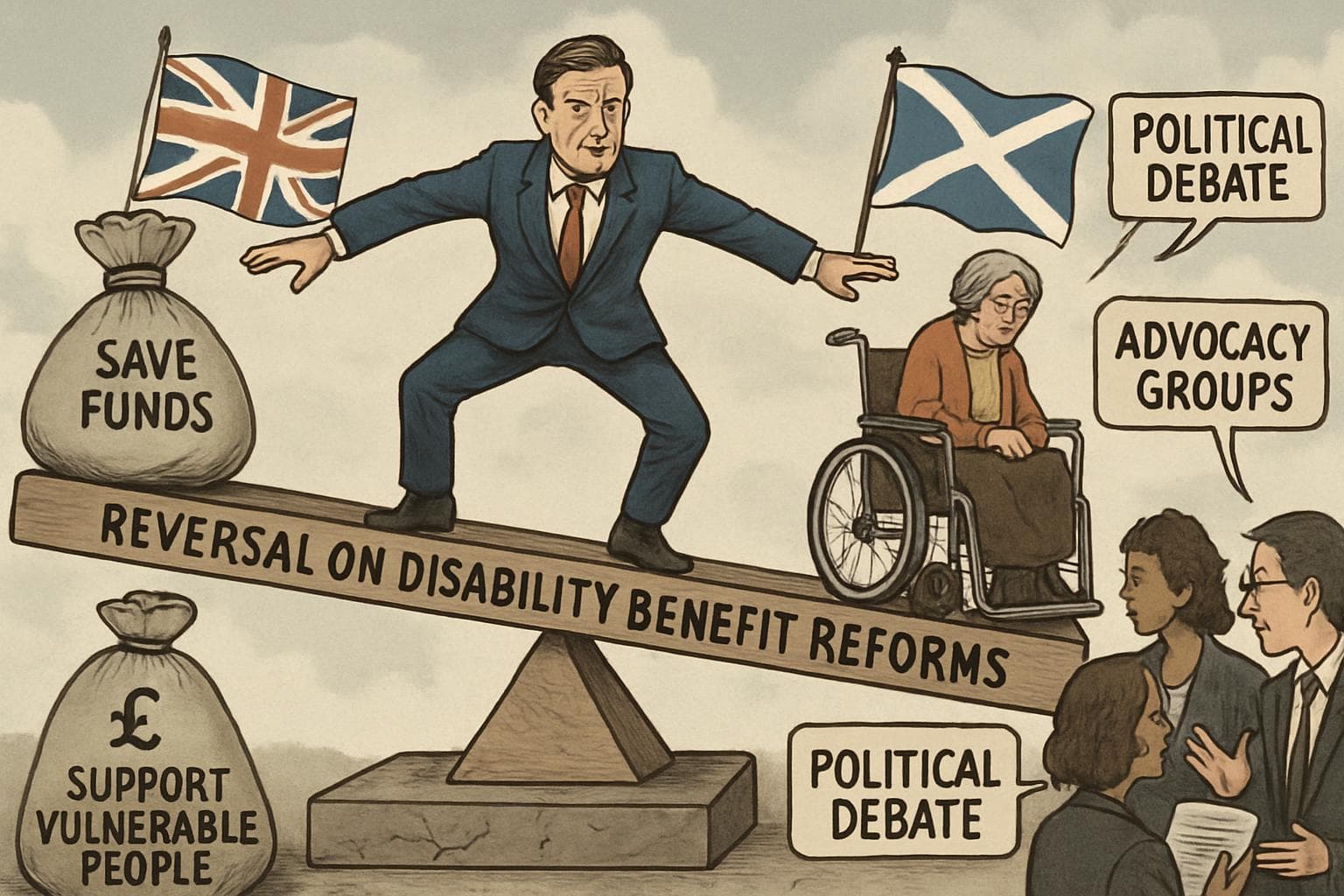
In a significant policy reversal, the UK government has announced changes to its planned welfare reforms, specifically concerning disability benefits, following pressure from Labour backbenchers and disability advocacy groups. The initial proposal aimed to tighten eligibility criteria for Personal Independence Payment (PIP) and Universal Credit, with the goal of saving £5 billion annually by 2030. However, the revised plan now projects savings of £2 billion per year, with changes affecting only new claimants from November 2026.
Impact on Disability Benefits
The government's original plan sought to impose stricter eligibility criteria for PIP, a benefit designed to assist individuals with long-term physical or mental health conditions. Under the proposed changes, claimants would need to score at least four points in one category, such as mobility or self-care, to qualify. This move faced backlash from Labour MPs and disability charities, who argued that it would unfairly penalize vulnerable individuals. In response, the government has agreed to apply these criteria only to new claimants and to review the assessment process in collaboration with disability organizations.
Implications for Scotland
While the UK-wide reforms will affect future claimants of Universal Credit, Scotland's devolved social security system offers some protection for current recipients. The Scottish government, which administers its own version of PIP known as the Adult Disability Payment, has stated it will not follow the UK's lead on these changes. This divergence highlights the differing approaches to social security between the UK and Scottish governments, with the latter emphasizing a more generous welfare policy.
Fast-Tracking Employment Support
As part of the revised welfare package, the government will expedite a £1 billion employment support scheme initially scheduled for 2029. This initiative aims to provide health and skills support to help individuals on health-related benefits re-enter the workforce. The move is seen as an effort to balance cost-cutting measures with support for those affected by the reforms.
Political Reactions and Future Outlook
The welfare reform U-turn has sparked a political debate, with Labour MPs expressing mixed reactions. While some have welcomed the concessions, others remain concerned about the impact on new claimants. Disability charities have also criticized the changes, calling for a more inclusive decision-making process involving disabled individuals.
WHAT THIS MIGHT MEAN
The government's decision to amend its welfare reform plans reflects the complex balancing act between fiscal responsibility and social welfare. Moving forward, the collaboration with disability organizations in reviewing PIP criteria could lead to more equitable outcomes for claimants. However, the political landscape remains volatile, with potential for further dissent within the Labour Party. As the reforms progress, the government's ability to address concerns from both MPs and advocacy groups will be crucial in shaping the future of the UK's welfare system.
Related Articles

Reform UK to Reinstate Two-Child Benefit Cap Amidst Political Controversy

Reform UK Pledges to Retain and Reform Budget Watchdog Amid Leadership Changes

Peter Murrell Faces Embezzlement Charges Amid SNP Financial Probe

Hopeful Signs for Scotland's Endangered Capercaillie as Conservation Efforts Show Promise

Saharan Dust to Illuminate UK Skies with Vivid Sunrises and Sunsets

Avalanche Risks Surge Amidst Extreme Weather Conditions in California and Europe
UK Government Reverses Course on Disability Benefit Reforms Amid Political Pressure
In This Article
 Daniel Rivera| Published
 HIGHLIGHTS
- The UK government has reversed its decision to tighten eligibility for disability benefits, affecting only new claimants from November 2026.
- Labour's welfare reform U-turn aims to save £2bn annually, down from the initially projected £5bn.
- Scotland's devolved social security system limits the direct impact of UK-wide welfare reforms on Scottish claimants.
- A £1bn employment support package will be fast-tracked to aid those on health benefits in returning to work.
- The reforms have sparked significant political debate, with Labour MPs and disability charities voicing concerns over the changes.
In a significant policy reversal, the UK government has announced changes to its planned welfare reforms, specifically concerning disability benefits, following pressure from Labour backbenchers and disability advocacy groups. The initial proposal aimed to tighten eligibility criteria for Personal Independence Payment (PIP) and Universal Credit, with the goal of saving £5 billion annually by 2030. However, the revised plan now projects savings of £2 billion per year, with changes affecting only new claimants from November 2026.
Impact on Disability Benefits
The government's original plan sought to impose stricter eligibility criteria for PIP, a benefit designed to assist individuals with long-term physical or mental health conditions. Under the proposed changes, claimants would need to score at least four points in one category, such as mobility or self-care, to qualify. This move faced backlash from Labour MPs and disability charities, who argued that it would unfairly penalize vulnerable individuals. In response, the government has agreed to apply these criteria only to new claimants and to review the assessment process in collaboration with disability organizations.
Implications for Scotland
While the UK-wide reforms will affect future claimants of Universal Credit, Scotland's devolved social security system offers some protection for current recipients. The Scottish government, which administers its own version of PIP known as the Adult Disability Payment, has stated it will not follow the UK's lead on these changes. This divergence highlights the differing approaches to social security between the UK and Scottish governments, with the latter emphasizing a more generous welfare policy.
Fast-Tracking Employment Support
As part of the revised welfare package, the government will expedite a £1 billion employment support scheme initially scheduled for 2029. This initiative aims to provide health and skills support to help individuals on health-related benefits re-enter the workforce. The move is seen as an effort to balance cost-cutting measures with support for those affected by the reforms.
Political Reactions and Future Outlook
The welfare reform U-turn has sparked a political debate, with Labour MPs expressing mixed reactions. While some have welcomed the concessions, others remain concerned about the impact on new claimants. Disability charities have also criticized the changes, calling for a more inclusive decision-making process involving disabled individuals.
WHAT THIS MIGHT MEAN
The government's decision to amend its welfare reform plans reflects the complex balancing act between fiscal responsibility and social welfare. Moving forward, the collaboration with disability organizations in reviewing PIP criteria could lead to more equitable outcomes for claimants. However, the political landscape remains volatile, with potential for further dissent within the Labour Party. As the reforms progress, the government's ability to address concerns from both MPs and advocacy groups will be crucial in shaping the future of the UK's welfare system.
Related Articles
Reform UK to Reinstate Two-Child Benefit Cap Amidst Political Controversy
Reform UK Pledges to Retain and Reform Budget Watchdog Amid Leadership Changes
Peter Murrell Faces Embezzlement Charges Amid SNP Financial Probe
Hopeful Signs for Scotland's Endangered Capercaillie as Conservation Efforts Show Promise
Saharan Dust to Illuminate UK Skies with Vivid Sunrises and Sunsets
Avalanche Risks Surge Amidst Extreme Weather Conditions in California and Europe