
Schools and Students Tackle Smartphone Use to Boost Mental Health
In This Article
HIGHLIGHTS
- Schools in Monmouthshire, UK, advise parents against giving smartphones to children under 14 to combat cyberbullying and improve schoolwork.
- A Kent school experiment found students felt "freedom" without smartphones, improving mental health and sleep.
- A survey shows 40% of 12-15-year-olds are taking breaks from smartphones to manage mental health, up 18% since 2022.
- Experts note children are independently managing screen time, reflecting a shift towards self-regulation and digital detox.
- Parents and schools are increasingly collaborating to address smartphone addiction and its impact on youth wellbeing.
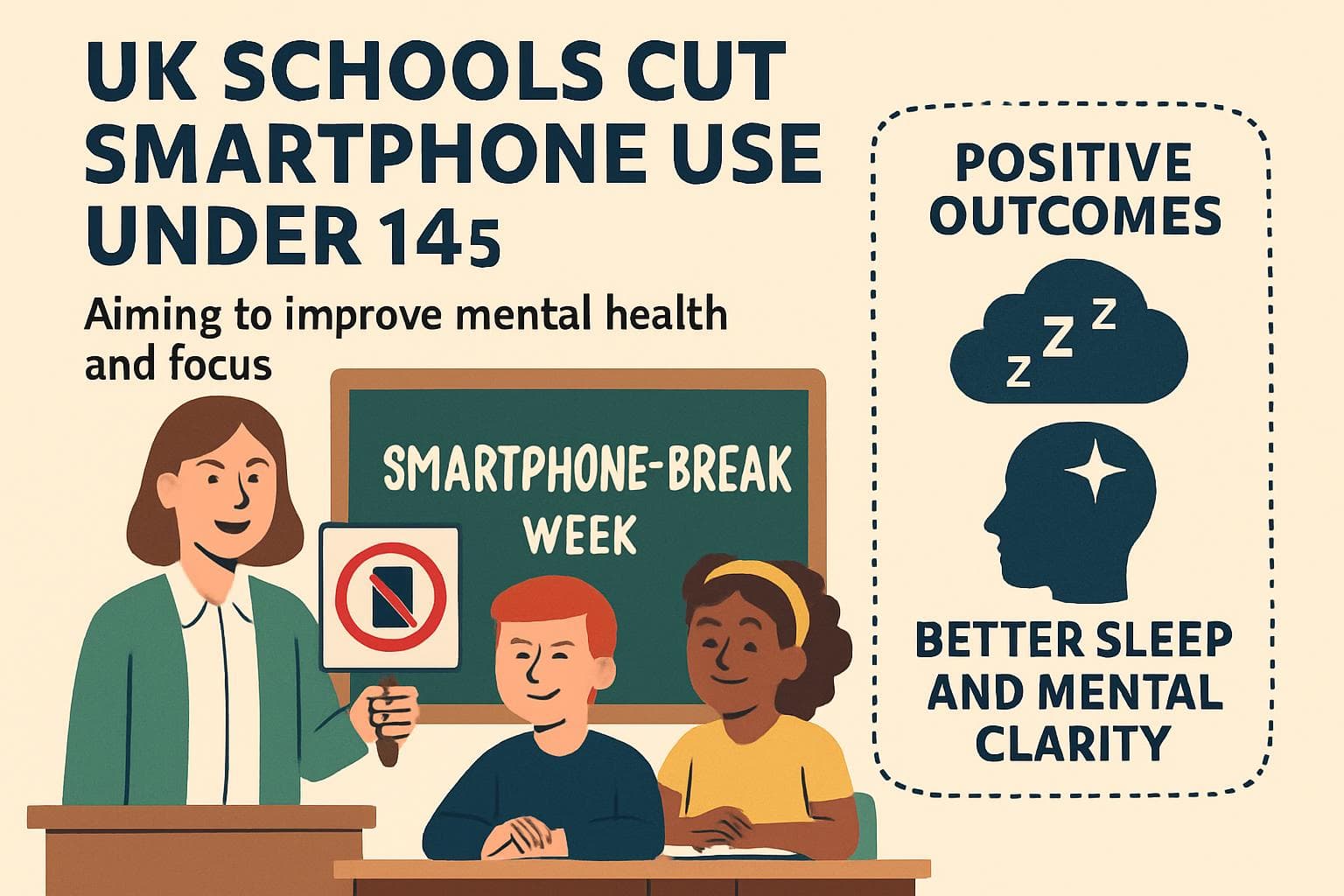
In a growing movement across the UK, schools and students are taking significant steps to address the impact of smartphone use on mental health and academic performance. In Monmouthshire, South Wales, schools have initiated a countywide policy advising parents against giving smartphones to children under 14. This initiative aims to curb cyberbullying and improve students' focus on schoolwork. "We've got reports of students online at two, three, four in the morning," said Hugo Hutchinson, headteacher at Monmouth Comprehensive, highlighting the adverse effects of late-night smartphone use.
While schools cannot enforce this policy at home, they hope to empower parents like Emma, who feels pressured to give her 12-year-old son a smartphone. "He was feeling left out," she said, noting the social challenges her son faced without a device. However, she remains concerned about the addictive nature of smartphones and their potential exposure to harmful content.
Meanwhile, The Canterbury Academy in Kent conducted an experiment where Year 10 students gave up their smartphones for a week, using basic mobile phones instead. The results were enlightening, with students reporting improved mental health and sleep. "I just feel free and happy with myself when I'm not constantly staring down at a screen," said pupil Molly. Parents also noticed positive changes, with one mother, Claire, expressing hope that her son would continue to limit his smartphone use.
A broader survey by GWI found that 40% of 12-15-year-olds are taking breaks from their devices to manage their mental health, a significant increase from previous years. Professor Sonia Livingstone from LSE's Digital Futures for Children centre noted that children are experimenting with ways to protect their wellbeing, such as taking breaks from social media and using features like "do not disturb" mode.
Experts like Daisy Greenwell, co-founder of Smartphone Free Childhood, observe that young people are increasingly questioning the necessity of constant connectivity. "Taking a break has become an act of rebellion," she said, highlighting a growing awareness among teenagers of the manipulative nature of social media platforms.
WHAT THIS MIGHT MEAN
The initiatives in Monmouthshire and Kent could set a precedent for other regions, encouraging more schools to adopt similar policies and experiments. As awareness grows, we may see a cultural shift towards more mindful smartphone use among youth. Experts suggest that this trend could lead to improved mental health outcomes and academic performance, as children learn to balance their digital and offline lives. However, the challenge remains in ensuring that these efforts are inclusive and consider the diverse needs of all students. As more data emerges, policymakers and educators will need to adapt strategies to effectively support young people's digital wellbeing.
Related Articles

Canada and Australia Forge Strategic Partnership Amid Global Uncertainty

UK Government to Reform Asylum Seeker Support and Employment Policies

Middle East Conflict Drives UK Energy Prices to New Highs

UK Faces Dilemmas Amid Iran Conflict and China Spying Allegations

UK Reinforces Military Presence in Cyprus Amid Middle East Tensions

Police Federation Chief Arrested Amid Fraud Investigation
Schools and Students Tackle Smartphone Use to Boost Mental Health
In This Article
 Himanshu Kaushik| Published
 HIGHLIGHTS
- Schools in Monmouthshire, UK, advise parents against giving smartphones to children under 14 to combat cyberbullying and improve schoolwork.
- A Kent school experiment found students felt "freedom" without smartphones, improving mental health and sleep.
- A survey shows 40% of 12-15-year-olds are taking breaks from smartphones to manage mental health, up 18% since 2022.
- Experts note children are independently managing screen time, reflecting a shift towards self-regulation and digital detox.
- Parents and schools are increasingly collaborating to address smartphone addiction and its impact on youth wellbeing.
In a growing movement across the UK, schools and students are taking significant steps to address the impact of smartphone use on mental health and academic performance. In Monmouthshire, South Wales, schools have initiated a countywide policy advising parents against giving smartphones to children under 14. This initiative aims to curb cyberbullying and improve students' focus on schoolwork. "We've got reports of students online at two, three, four in the morning," said Hugo Hutchinson, headteacher at Monmouth Comprehensive, highlighting the adverse effects of late-night smartphone use.
While schools cannot enforce this policy at home, they hope to empower parents like Emma, who feels pressured to give her 12-year-old son a smartphone. "He was feeling left out," she said, noting the social challenges her son faced without a device. However, she remains concerned about the addictive nature of smartphones and their potential exposure to harmful content.
Meanwhile, The Canterbury Academy in Kent conducted an experiment where Year 10 students gave up their smartphones for a week, using basic mobile phones instead. The results were enlightening, with students reporting improved mental health and sleep. "I just feel free and happy with myself when I'm not constantly staring down at a screen," said pupil Molly. Parents also noticed positive changes, with one mother, Claire, expressing hope that her son would continue to limit his smartphone use.
A broader survey by GWI found that 40% of 12-15-year-olds are taking breaks from their devices to manage their mental health, a significant increase from previous years. Professor Sonia Livingstone from LSE's Digital Futures for Children centre noted that children are experimenting with ways to protect their wellbeing, such as taking breaks from social media and using features like "do not disturb" mode.
Experts like Daisy Greenwell, co-founder of Smartphone Free Childhood, observe that young people are increasingly questioning the necessity of constant connectivity. "Taking a break has become an act of rebellion," she said, highlighting a growing awareness among teenagers of the manipulative nature of social media platforms.
WHAT THIS MIGHT MEAN
The initiatives in Monmouthshire and Kent could set a precedent for other regions, encouraging more schools to adopt similar policies and experiments. As awareness grows, we may see a cultural shift towards more mindful smartphone use among youth. Experts suggest that this trend could lead to improved mental health outcomes and academic performance, as children learn to balance their digital and offline lives. However, the challenge remains in ensuring that these efforts are inclusive and consider the diverse needs of all students. As more data emerges, policymakers and educators will need to adapt strategies to effectively support young people's digital wellbeing.
Related Articles
Canada and Australia Forge Strategic Partnership Amid Global Uncertainty
UK Government to Reform Asylum Seeker Support and Employment Policies
Middle East Conflict Drives UK Energy Prices to New Highs
UK Faces Dilemmas Amid Iran Conflict and China Spying Allegations
UK Reinforces Military Presence in Cyprus Amid Middle East Tensions
Police Federation Chief Arrested Amid Fraud Investigation