
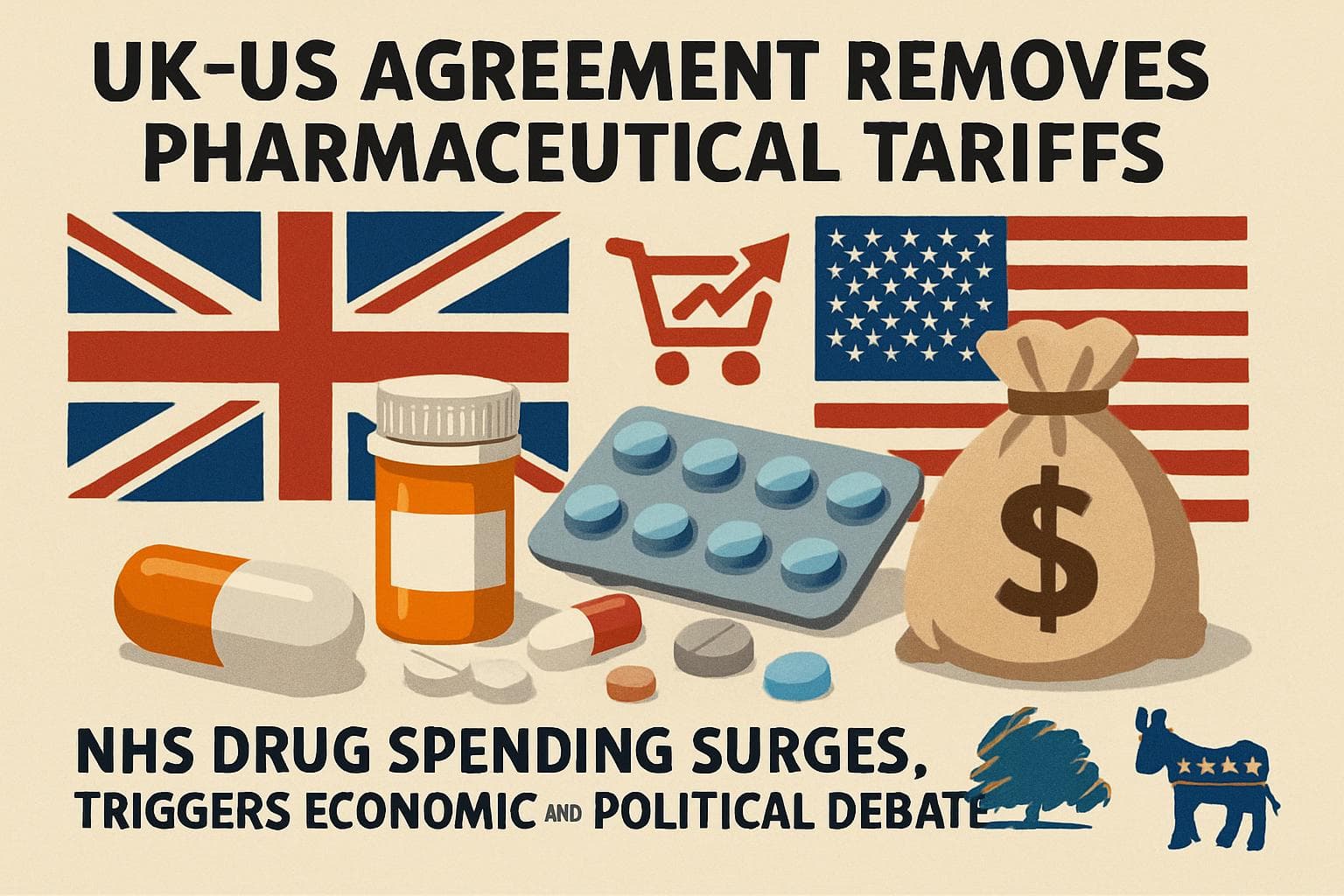
UK-US Zero-Tariff Deal on Pharmaceuticals Sparks NHS Spending Surge
In This Article
HIGHLIGHTS
- The UK and US have agreed to maintain zero tariffs on UK pharmaceutical exports to the US for three years, safeguarding a £5bn annual trade.
- The NHS will increase its spending on medicines, doubling its GDP allocation from 0.3% to 0.6% over the next decade.
- The agreement will see the NHS pay 25% more for new drugs, costing an estimated additional £3bn annually.
- The deal aims to protect UK pharmaceutical exports from potential 100% tariffs threatened by former US President Donald Trump.
- Critics argue the deal prioritizes US demands, potentially straining NHS budgets and impacting funding for other healthcare services.
In a landmark agreement, the United Kingdom and the United States have secured a deal to maintain zero tariffs on UK pharmaceutical exports to the US for the next three years. This arrangement, announced amidst previous threats from former US President Donald Trump to impose tariffs as high as 100% on imported drugs, is set to protect a crucial £5 billion annual trade.
Increased NHS Spending
As part of the agreement, the National Health Service (NHS) will significantly increase its expenditure on medicines. The NHS is set to double its GDP allocation for drug spending from 0.3% to 0.6% over the next decade. This move will see the NHS paying 25% more for new medicines, translating to an estimated additional £3 billion annually. The decision marks the first increase in NHS drug spending in over two decades.
Economic and Political Reactions
While the UK government hails the deal as a "historic step" towards strengthening the pharmaceutical industry, critics have voiced concerns over the financial implications. Helen Morgan, health spokesperson for the Liberal Democrats, criticized the agreement as a "Trump shakedown of the NHS," arguing that it prioritizes American interests at the expense of UK healthcare funding.
NHS leaders, while acknowledging the potential benefits of access to groundbreaking drugs, have expressed concerns about the lack of clarity on how the increased costs will be absorbed. Daniel Elkeles, CEO of NHS Providers, highlighted the absence of flexibility in current NHS budgets to accommodate this significant financial commitment.
Industry and Healthcare Implications
The deal is expected to bolster the UK pharmaceutical sector, which has faced challenges due to previous government drug pricing policies. By ensuring tariff-free access to the US market, the agreement aims to encourage investment and innovation within the industry.
However, experts like Dr. Andrew Hill from the University of Liverpool warn that the increased spending on drugs could divert funds from essential healthcare services, including staffing and low-cost treatments. The National Institute for Health and Care Excellence (NICE) will also adjust its spending thresholds, potentially approving more life-extending drugs.
WHAT THIS MIGHT MEAN
Moving forward, the UK-US zero-tariff deal on pharmaceuticals could have significant implications for both the healthcare sector and international trade relations. While the agreement may stimulate growth in the UK pharmaceutical industry, it raises questions about the sustainability of NHS funding. As the NHS navigates these financial challenges, policymakers will need to balance the benefits of access to innovative treatments with the potential strain on healthcare resources.
Politically, the deal underscores the complexities of transatlantic trade negotiations, particularly in the context of healthcare. The agreement may set a precedent for future trade discussions, highlighting the need for careful consideration of domestic economic impacts. As the UK continues to redefine its global trade relationships post-Brexit, the outcomes of this deal could influence its approach to future international agreements.
Related Articles

UK Faces Dilemmas Amid Iran Conflict and China Spying Allegations
UK-Iran Tensions: Starmer Defends Cautious Approach Amid Trump Criticism
Diplomatic Tensions Rise as Trump Criticizes Starmer's Iran Policy

Breakthrough Drug Offers Hope for Children with Severe Epilepsy

Cuba Faces Widespread Blackout Amid Deepening Fuel Crisis

Iran Postpones Khamenei Funeral Amid Escalating US-Israeli Strikes
UK-US Zero-Tariff Deal on Pharmaceuticals Sparks NHS Spending Surge
In This Article
 Ethan Brooks| Published
 HIGHLIGHTS
- The UK and US have agreed to maintain zero tariffs on UK pharmaceutical exports to the US for three years, safeguarding a £5bn annual trade.
- The NHS will increase its spending on medicines, doubling its GDP allocation from 0.3% to 0.6% over the next decade.
- The agreement will see the NHS pay 25% more for new drugs, costing an estimated additional £3bn annually.
- The deal aims to protect UK pharmaceutical exports from potential 100% tariffs threatened by former US President Donald Trump.
- Critics argue the deal prioritizes US demands, potentially straining NHS budgets and impacting funding for other healthcare services.
In a landmark agreement, the United Kingdom and the United States have secured a deal to maintain zero tariffs on UK pharmaceutical exports to the US for the next three years. This arrangement, announced amidst previous threats from former US President Donald Trump to impose tariffs as high as 100% on imported drugs, is set to protect a crucial £5 billion annual trade.
Increased NHS Spending
As part of the agreement, the National Health Service (NHS) will significantly increase its expenditure on medicines. The NHS is set to double its GDP allocation for drug spending from 0.3% to 0.6% over the next decade. This move will see the NHS paying 25% more for new medicines, translating to an estimated additional £3 billion annually. The decision marks the first increase in NHS drug spending in over two decades.
Economic and Political Reactions
While the UK government hails the deal as a "historic step" towards strengthening the pharmaceutical industry, critics have voiced concerns over the financial implications. Helen Morgan, health spokesperson for the Liberal Democrats, criticized the agreement as a "Trump shakedown of the NHS," arguing that it prioritizes American interests at the expense of UK healthcare funding.
NHS leaders, while acknowledging the potential benefits of access to groundbreaking drugs, have expressed concerns about the lack of clarity on how the increased costs will be absorbed. Daniel Elkeles, CEO of NHS Providers, highlighted the absence of flexibility in current NHS budgets to accommodate this significant financial commitment.
Industry and Healthcare Implications
The deal is expected to bolster the UK pharmaceutical sector, which has faced challenges due to previous government drug pricing policies. By ensuring tariff-free access to the US market, the agreement aims to encourage investment and innovation within the industry.
However, experts like Dr. Andrew Hill from the University of Liverpool warn that the increased spending on drugs could divert funds from essential healthcare services, including staffing and low-cost treatments. The National Institute for Health and Care Excellence (NICE) will also adjust its spending thresholds, potentially approving more life-extending drugs.
WHAT THIS MIGHT MEAN
Moving forward, the UK-US zero-tariff deal on pharmaceuticals could have significant implications for both the healthcare sector and international trade relations. While the agreement may stimulate growth in the UK pharmaceutical industry, it raises questions about the sustainability of NHS funding. As the NHS navigates these financial challenges, policymakers will need to balance the benefits of access to innovative treatments with the potential strain on healthcare resources.
Politically, the deal underscores the complexities of transatlantic trade negotiations, particularly in the context of healthcare. The agreement may set a precedent for future trade discussions, highlighting the need for careful consideration of domestic economic impacts. As the UK continues to redefine its global trade relationships post-Brexit, the outcomes of this deal could influence its approach to future international agreements.
Related Articles
UK Faces Dilemmas Amid Iran Conflict and China Spying Allegations
UK-Iran Tensions: Starmer Defends Cautious Approach Amid Trump Criticism
Diplomatic Tensions Rise as Trump Criticizes Starmer's Iran Policy
Breakthrough Drug Offers Hope for Children with Severe Epilepsy
Cuba Faces Widespread Blackout Amid Deepening Fuel Crisis
Iran Postpones Khamenei Funeral Amid Escalating US-Israeli Strikes