
UK Vehicle Production Slumps to Historic Low Amid Calls for New Factory Investment
In This Article
HIGHLIGHTS
- UK vehicle production hit a 73-year low in 2025, with only 764,715 vehicles produced, a 15.5% drop from the previous year.
- The Society of Motor Manufacturers and Traders (SMMT) highlights the need for a new factory to meet the target of 1.3 million cars annually by 2035.
- A cyberattack on Jaguar Land Rover and US trade tariffs significantly impacted production, alongside Brexit-related uncertainties.
- Chinese manufacturers are potential investors in new UK electric vehicle assembly plants, as their market share in the UK grows.
- Keir Starmer's trade talks in China could catalyze new investments in the UK car industry.
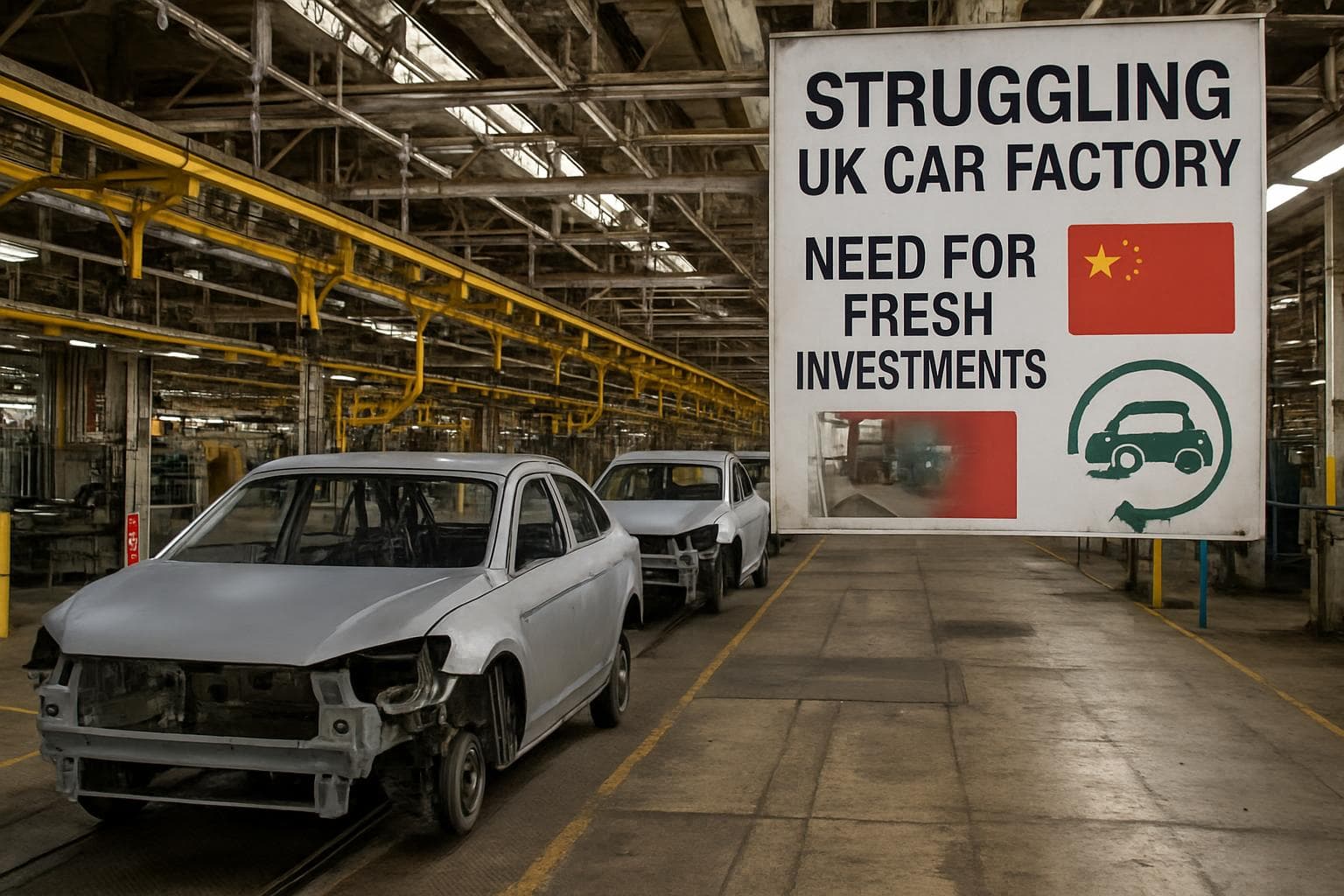
The UK vehicle manufacturing sector has experienced its most challenging year since 1952, with production plummeting to 764,715 vehicles in 2025, marking a 15.5% decline from the previous year. This downturn, reported by the Society of Motor Manufacturers and Traders (SMMT), underscores the pressing need for strategic investments to revitalize the industry.
Challenges and Setbacks
The past year has been described by SMMT's chief executive, Mike Hawes, as "the toughest year in a generation." A series of setbacks, including a crippling cyberattack on Jaguar Land Rover and the closure of Vauxhall's Luton plant, have severely disrupted production. Additionally, the imposition of increased US tariffs on UK car exports has further strained the sector. Brexit-related uncertainties and the pandemic's lingering effects have compounded these challenges, leading to a significant reduction in output.
The Path to Recovery
Despite these hurdles, there is optimism for recovery, driven by the burgeoning electric vehicle (EV) market. The SMMT anticipates that production could surpass one million vehicles by 2027, fueled by new electric models from manufacturers like Nissan and Jaguar Land Rover. However, achieving the Labour Party's ambitious target of 1.3 million cars annually by 2035 will likely require the establishment of a large new factory. Hawes emphasized the importance of retaining current production levels while attracting additional inward investment.
Potential for Chinese Investment
Chinese car manufacturers are emerging as potential investors in the UK, with brands like MG, BYD, and Chery increasing their market share. Keir Starmer's recent trade talks in China, accompanied by industry leaders, aim to foster new partnerships and investments. Hawes noted that the UK's reputation for open trade and investment could attract Chinese companies to establish local manufacturing bases, enhancing the UK's electric vehicle assembly capabilities.
WHAT THIS MIGHT MEAN
Looking ahead, the UK car industry faces a critical juncture. The potential establishment of a new factory could significantly boost production capacity, aligning with the Labour Party's industrial strategy. However, this will require substantial investment and collaboration with international partners, particularly from China. The outcome of Keir Starmer's trade discussions may play a pivotal role in shaping the future of UK vehicle manufacturing. As the industry pivots towards electric vehicles, maintaining competitive trade policies and addressing supply chain vulnerabilities will be essential for sustainable growth.
Related Articles

UK Faces Dilemmas Amid Iran Conflict and China Spying Allegations
China Sets Lowest GDP Growth Target in Decades Amid Economic Challenges

Labour MP's Husband Arrested in UK-China Espionage Probe

UK-Iran Tensions: Starmer Defends Cautious Approach Amid Trump Criticism

Diplomatic Tensions Rise as Trump Criticizes Starmer's Iran Policy

Canada and Australia Forge Strategic Partnership Amid Global Uncertainty
UK Vehicle Production Slumps to Historic Low Amid Calls for New Factory Investment
In This Article
 Daniel Rivera| Published
 HIGHLIGHTS
- UK vehicle production hit a 73-year low in 2025, with only 764,715 vehicles produced, a 15.5% drop from the previous year.
- The Society of Motor Manufacturers and Traders (SMMT) highlights the need for a new factory to meet the target of 1.3 million cars annually by 2035.
- A cyberattack on Jaguar Land Rover and US trade tariffs significantly impacted production, alongside Brexit-related uncertainties.
- Chinese manufacturers are potential investors in new UK electric vehicle assembly plants, as their market share in the UK grows.
- Keir Starmer's trade talks in China could catalyze new investments in the UK car industry.
The UK vehicle manufacturing sector has experienced its most challenging year since 1952, with production plummeting to 764,715 vehicles in 2025, marking a 15.5% decline from the previous year. This downturn, reported by the Society of Motor Manufacturers and Traders (SMMT), underscores the pressing need for strategic investments to revitalize the industry.
Challenges and Setbacks
The past year has been described by SMMT's chief executive, Mike Hawes, as "the toughest year in a generation." A series of setbacks, including a crippling cyberattack on Jaguar Land Rover and the closure of Vauxhall's Luton plant, have severely disrupted production. Additionally, the imposition of increased US tariffs on UK car exports has further strained the sector. Brexit-related uncertainties and the pandemic's lingering effects have compounded these challenges, leading to a significant reduction in output.
The Path to Recovery
Despite these hurdles, there is optimism for recovery, driven by the burgeoning electric vehicle (EV) market. The SMMT anticipates that production could surpass one million vehicles by 2027, fueled by new electric models from manufacturers like Nissan and Jaguar Land Rover. However, achieving the Labour Party's ambitious target of 1.3 million cars annually by 2035 will likely require the establishment of a large new factory. Hawes emphasized the importance of retaining current production levels while attracting additional inward investment.
Potential for Chinese Investment
Chinese car manufacturers are emerging as potential investors in the UK, with brands like MG, BYD, and Chery increasing their market share. Keir Starmer's recent trade talks in China, accompanied by industry leaders, aim to foster new partnerships and investments. Hawes noted that the UK's reputation for open trade and investment could attract Chinese companies to establish local manufacturing bases, enhancing the UK's electric vehicle assembly capabilities.
WHAT THIS MIGHT MEAN
Looking ahead, the UK car industry faces a critical juncture. The potential establishment of a new factory could significantly boost production capacity, aligning with the Labour Party's industrial strategy. However, this will require substantial investment and collaboration with international partners, particularly from China. The outcome of Keir Starmer's trade discussions may play a pivotal role in shaping the future of UK vehicle manufacturing. As the industry pivots towards electric vehicles, maintaining competitive trade policies and addressing supply chain vulnerabilities will be essential for sustainable growth.
Related Articles
UK Faces Dilemmas Amid Iran Conflict and China Spying Allegations
China Sets Lowest GDP Growth Target in Decades Amid Economic Challenges
Labour MP's Husband Arrested in UK-China Espionage Probe
UK-Iran Tensions: Starmer Defends Cautious Approach Amid Trump Criticism
Diplomatic Tensions Rise as Trump Criticizes Starmer's Iran Policy
Canada and Australia Forge Strategic Partnership Amid Global Uncertainty