
Ukraine Escalates Black Sea Tensions with Drone Strikes on Russian Oil Tankers
In This Article
HIGHLIGHTS
- Ukrainian naval drones targeted two Russian oil tankers, Kairos and Virat, in the Black Sea, escalating tensions.
- The attacks aim to disrupt Russia's "shadow fleet," which bypasses Western sanctions to fund its war in Ukraine.
- No casualties were reported, but the tankers sustained significant damage, impacting Russian oil transportation.
- The Caspian Pipeline Consortium halted operations at a Russian terminal due to damage from a Ukrainian drone attack.
- Kazakhstan condemned the attacks, emphasizing the need for stable energy supplies and urging Ukraine to prevent future incidents.
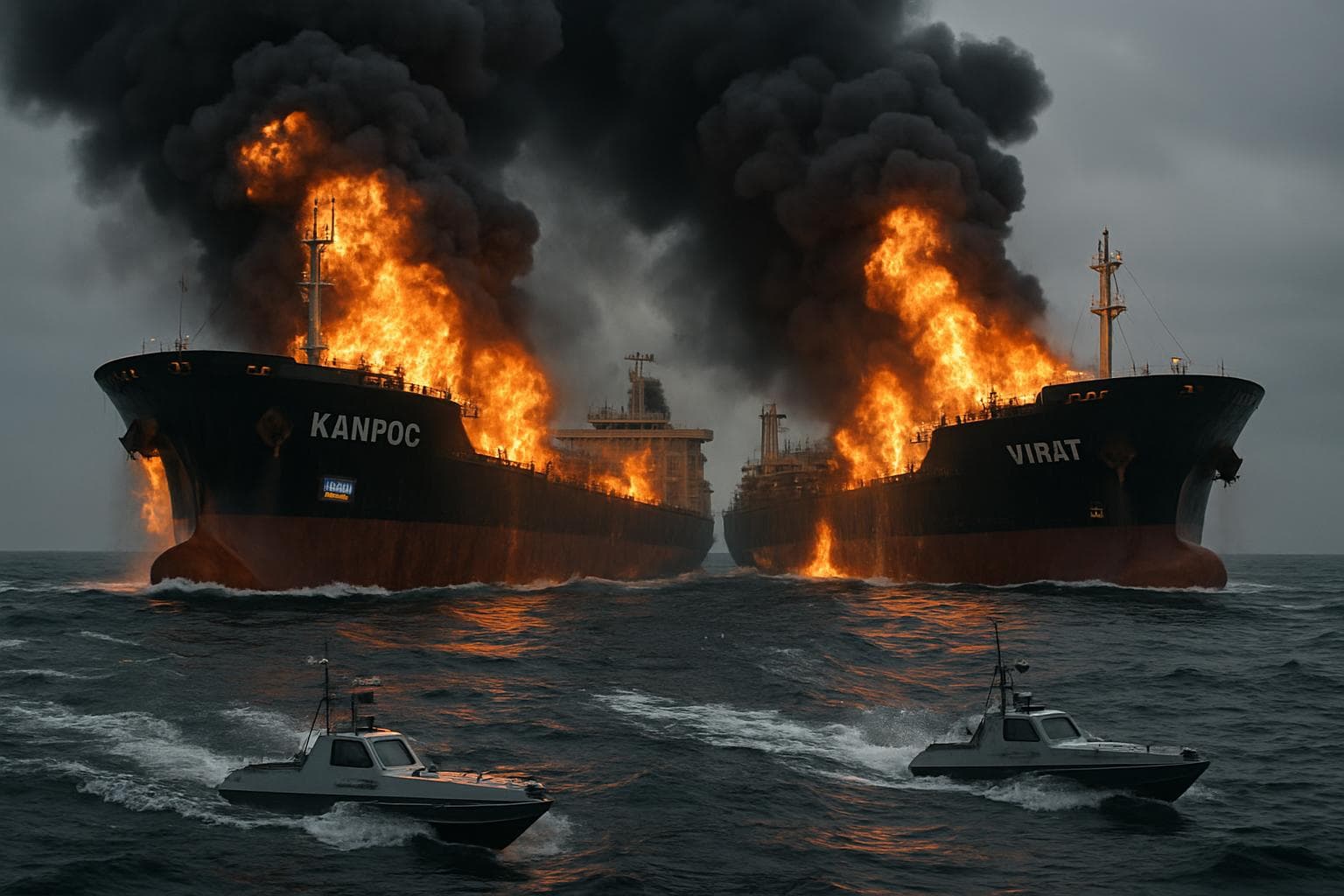
In a significant escalation of hostilities, Ukrainian naval drones have targeted two Russian oil tankers, Kairos and Virat, in the Black Sea. The strikes, confirmed by Ukrainian officials, are part of Kyiv's broader strategy to disrupt Russia's oil revenues, which are critical for funding its ongoing war in Ukraine.
Targeting the Shadow Fleet
The targeted vessels, both flagged to the Gambia, are part of Russia's so-called "shadow fleet." This fleet consists of hundreds of aging tankers that Russia uses to circumvent Western sanctions imposed after its 2022 invasion of Ukraine. The Kairos and Virat were reportedly empty and en route to the Russian port of Novorossiysk to load oil for foreign markets when they were struck. Footage verified by the BBC shows the drones speeding towards the tankers before detonating, causing significant fires but no casualties.
Impact on Russian Oil Operations
The damage to the tankers is expected to significantly impact Russian oil transportation. The Caspian Pipeline Consortium, which handles over 1% of global oil, has suspended operations at a Russian Black Sea terminal following a separate attack by Ukrainian drones. Kazakhstan, a major stakeholder in the consortium, expressed strong disapproval, citing the importance of maintaining a stable energy supply.
International Reactions and Future Implications
Turkey, whose exclusive economic zone was the site of the attacks, has voiced concerns over the safety risks posed by such incidents. Meanwhile, Ukrainian President Volodymyr Zelensky has dispatched a delegation to the United States to discuss potential resolutions to the conflict. The delegation, led by Rustem Umerov, aims to continue negotiations following the resignation of the previous lead negotiator, Andriy Yermak.
WHAT THIS MIGHT MEAN
The recent escalation in the Black Sea could lead to increased international pressure on Russia and further complicate diplomatic efforts to resolve the conflict. The attacks highlight Ukraine's determination to target Russian economic interests, potentially prompting Moscow to bolster its maritime defenses. As Kyiv continues to call for Western action against the shadow fleet, the situation may also influence global oil markets, particularly if further disruptions occur. Experts suggest that the international community will need to carefully navigate these developments to prevent a broader escalation in the region.
Related Articles

Iranian Students Lead Major Protests Amid Rising US-Iran Tensions
Israeli Airstrikes in Lebanon's Bekaa Valley Leave 10 Dead Amid Rising Tensions
Russian LNG Tanker Sinks in Mediterranean Amid Accusations of Ukrainian Drone Attack

US-Iran Tensions Escalate Amid Renewed Nuclear Talks and Protests

Russia-Ukraine Conflict: Four Years of Unyielding Struggle and Human Resilience

China Sets Lowest GDP Growth Target in Decades Amid Economic Challenges
Ukraine Escalates Black Sea Tensions with Drone Strikes on Russian Oil Tankers
In This Article
 James Okoro| Published
 HIGHLIGHTS
- Ukrainian naval drones targeted two Russian oil tankers, Kairos and Virat, in the Black Sea, escalating tensions.
- The attacks aim to disrupt Russia's "shadow fleet," which bypasses Western sanctions to fund its war in Ukraine.
- No casualties were reported, but the tankers sustained significant damage, impacting Russian oil transportation.
- The Caspian Pipeline Consortium halted operations at a Russian terminal due to damage from a Ukrainian drone attack.
- Kazakhstan condemned the attacks, emphasizing the need for stable energy supplies and urging Ukraine to prevent future incidents.
In a significant escalation of hostilities, Ukrainian naval drones have targeted two Russian oil tankers, Kairos and Virat, in the Black Sea. The strikes, confirmed by Ukrainian officials, are part of Kyiv's broader strategy to disrupt Russia's oil revenues, which are critical for funding its ongoing war in Ukraine.
Targeting the Shadow Fleet
The targeted vessels, both flagged to the Gambia, are part of Russia's so-called "shadow fleet." This fleet consists of hundreds of aging tankers that Russia uses to circumvent Western sanctions imposed after its 2022 invasion of Ukraine. The Kairos and Virat were reportedly empty and en route to the Russian port of Novorossiysk to load oil for foreign markets when they were struck. Footage verified by the BBC shows the drones speeding towards the tankers before detonating, causing significant fires but no casualties.
Impact on Russian Oil Operations
The damage to the tankers is expected to significantly impact Russian oil transportation. The Caspian Pipeline Consortium, which handles over 1% of global oil, has suspended operations at a Russian Black Sea terminal following a separate attack by Ukrainian drones. Kazakhstan, a major stakeholder in the consortium, expressed strong disapproval, citing the importance of maintaining a stable energy supply.
International Reactions and Future Implications
Turkey, whose exclusive economic zone was the site of the attacks, has voiced concerns over the safety risks posed by such incidents. Meanwhile, Ukrainian President Volodymyr Zelensky has dispatched a delegation to the United States to discuss potential resolutions to the conflict. The delegation, led by Rustem Umerov, aims to continue negotiations following the resignation of the previous lead negotiator, Andriy Yermak.
WHAT THIS MIGHT MEAN
The recent escalation in the Black Sea could lead to increased international pressure on Russia and further complicate diplomatic efforts to resolve the conflict. The attacks highlight Ukraine's determination to target Russian economic interests, potentially prompting Moscow to bolster its maritime defenses. As Kyiv continues to call for Western action against the shadow fleet, the situation may also influence global oil markets, particularly if further disruptions occur. Experts suggest that the international community will need to carefully navigate these developments to prevent a broader escalation in the region.
Related Articles
Iranian Students Lead Major Protests Amid Rising US-Iran Tensions
Israeli Airstrikes in Lebanon's Bekaa Valley Leave 10 Dead Amid Rising Tensions
Russian LNG Tanker Sinks in Mediterranean Amid Accusations of Ukrainian Drone Attack
US-Iran Tensions Escalate Amid Renewed Nuclear Talks and Protests
Russia-Ukraine Conflict: Four Years of Unyielding Struggle and Human Resilience
China Sets Lowest GDP Growth Target in Decades Amid Economic Challenges