
UK's Palestinian State Recognition Plan Sparks Legal Debate
In This Article
HIGHLIGHTS
- The UK government plans to recognize a Palestinian state unless Israel meets specific conditions, sparking legal debates.
- Critics argue that Palestine does not meet the Montevideo Convention's criteria for statehood, citing undefined borders and governance issues.
- Over 140 countries have already recognized Palestine, and the UK aims to do so by September if Israel does not comply with peace conditions.
- Legal experts are divided, with some asserting that Palestine meets statehood criteria, while others emphasize the need for political judgment.
- The UK government maintains that recognition aligns with international law and is a strategic move towards a two-state solution.
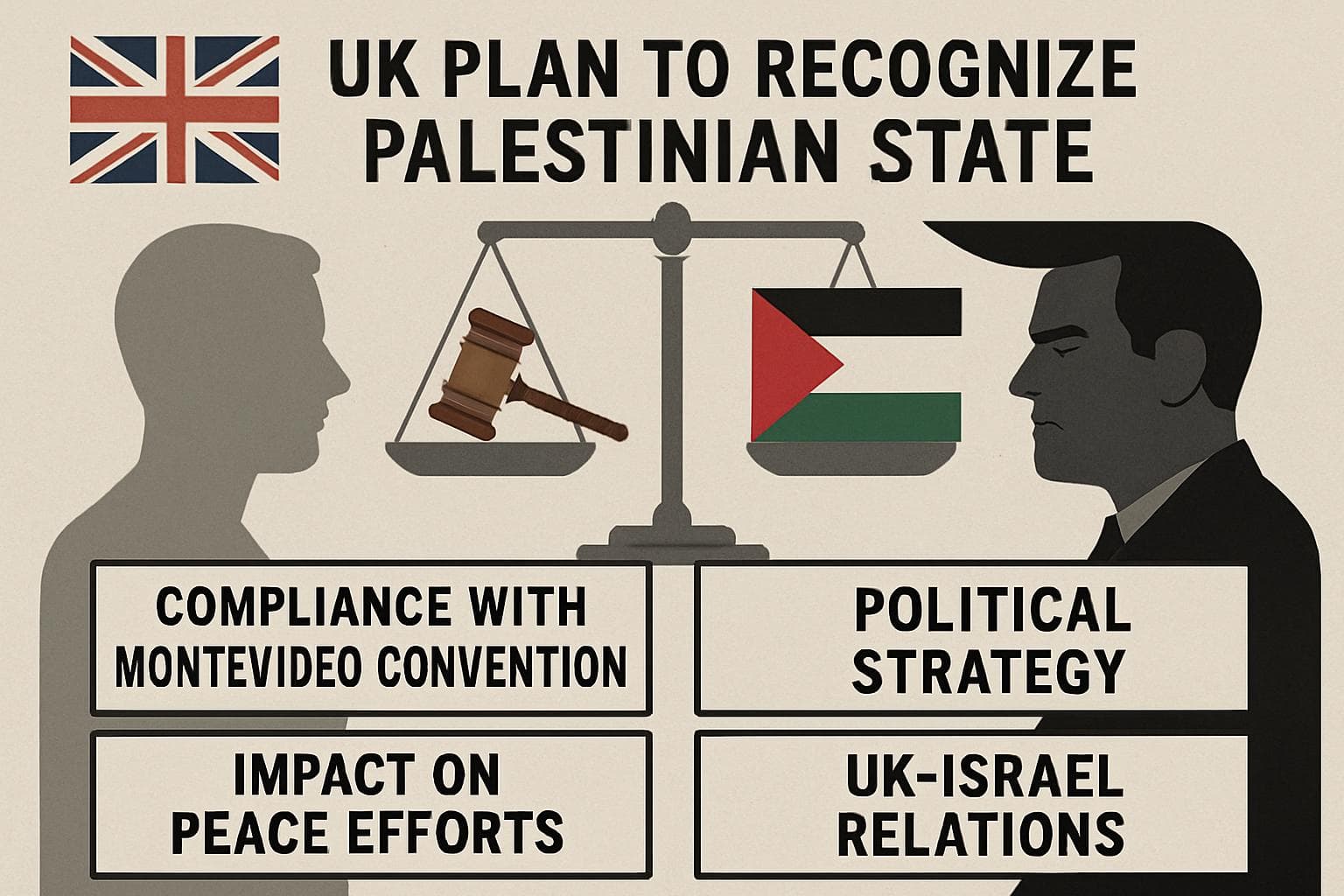
The UK government's recent announcement to recognize a Palestinian state has ignited a contentious debate over international law compliance. Prime Minister Keir Starmer declared that the UK would proceed with recognition unless Israel agrees to a ceasefire and other conditions aimed at reviving a two-state solution. This move, however, has faced criticism from a group of senior lawyers and peers who argue it may breach the Montevideo Convention's criteria for statehood.
Legal Concerns and the Montevideo Convention
The Montevideo Convention, a 1933 treaty, outlines four criteria for state recognition: a defined territory, a permanent population, an effective government, and the capacity to engage in international relations. Critics, including 43 cross-party peers, argue that Palestine lacks defined borders and a unified government, with Hamas and Fatah controlling different regions. They caution that recognizing Palestine could undermine international law's integrity.
Government's Stance and International Support
Despite these concerns, Business Minister Gareth Thomas emphasized that recognizing Palestine is a political judgment, aligning with the UK's foreign policy goals. He noted that over 140 countries have already recognized Palestine, suggesting broad international support. The UK plans to formalize recognition before the UN General Assembly in September, contingent on Israel's actions regarding Gaza and the West Bank.
Divergent Legal Opinions
Legal experts remain divided on the issue. Philippe Sands KC, a law professor at University College London, argues that Palestine meets the legal criteria for statehood, supported by the International Court of Justice's recognition of Palestinian self-determination. Conversely, other legal authorities stress the importance of adhering to established international law frameworks, warning against political expedience.
Strategic Implications for Peace
Trade Secretary Jonathan Reynolds defended the government's approach, highlighting the need for a genuine peace process. He stressed that the recognition aims to leverage the UK's influence to achieve a lasting resolution, emphasizing the importance of a two-state solution.
WHAT THIS MIGHT MEAN
The UK's decision to recognize Palestine could have significant geopolitical implications. If Israel fails to meet the UK's conditions, the recognition may strain UK-Israel relations but could also bolster the UK's standing among countries supporting Palestinian statehood. Legal challenges may arise, potentially leading to international court deliberations. Experts suggest that the move could either catalyze renewed peace efforts or exacerbate regional tensions, depending on subsequent diplomatic engagements.
Images from the Web

Related Articles

US Ambassador's Biblical Land Remarks Spark Outcry from Arab Nations

Middle East Conflict Drives UK Energy Prices to New Highs

UK Faces Dilemmas Amid Iran Conflict and China Spying Allegations

US and Israel Intensify Military Campaign as Iran's Capabilities Dwindle

Breakthrough Drug Offers Hope for Children with Severe Epilepsy

Intensified US-Israel Strikes on Iran Spark Global Outcry
UK's Palestinian State Recognition Plan Sparks Legal Debate
In This Article
 James Okoro| Published
 HIGHLIGHTS
- The UK government plans to recognize a Palestinian state unless Israel meets specific conditions, sparking legal debates.
- Critics argue that Palestine does not meet the Montevideo Convention's criteria for statehood, citing undefined borders and governance issues.
- Over 140 countries have already recognized Palestine, and the UK aims to do so by September if Israel does not comply with peace conditions.
- Legal experts are divided, with some asserting that Palestine meets statehood criteria, while others emphasize the need for political judgment.
- The UK government maintains that recognition aligns with international law and is a strategic move towards a two-state solution.
The UK government's recent announcement to recognize a Palestinian state has ignited a contentious debate over international law compliance. Prime Minister Keir Starmer declared that the UK would proceed with recognition unless Israel agrees to a ceasefire and other conditions aimed at reviving a two-state solution. This move, however, has faced criticism from a group of senior lawyers and peers who argue it may breach the Montevideo Convention's criteria for statehood.
Legal Concerns and the Montevideo Convention
The Montevideo Convention, a 1933 treaty, outlines four criteria for state recognition: a defined territory, a permanent population, an effective government, and the capacity to engage in international relations. Critics, including 43 cross-party peers, argue that Palestine lacks defined borders and a unified government, with Hamas and Fatah controlling different regions. They caution that recognizing Palestine could undermine international law's integrity.
Government's Stance and International Support
Despite these concerns, Business Minister Gareth Thomas emphasized that recognizing Palestine is a political judgment, aligning with the UK's foreign policy goals. He noted that over 140 countries have already recognized Palestine, suggesting broad international support. The UK plans to formalize recognition before the UN General Assembly in September, contingent on Israel's actions regarding Gaza and the West Bank.
Divergent Legal Opinions
Legal experts remain divided on the issue. Philippe Sands KC, a law professor at University College London, argues that Palestine meets the legal criteria for statehood, supported by the International Court of Justice's recognition of Palestinian self-determination. Conversely, other legal authorities stress the importance of adhering to established international law frameworks, warning against political expedience.
Strategic Implications for Peace
Trade Secretary Jonathan Reynolds defended the government's approach, highlighting the need for a genuine peace process. He stressed that the recognition aims to leverage the UK's influence to achieve a lasting resolution, emphasizing the importance of a two-state solution.
WHAT THIS MIGHT MEAN
The UK's decision to recognize Palestine could have significant geopolitical implications. If Israel fails to meet the UK's conditions, the recognition may strain UK-Israel relations but could also bolster the UK's standing among countries supporting Palestinian statehood. Legal challenges may arise, potentially leading to international court deliberations. Experts suggest that the move could either catalyze renewed peace efforts or exacerbate regional tensions, depending on subsequent diplomatic engagements.
Images from the Web
Related Articles
US Ambassador's Biblical Land Remarks Spark Outcry from Arab Nations
Middle East Conflict Drives UK Energy Prices to New Highs
UK Faces Dilemmas Amid Iran Conflict and China Spying Allegations
US and Israel Intensify Military Campaign as Iran's Capabilities Dwindle
Breakthrough Drug Offers Hope for Children with Severe Epilepsy
Intensified US-Israel Strikes on Iran Spark Global Outcry