
US Boycotts G20 Summit in South Africa Over Disputed Claims of White Farmer Persecution
In This Article
HIGHLIGHTS
- Donald Trump announced the US will boycott the G20 summit in South Africa, citing alleged persecution of white farmers.
- South Africa's government and courts have dismissed claims of a "white genocide" as unfounded and unsupported by evidence.
- Trump's administration plans to prioritize refugee admissions for white South Africans, despite limited uptake of this offer.
- South Africa's foreign ministry expressed regret over the US decision, emphasizing the summit's success does not depend on one nation.
- President Cyril Ramaphosa has refuted Trump's claims, highlighting the higher standard of living for white South Africans compared to Black residents.
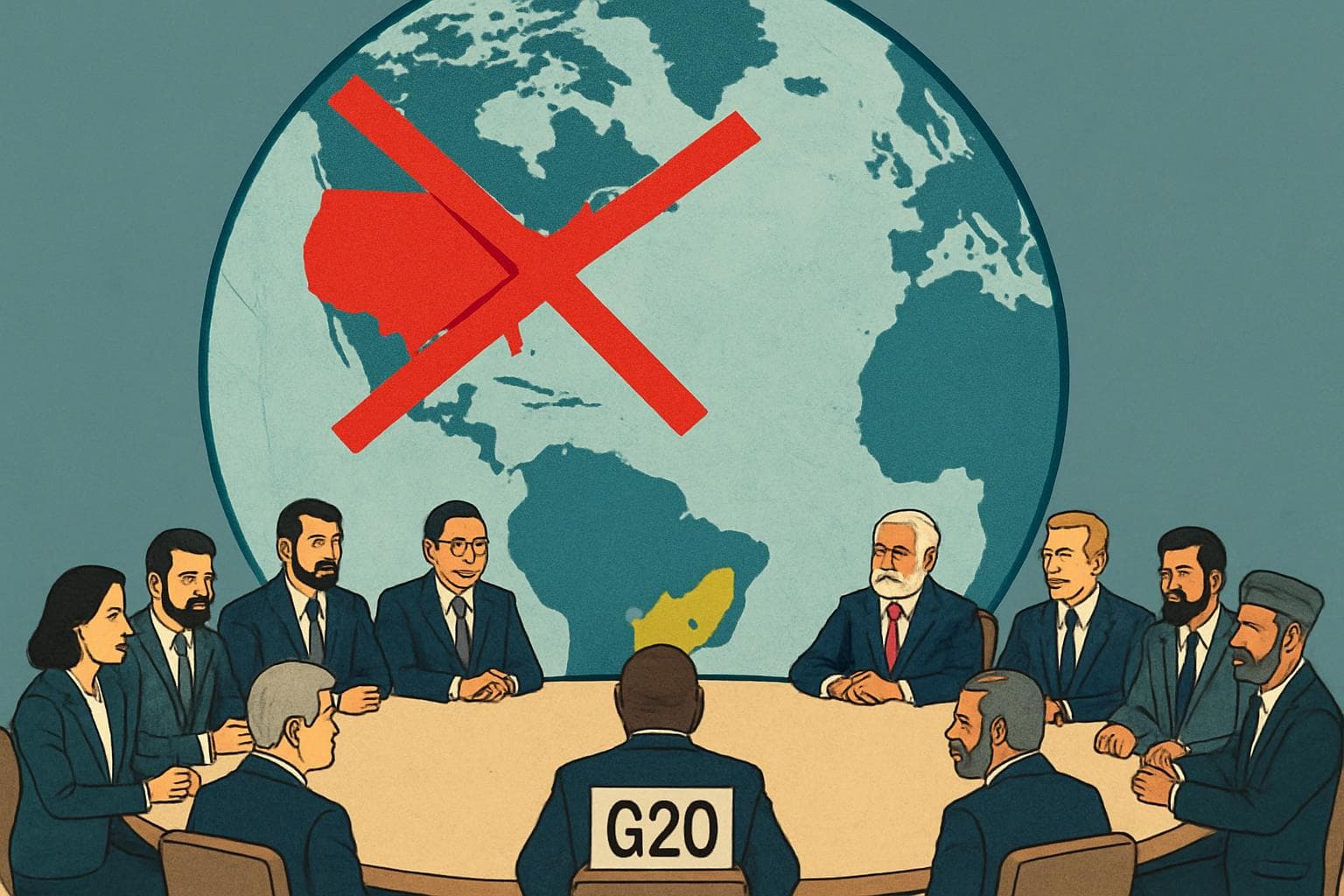
The United States, under the leadership of President Donald Trump, has announced its decision to boycott the upcoming G20 summit in South Africa. The move stems from Trump's allegations of human rights abuses against white farmers, specifically Afrikaners, in the country. These claims, however, have been widely discredited by South African authorities and international observers.
Trump's Allegations and South Africa's Response
President Trump took to his social media platform, Truth Social, to express his disapproval of the G20 being hosted in South Africa, labeling it a "total disgrace." He cited alleged violence and land confiscation against Afrikaners as the primary reasons for the boycott. The Trump administration has previously accused the South African government of allowing such persecution, a stance that has been met with surprise and denial from South African officials.
South Africa's foreign ministry has dismissed these allegations as baseless, with spokesperson Chrispin Phiri stating that there is "absolutely no evidence of white persecution." He emphasized that crime in South Africa affects all citizens, regardless of race, and that the country is actively addressing its challenges. The ministry also highlighted that the characterization of Afrikaners as an exclusively white group is historically inaccurate.
International and Domestic Reactions
The decision to boycott the summit has drawn criticism and concern. South African President Cyril Ramaphosa has personally refuted Trump's claims, pointing out that white South Africans generally enjoy a higher standard of living than their Black counterparts, more than three decades after the end of apartheid. Despite this, the Trump administration has maintained its stance, even suggesting that South Africa should be excluded from the G20 altogether.
The US had initially planned to send Vice President JD Vance to the summit, but this plan was scrapped following the boycott announcement. The South African government remains optimistic about the summit's success, asserting that it does not hinge on the participation of any single nation.
WHAT THIS MIGHT MEAN
The US boycott of the G20 summit in South Africa could strain diplomatic relations between the two countries, potentially impacting future collaborations on global economic and political issues. If the US continues to prioritize refugee admissions for white South Africans, it may face criticism for perceived racial bias in its immigration policies. Experts suggest that this move could also influence other nations' perceptions of the US's commitment to multilateralism and international cooperation. As the G20 summit proceeds without US participation, South Africa may seek to strengthen ties with other member states, reinforcing its position on the global stage.
Related Articles

Tech Giants Pledge to Cover AI Data Center Energy Costs Amid Rising Electricity Concerns
Cuba Faces Widespread Blackout Amid Deepening Fuel Crisis

UK Faces Dilemmas Amid Iran Conflict and China Spying Allegations
China Sets Lowest GDP Growth Target in Decades Amid Economic Challenges
Congress Subpoenas Attorney General Bondi in Epstein Investigation

Google Faces Legal Battle Over AI Chatbot's Alleged Role in Tragic Death
US Boycotts G20 Summit in South Africa Over Disputed Claims of White Farmer Persecution
In This Article
 James Okoro| Published
 HIGHLIGHTS
- Donald Trump announced the US will boycott the G20 summit in South Africa, citing alleged persecution of white farmers.
- South Africa's government and courts have dismissed claims of a "white genocide" as unfounded and unsupported by evidence.
- Trump's administration plans to prioritize refugee admissions for white South Africans, despite limited uptake of this offer.
- South Africa's foreign ministry expressed regret over the US decision, emphasizing the summit's success does not depend on one nation.
- President Cyril Ramaphosa has refuted Trump's claims, highlighting the higher standard of living for white South Africans compared to Black residents.
The United States, under the leadership of President Donald Trump, has announced its decision to boycott the upcoming G20 summit in South Africa. The move stems from Trump's allegations of human rights abuses against white farmers, specifically Afrikaners, in the country. These claims, however, have been widely discredited by South African authorities and international observers.
Trump's Allegations and South Africa's Response
President Trump took to his social media platform, Truth Social, to express his disapproval of the G20 being hosted in South Africa, labeling it a "total disgrace." He cited alleged violence and land confiscation against Afrikaners as the primary reasons for the boycott. The Trump administration has previously accused the South African government of allowing such persecution, a stance that has been met with surprise and denial from South African officials.
South Africa's foreign ministry has dismissed these allegations as baseless, with spokesperson Chrispin Phiri stating that there is "absolutely no evidence of white persecution." He emphasized that crime in South Africa affects all citizens, regardless of race, and that the country is actively addressing its challenges. The ministry also highlighted that the characterization of Afrikaners as an exclusively white group is historically inaccurate.
International and Domestic Reactions
The decision to boycott the summit has drawn criticism and concern. South African President Cyril Ramaphosa has personally refuted Trump's claims, pointing out that white South Africans generally enjoy a higher standard of living than their Black counterparts, more than three decades after the end of apartheid. Despite this, the Trump administration has maintained its stance, even suggesting that South Africa should be excluded from the G20 altogether.
The US had initially planned to send Vice President JD Vance to the summit, but this plan was scrapped following the boycott announcement. The South African government remains optimistic about the summit's success, asserting that it does not hinge on the participation of any single nation.
WHAT THIS MIGHT MEAN
The US boycott of the G20 summit in South Africa could strain diplomatic relations between the two countries, potentially impacting future collaborations on global economic and political issues. If the US continues to prioritize refugee admissions for white South Africans, it may face criticism for perceived racial bias in its immigration policies. Experts suggest that this move could also influence other nations' perceptions of the US's commitment to multilateralism and international cooperation. As the G20 summit proceeds without US participation, South Africa may seek to strengthen ties with other member states, reinforcing its position on the global stage.
Related Articles
Tech Giants Pledge to Cover AI Data Center Energy Costs Amid Rising Electricity Concerns
Cuba Faces Widespread Blackout Amid Deepening Fuel Crisis
UK Faces Dilemmas Amid Iran Conflict and China Spying Allegations
China Sets Lowest GDP Growth Target in Decades Amid Economic Challenges
Congress Subpoenas Attorney General Bondi in Epstein Investigation
Google Faces Legal Battle Over AI Chatbot's Alleged Role in Tragic Death