
US-Brazil Trade Tensions Escalate Amid Trump’s Tariff Ultimatum
In This Article
HIGHLIGHTS
- The Trump administration has initiated an investigation into Brazil's trade practices, citing unfair tariffs and digital trade policies.
- The US has imposed a 50% tariff on Brazilian imports, effective from August 1, in response to these alleged practices.
- Former Brazilian President Jair Bolsonaro faces potential imprisonment for a failed coup attempt, with Trump urging Brazil to drop charges.
- Public protests in Brazil have erupted against Trump's intervention, with demonstrators criticizing Bolsonaro's actions.
- The trade dispute has strained US-Brazil relations, with Brazil threatening reciprocal tariffs.
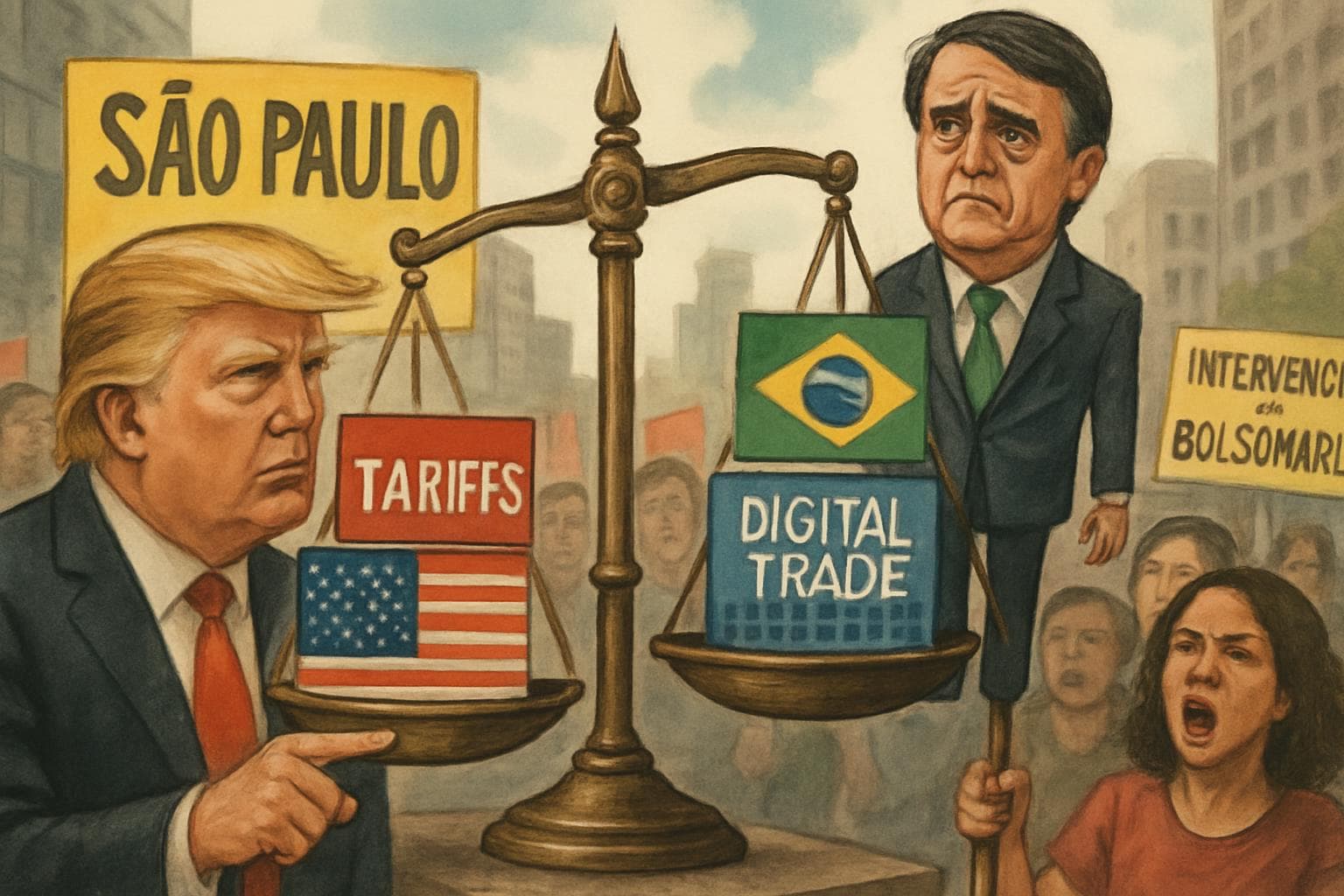
The United States has launched a formal investigation into Brazil's trade practices, accusing the South American nation of implementing unfair tariffs and discriminatory digital trade policies. This move, directed by President Donald Trump, aims to assess whether Brazil's actions are detrimental to US commerce, particularly affecting American social media companies and technology innovators.
Trade Dispute and Tariff Measures
The US Trade Representative, Jamieson Greer, announced the investigation, highlighting concerns over Brazil's preferential tariffs and inadequate enforcement of intellectual property rights. In a letter to Brazilian President Luiz Inácio Lula da Silva, Trump declared a 50% tariff on Brazilian imports starting August 1, citing these issues as justification. The trade between the two nations was valued at $90 billion last year, with the US reporting a $7.4 billion trade surplus in 2024.
Political Intervention and Bolsonaro’s Legal Troubles
The trade tensions are further complicated by Trump's call for Brazil to halt the prosecution of former President Jair Bolsonaro. Bolsonaro, facing charges related to a failed coup attempt after the 2022 presidential election, could be sentenced to up to 43 years in prison. Trump's intervention, perceived as politically motivated, has sparked widespread protests in Brazil, with citizens condemning both Trump and Bolsonaro.
Public Backlash and Political Repercussions
Demonstrations in São Paulo saw thousands rally against Trump's actions, with protestors burning effigies and displaying banners denouncing the US president's interference. The move has also bolstered support for Lula, with public sentiment turning against Bolsonaro and his family, who have long portrayed themselves as nationalists. The conservative newspaper Estado de São Paulo criticized Bolsonaro, urging conservatives to choose between supporting Brazil or the former president.
WHAT THIS MIGHT MEAN
The ongoing trade dispute between the US and Brazil could lead to significant economic and political repercussions. If Brazil retaliates with reciprocal tariffs, it may further strain bilateral relations and impact global trade dynamics. The investigation's findings could influence future US trade policies, particularly concerning digital trade and intellectual property rights.
Politically, Trump's intervention in Bolsonaro's legal troubles may backfire, potentially strengthening Lula's position and diminishing Bolsonaro's influence. As the Brazilian Supreme Court prepares to rule on Bolsonaro's case, the outcome could reshape Brazil's political landscape and affect its international relations, particularly with the US.
Related Articles
Trump's New Tariff Strategy Sparks Global Trade Uncertainty
China Sets Lowest GDP Growth Target in Decades Amid Economic Challenges

Tech Giants Pledge to Cover AI Data Center Energy Costs Amid Rising Electricity Concerns

Cuba Faces Widespread Blackout Amid Deepening Fuel Crisis

UK Faces Dilemmas Amid Iran Conflict and China Spying Allegations
US Supreme Court Ruling Sparks Trade Uncertainty in Asia and Beyond
US-Brazil Trade Tensions Escalate Amid Trump’s Tariff Ultimatum
In This Article
 Daniel Rivera| Published
 HIGHLIGHTS
- The Trump administration has initiated an investigation into Brazil's trade practices, citing unfair tariffs and digital trade policies.
- The US has imposed a 50% tariff on Brazilian imports, effective from August 1, in response to these alleged practices.
- Former Brazilian President Jair Bolsonaro faces potential imprisonment for a failed coup attempt, with Trump urging Brazil to drop charges.
- Public protests in Brazil have erupted against Trump's intervention, with demonstrators criticizing Bolsonaro's actions.
- The trade dispute has strained US-Brazil relations, with Brazil threatening reciprocal tariffs.
The United States has launched a formal investigation into Brazil's trade practices, accusing the South American nation of implementing unfair tariffs and discriminatory digital trade policies. This move, directed by President Donald Trump, aims to assess whether Brazil's actions are detrimental to US commerce, particularly affecting American social media companies and technology innovators.
Trade Dispute and Tariff Measures
The US Trade Representative, Jamieson Greer, announced the investigation, highlighting concerns over Brazil's preferential tariffs and inadequate enforcement of intellectual property rights. In a letter to Brazilian President Luiz Inácio Lula da Silva, Trump declared a 50% tariff on Brazilian imports starting August 1, citing these issues as justification. The trade between the two nations was valued at $90 billion last year, with the US reporting a $7.4 billion trade surplus in 2024.
Political Intervention and Bolsonaro’s Legal Troubles
The trade tensions are further complicated by Trump's call for Brazil to halt the prosecution of former President Jair Bolsonaro. Bolsonaro, facing charges related to a failed coup attempt after the 2022 presidential election, could be sentenced to up to 43 years in prison. Trump's intervention, perceived as politically motivated, has sparked widespread protests in Brazil, with citizens condemning both Trump and Bolsonaro.
Public Backlash and Political Repercussions
Demonstrations in São Paulo saw thousands rally against Trump's actions, with protestors burning effigies and displaying banners denouncing the US president's interference. The move has also bolstered support for Lula, with public sentiment turning against Bolsonaro and his family, who have long portrayed themselves as nationalists. The conservative newspaper Estado de São Paulo criticized Bolsonaro, urging conservatives to choose between supporting Brazil or the former president.
WHAT THIS MIGHT MEAN
The ongoing trade dispute between the US and Brazil could lead to significant economic and political repercussions. If Brazil retaliates with reciprocal tariffs, it may further strain bilateral relations and impact global trade dynamics. The investigation's findings could influence future US trade policies, particularly concerning digital trade and intellectual property rights.
Politically, Trump's intervention in Bolsonaro's legal troubles may backfire, potentially strengthening Lula's position and diminishing Bolsonaro's influence. As the Brazilian Supreme Court prepares to rule on Bolsonaro's case, the outcome could reshape Brazil's political landscape and affect its international relations, particularly with the US.
Related Articles
Trump's New Tariff Strategy Sparks Global Trade Uncertainty
China Sets Lowest GDP Growth Target in Decades Amid Economic Challenges
Tech Giants Pledge to Cover AI Data Center Energy Costs Amid Rising Electricity Concerns
Cuba Faces Widespread Blackout Amid Deepening Fuel Crisis
UK Faces Dilemmas Amid Iran Conflict and China Spying Allegations
US Supreme Court Ruling Sparks Trade Uncertainty in Asia and Beyond