
US Courts Rule on AI Copyright Cases: Anthropic and Meta Secure Legal Wins
In This Article
HIGHLIGHTS
- A US judge ruled that Anthropic's use of books to train its AI model was "fair use" under US copyright law, but the company must face trial for storing pirated copies.
- Meta also won a similar lawsuit, with a judge ruling that the authors failed to prove copyright infringement by the company's AI training practices.
- Both cases highlight the ongoing legal battles over the use of copyrighted materials in AI training, with potential damages reaching up to $150,000 per work.
- The rulings are significant as they set precedents for other pending cases involving AI firms and copyright issues.
- The fair use doctrine remains a critical legal defense for tech companies developing AI technologies.
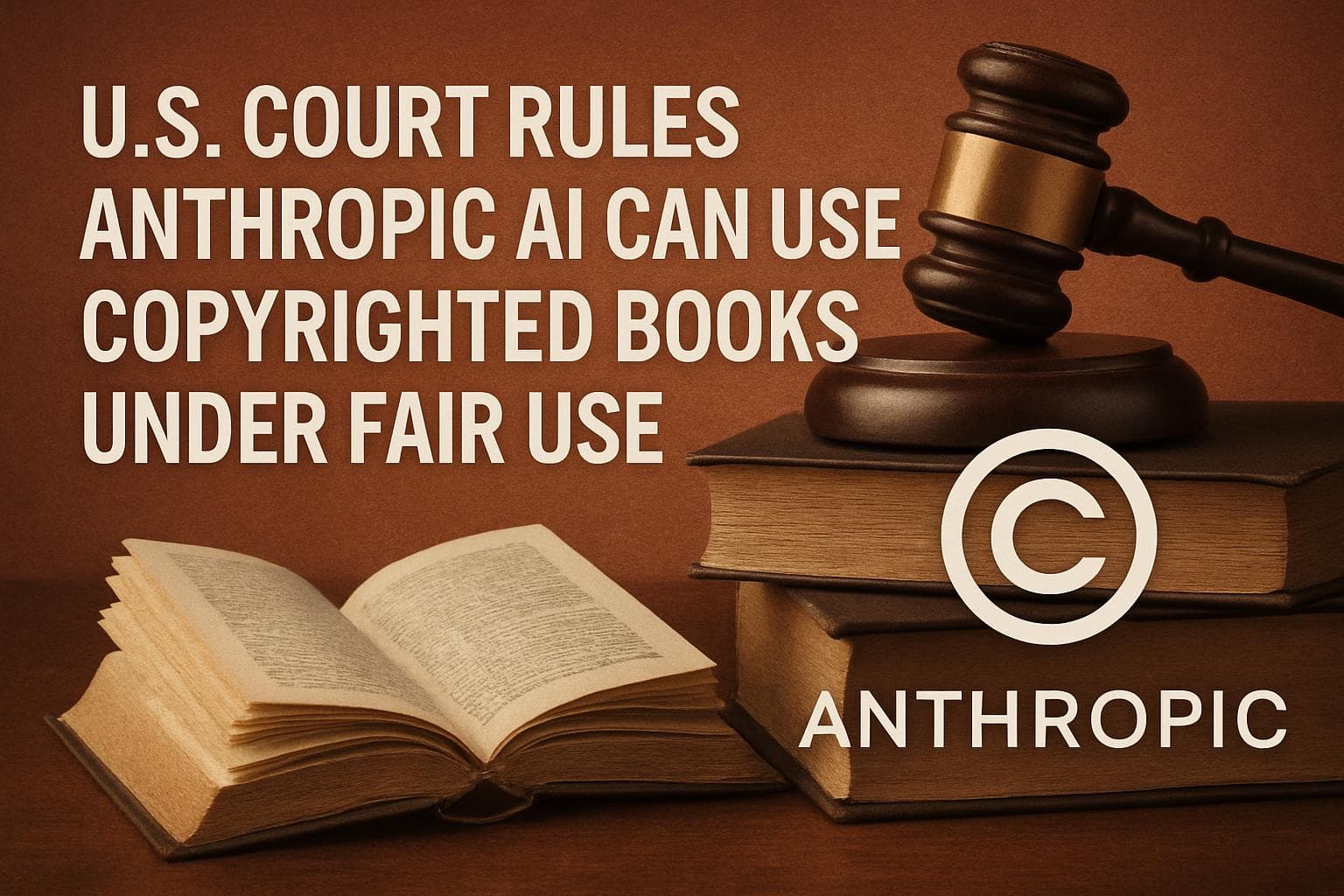
In a landmark decision, a US judge has ruled that the use of copyrighted books by AI firm Anthropic to train its large language model (LLM) is permissible under the "fair use" doctrine. The ruling, delivered by Judge William Alsup, comes amid a wave of legal challenges facing AI companies over their use of copyrighted materials. However, Anthropic must still face trial for allegedly storing over seven million pirated books, which could result in damages of up to $150,000 per work.
The lawsuit, initiated by authors Andrea Bartz, Charles Graeber, and Kirk Wallace Johnson, accused Anthropic of using their works without permission to develop its Claude AI model. Judge Alsup noted that Anthropic's use was "exceedingly transformative," likening it to a reader aspiring to create something new rather than replicate existing works. Despite this, the judge criticized the company's storage of pirated copies, which he deemed a violation of copyright law.
In a related case, Meta, the parent company of Facebook, also secured a legal victory. Judge Vince Chhabria ruled that the authors, including Sarah Silverman and Ta-Nehisi Coates, did not provide sufficient evidence to prove that Meta's AI training practices diluted the market for their works. However, Chhabria acknowledged that using copyrighted materials without permission could be unlawful in many circumstances, emphasizing the complexity of these legal battles.
These rulings underscore the contentious nature of copyright issues in the AI industry, where companies like Anthropic and Meta rely on vast amounts of data, including copyrighted content, to train their AI systems. The fair use doctrine has emerged as a pivotal legal defense, allowing for the use of copyrighted works in certain contexts to foster creativity and innovation.
As the legal landscape evolves, AI firms are increasingly striking licensing deals with content creators to mitigate potential legal risks. The outcomes of these cases are expected to influence numerous other lawsuits currently pending in the US, with experts predicting that the US Supreme Court may eventually address the broader question of AI training and copyright law.
WHAT THIS MIGHT MEAN
The recent rulings in favor of Anthropic and Meta could set significant legal precedents for the AI industry, potentially shaping how copyright law is interpreted in the context of AI training. As more cases emerge, the fair use doctrine will likely continue to be a central point of contention. Legal experts suggest that these cases could eventually reach the US Supreme Court, which may provide a definitive ruling on the matter.
For authors and content creators, these decisions highlight the challenges of protecting intellectual property in the digital age. While some may seek to negotiate licensing agreements with AI firms, others might continue to pursue legal action to safeguard their works. The outcomes of these cases will be closely watched by stakeholders across the creative and tech industries, as they navigate the complex intersection of copyright law and AI innovation.
Related Articles
Tech Giants Pledge to Cover AI Data Center Energy Costs Amid Rising Electricity Concerns
EU Challenges Meta Over AI Chatbot Restrictions on WhatsApp
India Considers Social Media Ban for Under-16s Amid Global Trend
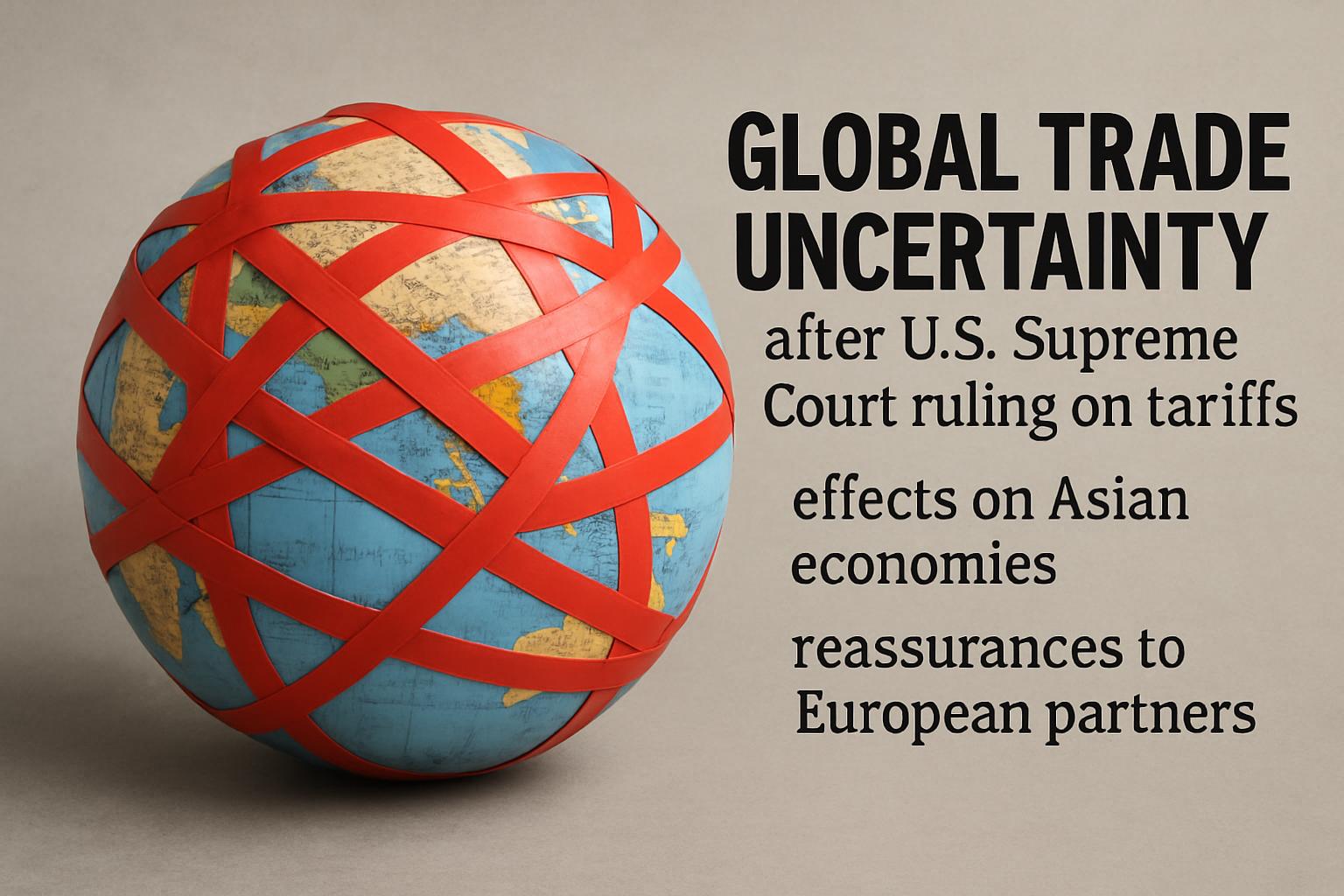
US Supreme Court Ruling Sparks Trade Uncertainty in Asia and Beyond
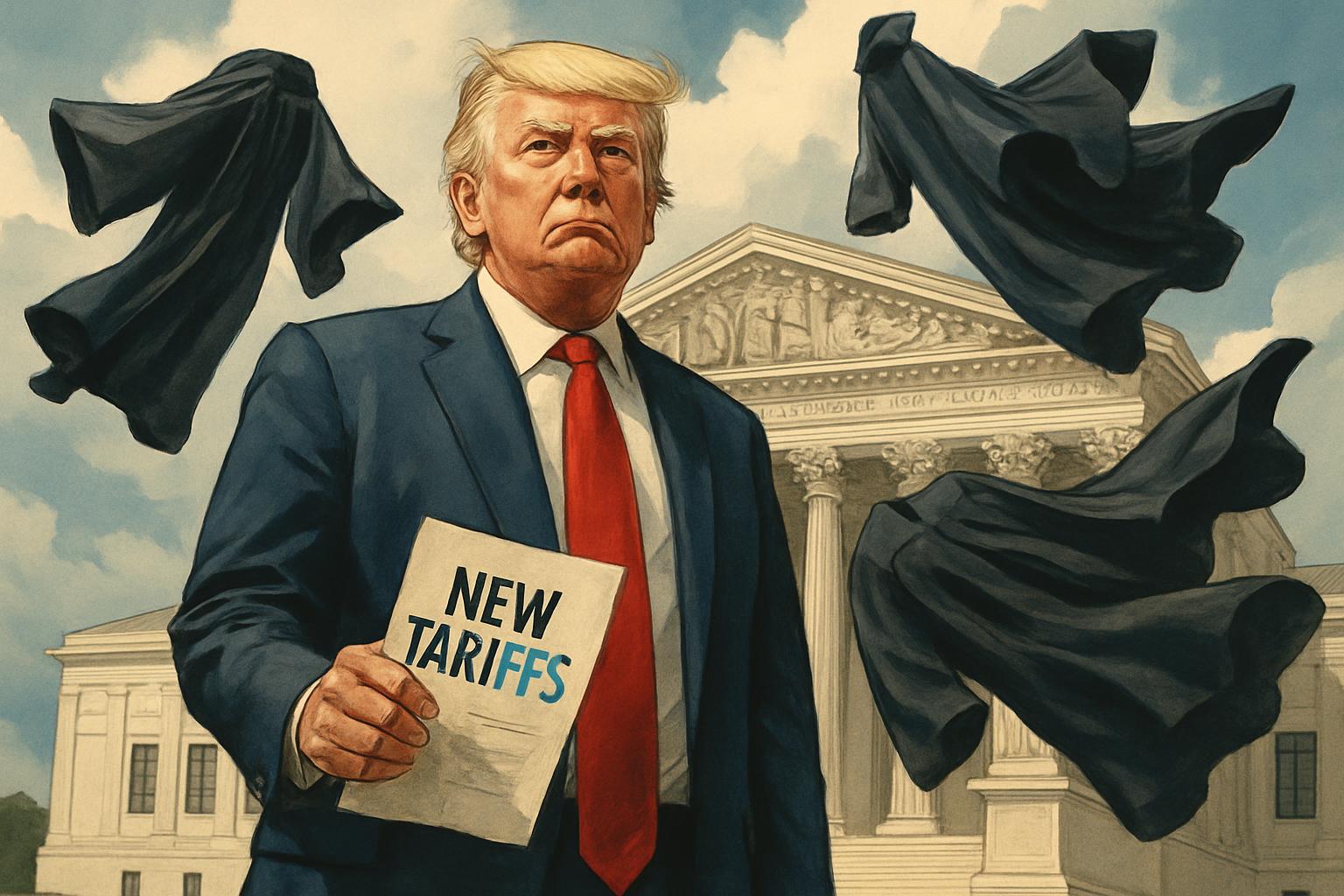
Trump Criticizes Supreme Court After Tariff Ruling, Imposes New Global Tariff

US Supreme Court Ruling on Tariffs Sparks Uncertainty for UK and Global Trade
US Courts Rule on AI Copyright Cases: Anthropic and Meta Secure Legal Wins
In This Article
 Himanshu Kaushik| Published
 HIGHLIGHTS
- A US judge ruled that Anthropic's use of books to train its AI model was "fair use" under US copyright law, but the company must face trial for storing pirated copies.
- Meta also won a similar lawsuit, with a judge ruling that the authors failed to prove copyright infringement by the company's AI training practices.
- Both cases highlight the ongoing legal battles over the use of copyrighted materials in AI training, with potential damages reaching up to $150,000 per work.
- The rulings are significant as they set precedents for other pending cases involving AI firms and copyright issues.
- The fair use doctrine remains a critical legal defense for tech companies developing AI technologies.
In a landmark decision, a US judge has ruled that the use of copyrighted books by AI firm Anthropic to train its large language model (LLM) is permissible under the "fair use" doctrine. The ruling, delivered by Judge William Alsup, comes amid a wave of legal challenges facing AI companies over their use of copyrighted materials. However, Anthropic must still face trial for allegedly storing over seven million pirated books, which could result in damages of up to $150,000 per work.
The lawsuit, initiated by authors Andrea Bartz, Charles Graeber, and Kirk Wallace Johnson, accused Anthropic of using their works without permission to develop its Claude AI model. Judge Alsup noted that Anthropic's use was "exceedingly transformative," likening it to a reader aspiring to create something new rather than replicate existing works. Despite this, the judge criticized the company's storage of pirated copies, which he deemed a violation of copyright law.
In a related case, Meta, the parent company of Facebook, also secured a legal victory. Judge Vince Chhabria ruled that the authors, including Sarah Silverman and Ta-Nehisi Coates, did not provide sufficient evidence to prove that Meta's AI training practices diluted the market for their works. However, Chhabria acknowledged that using copyrighted materials without permission could be unlawful in many circumstances, emphasizing the complexity of these legal battles.
These rulings underscore the contentious nature of copyright issues in the AI industry, where companies like Anthropic and Meta rely on vast amounts of data, including copyrighted content, to train their AI systems. The fair use doctrine has emerged as a pivotal legal defense, allowing for the use of copyrighted works in certain contexts to foster creativity and innovation.
As the legal landscape evolves, AI firms are increasingly striking licensing deals with content creators to mitigate potential legal risks. The outcomes of these cases are expected to influence numerous other lawsuits currently pending in the US, with experts predicting that the US Supreme Court may eventually address the broader question of AI training and copyright law.
WHAT THIS MIGHT MEAN
The recent rulings in favor of Anthropic and Meta could set significant legal precedents for the AI industry, potentially shaping how copyright law is interpreted in the context of AI training. As more cases emerge, the fair use doctrine will likely continue to be a central point of contention. Legal experts suggest that these cases could eventually reach the US Supreme Court, which may provide a definitive ruling on the matter.
For authors and content creators, these decisions highlight the challenges of protecting intellectual property in the digital age. While some may seek to negotiate licensing agreements with AI firms, others might continue to pursue legal action to safeguard their works. The outcomes of these cases will be closely watched by stakeholders across the creative and tech industries, as they navigate the complex intersection of copyright law and AI innovation.
Related Articles
Tech Giants Pledge to Cover AI Data Center Energy Costs Amid Rising Electricity Concerns
EU Challenges Meta Over AI Chatbot Restrictions on WhatsApp
India Considers Social Media Ban for Under-16s Amid Global Trend
US Supreme Court Ruling Sparks Trade Uncertainty in Asia and Beyond
Trump Criticizes Supreme Court After Tariff Ruling, Imposes New Global Tariff
US Supreme Court Ruling on Tariffs Sparks Uncertainty for UK and Global Trade