
US Economy Surges Amidst Trade and Spending Dynamics
In This Article
HIGHLIGHTS
- The US economy grew at an annualized rate of 4.3% in the third quarter, marking its fastest pace in two years.
- Consumer spending and exports were key drivers of growth, despite a decline in business investment and ongoing inflation concerns.
- The Federal Reserve's interest rate decisions are complicated by mixed economic signals, including a drop in consumer confidence.
- President Trump's tariffs are credited by some for the economic boost, though they face legal challenges and public skepticism.
- Analysts warn that the recent government shutdown and rising prices could slow growth in the final quarter of the year.
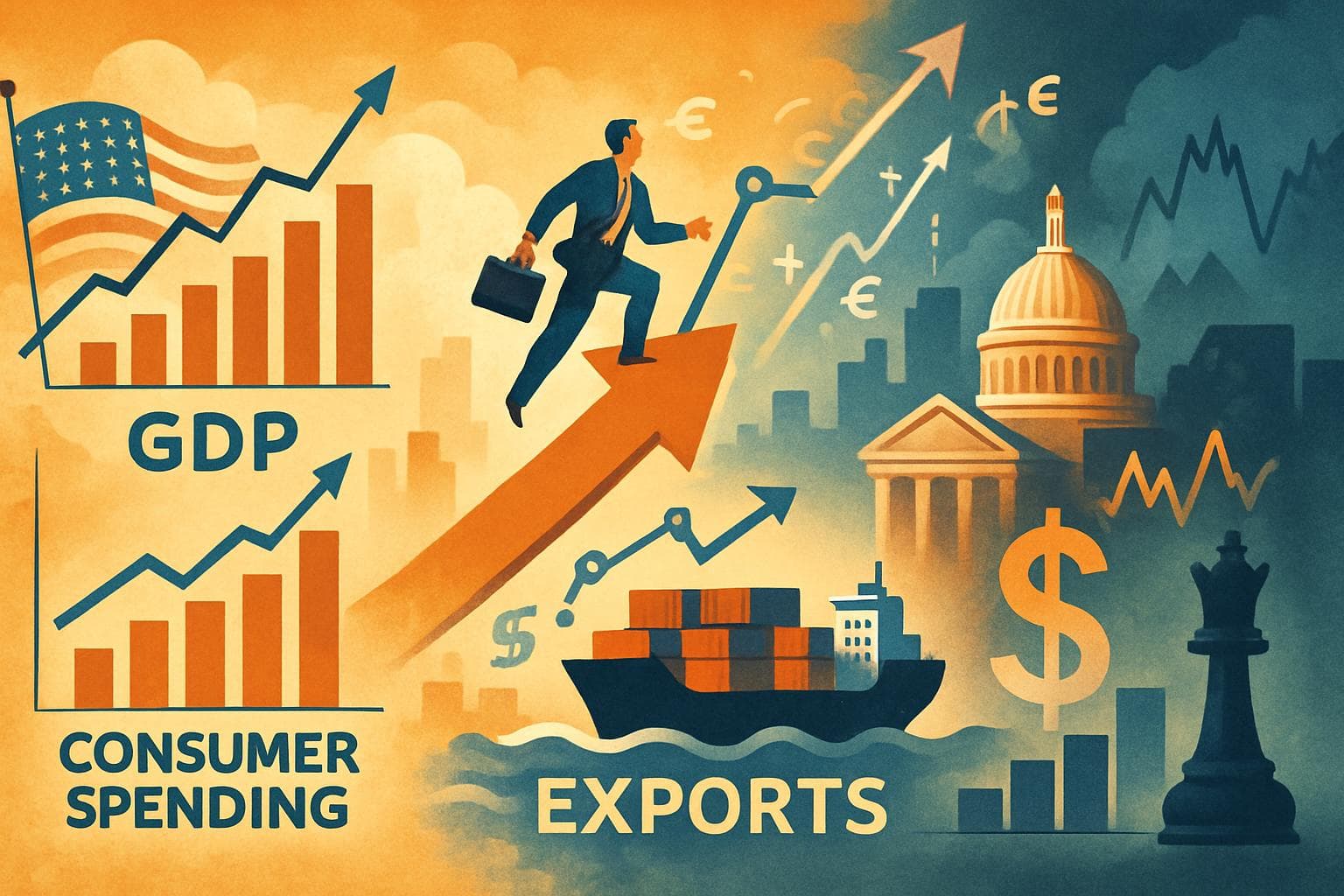
The US economy experienced a robust expansion in the third quarter of 2025, with the Gross Domestic Product (GDP) growing at an annualized rate of 4.3%, the fastest in two years. This unexpected surge, reported by the Commerce Department, was driven by a significant increase in consumer spending and a rebound in exports, despite the challenges posed by recent trade policies and inflationary pressures.
Consumer Spending and Export Rebound
Consumer spending, a critical component of the US economy, rose at an annual rate of 3.5%, up from 2.5% in the previous quarter. This increase occurred even as the job market showed signs of slowing, with households allocating more funds towards healthcare services. Exports, which had previously declined, surged by 7.4%, counteracting the negative impact of reduced imports due to tariffs imposed earlier this year.
Tariffs and Economic Policy
President Donald Trump has attributed the economic growth to his tariff policies, which he claims have bolstered national security and economic performance. However, these tariffs are currently under scrutiny by the Supreme Court, facing legal challenges and public discontent. Despite the growth figures, consumer confidence has declined for the fifth consecutive month, reflecting broader economic uncertainties.
Federal Reserve's Dilemma
The Federal Reserve faces a complex decision-making environment as it navigates between maintaining price stability and supporting employment. With inflation remaining above the 2% target, the Fed has already implemented three interest rate cuts this year. However, the recent government shutdown, which delayed economic data collection, adds another layer of complexity to the Fed's policy considerations.
Economic Outlook
Analysts caution that the impressive third-quarter growth may not be sustainable. The effects of the government shutdown and rising prices could dampen economic momentum in the final quarter of the year. Michael Pearce, Chief US Economist at Oxford Economics, noted that while the economy is well-positioned for future growth, the temporary boost from trade and government spending might not persist.
WHAT THIS MIGHT MEAN
Looking ahead, the US economy's trajectory will depend on several factors, including the resolution of tariff-related legal challenges and the Federal Reserve's policy decisions. If consumer confidence continues to wane, it could signal a broader economic slowdown, potentially prompting further interest rate cuts. Additionally, the outcome of the Supreme Court's review of tariff policies could have significant implications for trade dynamics and economic stability. As the nation approaches the end of the year, policymakers and economists alike will be closely monitoring these developments to gauge their impact on future growth prospects.
Related Articles
Trump's New Tariff Strategy Sparks Global Trade Uncertainty
China Sets Lowest GDP Growth Target in Decades Amid Economic Challenges

Tech Giants Pledge to Cover AI Data Center Energy Costs Amid Rising Electricity Concerns

Cuba Faces Widespread Blackout Amid Deepening Fuel Crisis

UK Faces Dilemmas Amid Iran Conflict and China Spying Allegations
US Supreme Court Ruling Sparks Trade Uncertainty in Asia and Beyond
US Economy Surges Amidst Trade and Spending Dynamics
In This Article
 Daniel Rivera| Published
 HIGHLIGHTS
- The US economy grew at an annualized rate of 4.3% in the third quarter, marking its fastest pace in two years.
- Consumer spending and exports were key drivers of growth, despite a decline in business investment and ongoing inflation concerns.
- The Federal Reserve's interest rate decisions are complicated by mixed economic signals, including a drop in consumer confidence.
- President Trump's tariffs are credited by some for the economic boost, though they face legal challenges and public skepticism.
- Analysts warn that the recent government shutdown and rising prices could slow growth in the final quarter of the year.
The US economy experienced a robust expansion in the third quarter of 2025, with the Gross Domestic Product (GDP) growing at an annualized rate of 4.3%, the fastest in two years. This unexpected surge, reported by the Commerce Department, was driven by a significant increase in consumer spending and a rebound in exports, despite the challenges posed by recent trade policies and inflationary pressures.
Consumer Spending and Export Rebound
Consumer spending, a critical component of the US economy, rose at an annual rate of 3.5%, up from 2.5% in the previous quarter. This increase occurred even as the job market showed signs of slowing, with households allocating more funds towards healthcare services. Exports, which had previously declined, surged by 7.4%, counteracting the negative impact of reduced imports due to tariffs imposed earlier this year.
Tariffs and Economic Policy
President Donald Trump has attributed the economic growth to his tariff policies, which he claims have bolstered national security and economic performance. However, these tariffs are currently under scrutiny by the Supreme Court, facing legal challenges and public discontent. Despite the growth figures, consumer confidence has declined for the fifth consecutive month, reflecting broader economic uncertainties.
Federal Reserve's Dilemma
The Federal Reserve faces a complex decision-making environment as it navigates between maintaining price stability and supporting employment. With inflation remaining above the 2% target, the Fed has already implemented three interest rate cuts this year. However, the recent government shutdown, which delayed economic data collection, adds another layer of complexity to the Fed's policy considerations.
Economic Outlook
Analysts caution that the impressive third-quarter growth may not be sustainable. The effects of the government shutdown and rising prices could dampen economic momentum in the final quarter of the year. Michael Pearce, Chief US Economist at Oxford Economics, noted that while the economy is well-positioned for future growth, the temporary boost from trade and government spending might not persist.
WHAT THIS MIGHT MEAN
Looking ahead, the US economy's trajectory will depend on several factors, including the resolution of tariff-related legal challenges and the Federal Reserve's policy decisions. If consumer confidence continues to wane, it could signal a broader economic slowdown, potentially prompting further interest rate cuts. Additionally, the outcome of the Supreme Court's review of tariff policies could have significant implications for trade dynamics and economic stability. As the nation approaches the end of the year, policymakers and economists alike will be closely monitoring these developments to gauge their impact on future growth prospects.
Related Articles
Trump's New Tariff Strategy Sparks Global Trade Uncertainty
China Sets Lowest GDP Growth Target in Decades Amid Economic Challenges
Tech Giants Pledge to Cover AI Data Center Energy Costs Amid Rising Electricity Concerns
Cuba Faces Widespread Blackout Amid Deepening Fuel Crisis
UK Faces Dilemmas Amid Iran Conflict and China Spying Allegations
US Supreme Court Ruling Sparks Trade Uncertainty in Asia and Beyond