
US-EU Trade Deal: A Landmark Agreement with Mixed Reactions
In This Article
HIGHLIGHTS
- The US and EU have reached a significant trade agreement, imposing a 15% tariff on EU goods imported into the US.
- The deal is seen as a victory for President Trump, though it has sparked criticism within the EU, particularly from France.
- The agreement has caused the euro to weaken against the US dollar, though this may be temporary.
- Economic analysts suggest the EU prioritized short-term economic stability over long-term trade advantages.
- The deal requires approval from all 27 EU member states, highlighting potential internal divisions.
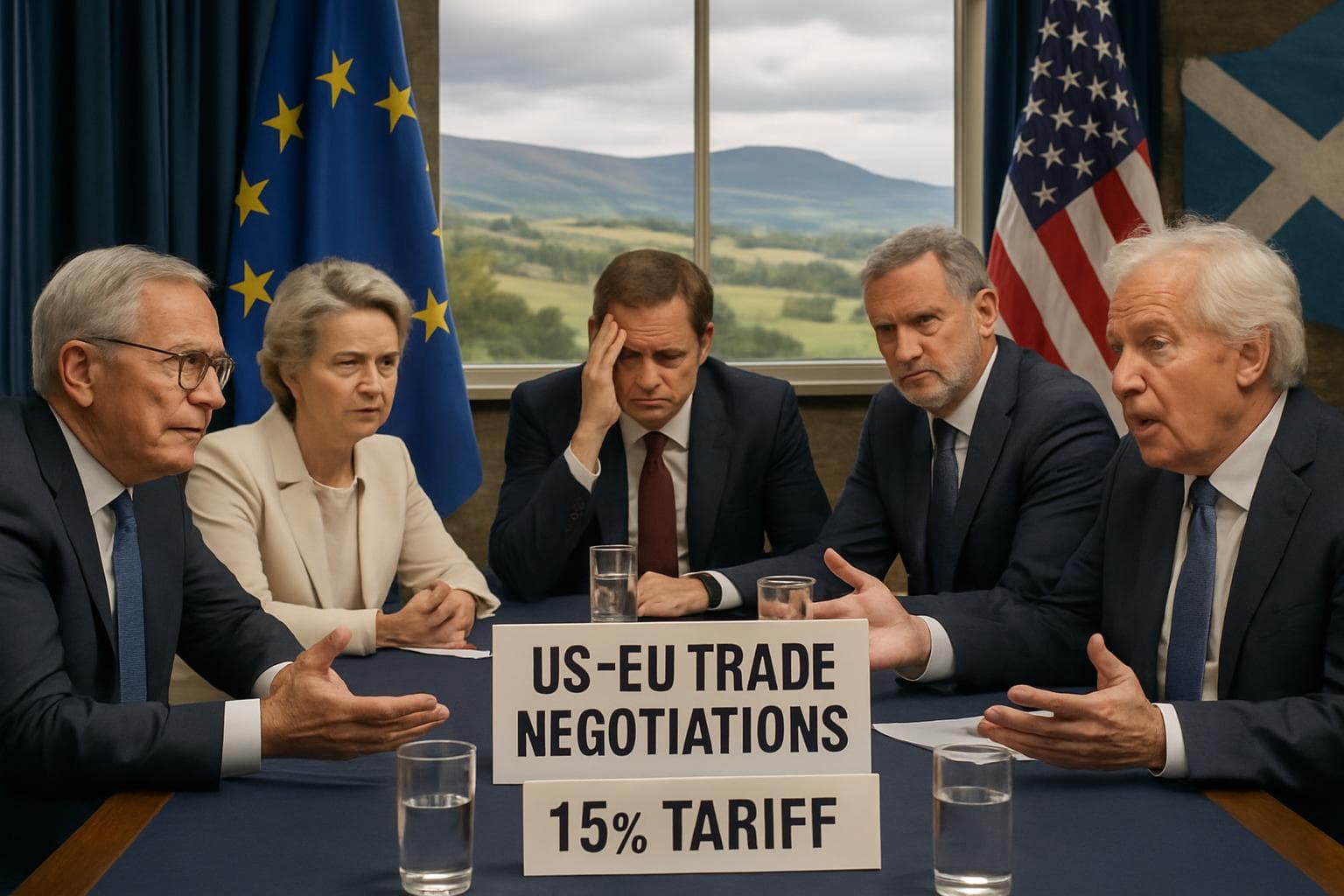
In a landmark development, the United States and the European Union have announced a major trade agreement, hailed as the largest of its kind. The deal, which emerged from negotiations in Scotland, introduces a 15% tariff on goods imported from the EU to the US. While this framework is not yet a full-fledged trade deal, it sets the stage for significant economic shifts.
Economic Implications and Reactions
The agreement has been met with mixed reactions. President Donald Trump has touted it as a major victory, while some EU leaders, including French Prime Minister François Bayrou, have criticized it as a capitulation. The deal is expected to generate tens of billions of dollars in import taxes for the US, potentially impacting consumer prices and economic growth.
Stock markets in Asia and Europe responded positively to the news, with analysts suggesting the deal provides much-needed certainty for investors. Chris Weston of Pepperstone remarked that the agreement is "market-friendly" and could boost the euro's potential.
Currency Fluctuations and Economic Strategy
The announcement has led to a weakening of the euro against the US dollar. Javier Corominas of Oxford Economics noted that the dollar's strength might be short-lived, given the negative economic impacts of tariffs on US consumers. The EU's decision to prioritize short-term economic health over a more balanced trade relationship reflects its current economic challenges, including inflation and reliance on US security and energy imports.
Internal EU Dynamics
The trade deal requires ratification by all 27 EU member states, each with varying economic interests and dependencies on US trade. This requirement highlights potential divisions within the bloc, as some countries cautiously welcome the agreement while others express concern over its implications.
WHAT THIS MIGHT MEAN
As the US-EU trade deal progresses towards ratification, its economic and political implications will continue to unfold. The agreement's impact on consumer prices and economic growth in both regions will be closely monitored. Should the deal exacerbate existing economic challenges, it could lead to increased political pressure on EU leaders to renegotiate terms.
Furthermore, the deal's influence on global trade relations, particularly with other major economies like China, will be significant. The EU's reliance on US energy imports and security support may also prompt discussions on diversifying its economic partnerships. Ultimately, the success of this trade agreement will depend on its ability to balance short-term economic gains with long-term strategic interests.
Related Articles
China Sets Lowest GDP Growth Target in Decades Amid Economic Challenges

UK Faces Dilemmas Amid Iran Conflict and China Spying Allegations

Tech Giants Pledge to Cover AI Data Center Energy Costs Amid Rising Electricity Concerns

Cuba Faces Widespread Blackout Amid Deepening Fuel Crisis

Spain's Sánchez Stands Firm Against Trump's Trade Threat Over Iran Stance

Congress Subpoenas Attorney General Bondi in Epstein Investigation
US-EU Trade Deal: A Landmark Agreement with Mixed Reactions
In This Article
 Daniel Rivera| Published
 HIGHLIGHTS
- The US and EU have reached a significant trade agreement, imposing a 15% tariff on EU goods imported into the US.
- The deal is seen as a victory for President Trump, though it has sparked criticism within the EU, particularly from France.
- The agreement has caused the euro to weaken against the US dollar, though this may be temporary.
- Economic analysts suggest the EU prioritized short-term economic stability over long-term trade advantages.
- The deal requires approval from all 27 EU member states, highlighting potential internal divisions.
In a landmark development, the United States and the European Union have announced a major trade agreement, hailed as the largest of its kind. The deal, which emerged from negotiations in Scotland, introduces a 15% tariff on goods imported from the EU to the US. While this framework is not yet a full-fledged trade deal, it sets the stage for significant economic shifts.
Economic Implications and Reactions
The agreement has been met with mixed reactions. President Donald Trump has touted it as a major victory, while some EU leaders, including French Prime Minister François Bayrou, have criticized it as a capitulation. The deal is expected to generate tens of billions of dollars in import taxes for the US, potentially impacting consumer prices and economic growth.
Stock markets in Asia and Europe responded positively to the news, with analysts suggesting the deal provides much-needed certainty for investors. Chris Weston of Pepperstone remarked that the agreement is "market-friendly" and could boost the euro's potential.
Currency Fluctuations and Economic Strategy
The announcement has led to a weakening of the euro against the US dollar. Javier Corominas of Oxford Economics noted that the dollar's strength might be short-lived, given the negative economic impacts of tariffs on US consumers. The EU's decision to prioritize short-term economic health over a more balanced trade relationship reflects its current economic challenges, including inflation and reliance on US security and energy imports.
Internal EU Dynamics
The trade deal requires ratification by all 27 EU member states, each with varying economic interests and dependencies on US trade. This requirement highlights potential divisions within the bloc, as some countries cautiously welcome the agreement while others express concern over its implications.
WHAT THIS MIGHT MEAN
As the US-EU trade deal progresses towards ratification, its economic and political implications will continue to unfold. The agreement's impact on consumer prices and economic growth in both regions will be closely monitored. Should the deal exacerbate existing economic challenges, it could lead to increased political pressure on EU leaders to renegotiate terms.
Furthermore, the deal's influence on global trade relations, particularly with other major economies like China, will be significant. The EU's reliance on US energy imports and security support may also prompt discussions on diversifying its economic partnerships. Ultimately, the success of this trade agreement will depend on its ability to balance short-term economic gains with long-term strategic interests.
Related Articles
China Sets Lowest GDP Growth Target in Decades Amid Economic Challenges
UK Faces Dilemmas Amid Iran Conflict and China Spying Allegations
Tech Giants Pledge to Cover AI Data Center Energy Costs Amid Rising Electricity Concerns
Cuba Faces Widespread Blackout Amid Deepening Fuel Crisis
Spain's Sánchez Stands Firm Against Trump's Trade Threat Over Iran Stance
Congress Subpoenas Attorney General Bondi in Epstein Investigation