
US-EU Trade Deal Sparks Controversy Amid Economic Concerns
In This Article
HIGHLIGHTS
- The US-EU trade deal imposes a 15% tariff on most European exports, avoiding a potential 30% tariff threatened by Trump.
- French Prime Minister François Bayrou criticized the deal as a "dark day" for Europe, indicating submission to US demands.
- German Chancellor Friedrich Merz acknowledged the deal's economic damage but noted it averted a more severe trade war.
- The agreement requires approval from all 27 EU member states, each with varying interests in US trade.
- EU Trade Commissioner Maroš Šefčovič defended the deal, citing geopolitical alignment amid the Ukraine conflict.
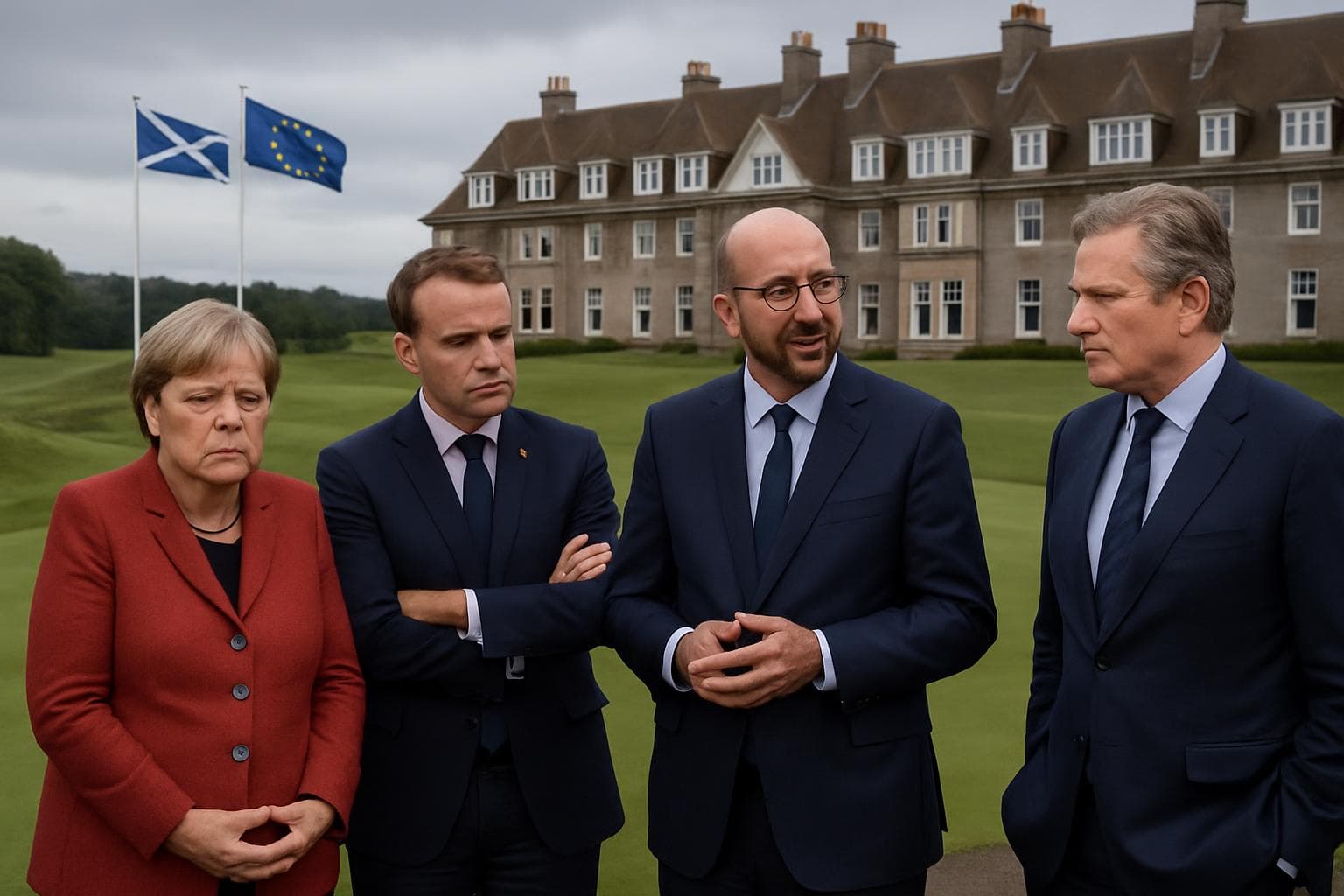
The recent trade agreement between the United States and the European Union has stirred significant debate among European leaders, with reactions ranging from cautious acceptance to outright disapproval. The deal, struck at former President Donald Trump's Turnberry golf resort in Scotland, imposes a 15% tariff on most EU exports to the US, a compromise from the initially threatened 30% tariff.
Mixed Reactions from European Leaders
French Prime Minister François Bayrou was among the most vocal critics, describing the agreement as a "dark day" for Europe, suggesting it represented a capitulation to US demands. "It is a dark day when an alliance of free peoples resigns itself to submission," Bayrou stated on social media platform X. Meanwhile, German Chancellor Friedrich Merz acknowledged the economic challenges posed by the deal but emphasized that it prevented a more damaging trade war. "We couldn't expect to achieve any more," Merz remarked, highlighting the constraints faced by EU negotiators.
Economic and Political Implications
The deal, which requires approval from all 27 EU member states, has exposed underlying tensions within the bloc. While some leaders, like Italian Prime Minister Giorgia Meloni, welcomed the avoidance of a trade escalation, others expressed concerns over the economic impact. The agreement triples the average tariff rate from 4.8% to 15%, affecting key sectors such as automotive and pharmaceuticals. EU Trade Commissioner Maroš Šefčovič defended the deal, citing the importance of maintaining strong transatlantic trade relations amid geopolitical tensions, particularly in the context of the Ukraine conflict.
Market Reactions and Future Prospects
The announcement initially boosted European stock markets, with indices like Germany's Dax and France's Cac 40 seeing gains. However, the rally was short-lived as French disapproval dampened investor enthusiasm, leading to a decline in market performance. The euro also fell against the US dollar, reflecting market uncertainty.
WHAT THIS MIGHT MEAN
As the trade deal awaits ratification by EU member states, its future remains uncertain. The agreement's economic implications could lead to further political divisions within the EU, particularly if member states prioritize national interests over collective goals. Experts suggest that while the deal averts an immediate trade war, it may not significantly alter transatlantic trade dynamics. The EU's ability to navigate these challenges will be crucial in maintaining economic stability and geopolitical alignment with the US.
Related Articles
Spain's Sánchez Stands Firm Against Trump's Trade Threat Over Iran Stance

Cuba Faces Widespread Blackout Amid Deepening Fuel Crisis

Russian LNG Tanker Sinks in Mediterranean Amid Accusations of Ukrainian Drone Attack

UK Faces Dilemmas Amid Iran Conflict and China Spying Allegations
China Sets Lowest GDP Growth Target in Decades Amid Economic Challenges

Tech Giants Pledge to Cover AI Data Center Energy Costs Amid Rising Electricity Concerns
US-EU Trade Deal Sparks Controversy Amid Economic Concerns
In This Article
 Alex Carter| Published
 HIGHLIGHTS
- The US-EU trade deal imposes a 15% tariff on most European exports, avoiding a potential 30% tariff threatened by Trump.
- French Prime Minister François Bayrou criticized the deal as a "dark day" for Europe, indicating submission to US demands.
- German Chancellor Friedrich Merz acknowledged the deal's economic damage but noted it averted a more severe trade war.
- The agreement requires approval from all 27 EU member states, each with varying interests in US trade.
- EU Trade Commissioner Maroš Šefčovič defended the deal, citing geopolitical alignment amid the Ukraine conflict.
The recent trade agreement between the United States and the European Union has stirred significant debate among European leaders, with reactions ranging from cautious acceptance to outright disapproval. The deal, struck at former President Donald Trump's Turnberry golf resort in Scotland, imposes a 15% tariff on most EU exports to the US, a compromise from the initially threatened 30% tariff.
Mixed Reactions from European Leaders
French Prime Minister François Bayrou was among the most vocal critics, describing the agreement as a "dark day" for Europe, suggesting it represented a capitulation to US demands. "It is a dark day when an alliance of free peoples resigns itself to submission," Bayrou stated on social media platform X. Meanwhile, German Chancellor Friedrich Merz acknowledged the economic challenges posed by the deal but emphasized that it prevented a more damaging trade war. "We couldn't expect to achieve any more," Merz remarked, highlighting the constraints faced by EU negotiators.
Economic and Political Implications
The deal, which requires approval from all 27 EU member states, has exposed underlying tensions within the bloc. While some leaders, like Italian Prime Minister Giorgia Meloni, welcomed the avoidance of a trade escalation, others expressed concerns over the economic impact. The agreement triples the average tariff rate from 4.8% to 15%, affecting key sectors such as automotive and pharmaceuticals. EU Trade Commissioner Maroš Šefčovič defended the deal, citing the importance of maintaining strong transatlantic trade relations amid geopolitical tensions, particularly in the context of the Ukraine conflict.
Market Reactions and Future Prospects
The announcement initially boosted European stock markets, with indices like Germany's Dax and France's Cac 40 seeing gains. However, the rally was short-lived as French disapproval dampened investor enthusiasm, leading to a decline in market performance. The euro also fell against the US dollar, reflecting market uncertainty.
WHAT THIS MIGHT MEAN
As the trade deal awaits ratification by EU member states, its future remains uncertain. The agreement's economic implications could lead to further political divisions within the EU, particularly if member states prioritize national interests over collective goals. Experts suggest that while the deal averts an immediate trade war, it may not significantly alter transatlantic trade dynamics. The EU's ability to navigate these challenges will be crucial in maintaining economic stability and geopolitical alignment with the US.
Related Articles
Spain's Sánchez Stands Firm Against Trump's Trade Threat Over Iran Stance
Cuba Faces Widespread Blackout Amid Deepening Fuel Crisis
Russian LNG Tanker Sinks in Mediterranean Amid Accusations of Ukrainian Drone Attack
UK Faces Dilemmas Amid Iran Conflict and China Spying Allegations
China Sets Lowest GDP Growth Target in Decades Amid Economic Challenges
Tech Giants Pledge to Cover AI Data Center Energy Costs Amid Rising Electricity Concerns