
US and Indonesia Forge New Trade Deal Amid Tariff Tensions
In This Article
HIGHLIGHTS
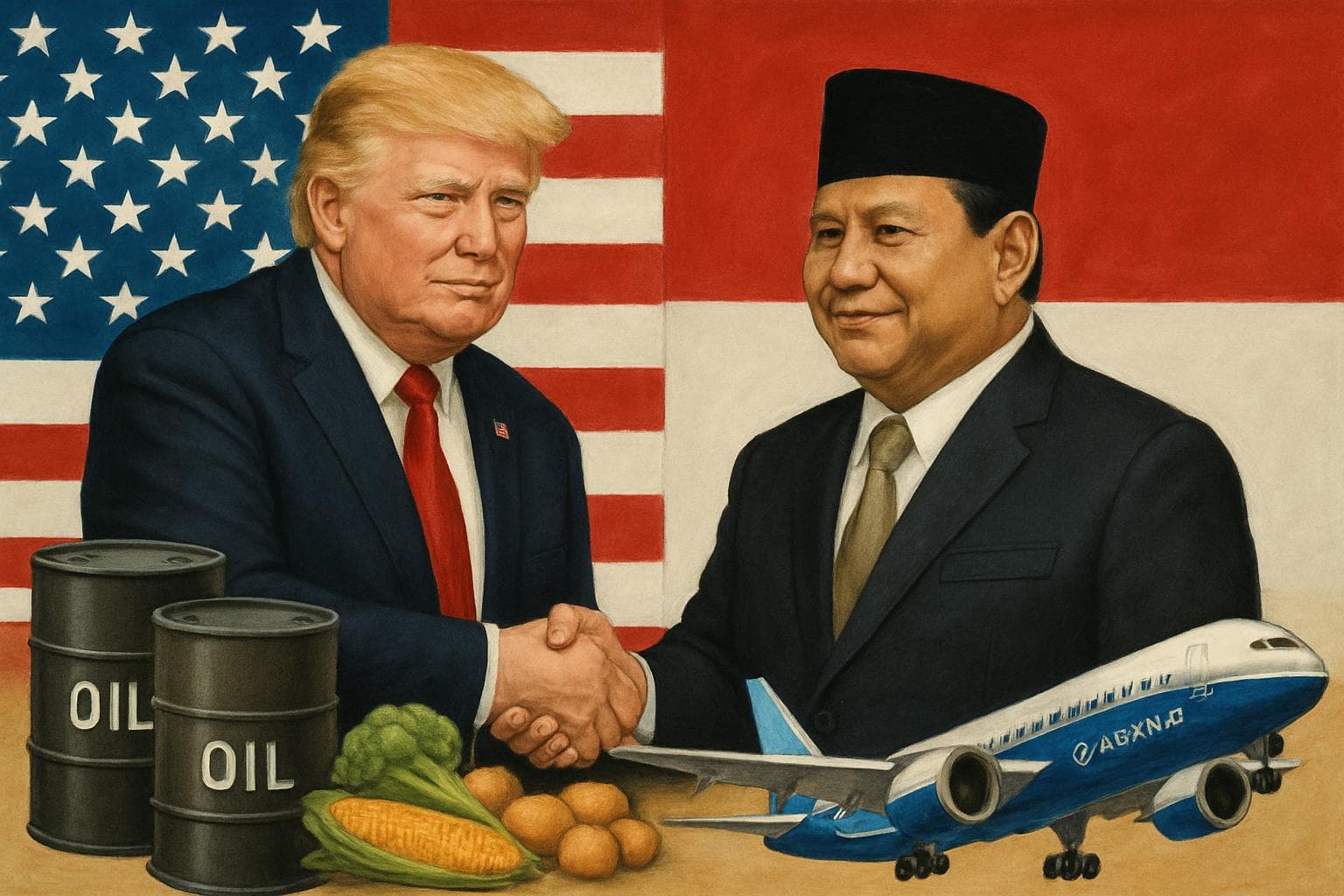
- US President Donald Trump announced a trade deal with Indonesia, reducing proposed tariffs from 32% to 19%.
- Indonesia agreed to purchase $15 billion in US energy, $4.5 billion in agricultural products, and 50 Boeing jets.
- The agreement follows a series of tariff threats by Trump, targeting major US trade partners.
- Indonesia's President Prabowo Subianto described the deal as a "new era of mutual benefit."
- The deal's specifics, including implementation timelines, remain unclear.
In a significant development in international trade relations, US President Donald Trump has announced a new trade agreement with Indonesia, marking a pivotal moment in the ongoing tariff negotiations. The deal, which reduces the previously threatened 32% tariff on Indonesian goods to 19%, comes as part of Trump's broader strategy to recalibrate trade dynamics with key partners.
A New Era of Trade Relations
The agreement, hailed by Indonesian President Prabowo Subianto as a "new era of mutual benefit," includes substantial purchase commitments from Indonesia. The Southeast Asian nation has pledged to buy $15 billion in US energy, $4.5 billion in American agricultural products, and 50 Boeing jets. This move is expected to bolster US exports and strengthen economic ties between the two countries.
Background of Tariff Threats
This trade pact emerges against a backdrop of heightened tariff threats from the Trump administration, which has been actively renegotiating trade terms with several countries. Earlier this year, Trump had announced plans to impose a 32% tariff on Indonesian goods, a move that prompted swift negotiations to avert the steep duties. The revised tariff rate of 19% reflects a compromise reached after direct discussions between Trump and President Subianto.
Economic and Political Implications
While the deal is seen as a political win for both nations, its economic impact remains a topic of debate. Stephen Marks, an economics professor at Pomona College, noted that the benefits for Indonesia are "more political than economic," given the country's existing trade dynamics with the US. Despite this, the agreement is expected to enhance bilateral trade, which totaled nearly $40 billion in 2024.
Uncertain Details and Future Prospects
Despite the announcement, several details of the agreement remain unspecified, including the timeline for implementing the reduced tariffs and the schedule for Indonesia's purchases. Trump's administration has been under pressure to finalize trade deals, having recently concluded agreements with the UK, China, and Vietnam. As negotiations continue with other nations, including India and the European Union, the global trade landscape remains in flux.
WHAT THIS MIGHT MEAN
Looking ahead, the US-Indonesia trade deal could set a precedent for future negotiations with other countries facing similar tariff threats. The agreement may encourage other nations to seek compromises to avoid steep tariffs, potentially leading to a series of bilateral deals. However, the lack of clarity on implementation timelines could pose challenges, as businesses on both sides await concrete details. As the Trump administration continues its aggressive trade policy, the global economic environment may experience further shifts, with potential implications for international trade norms and practices.
Related Articles
China Sets Lowest GDP Growth Target in Decades Amid Economic Challenges

UK Faces Dilemmas Amid Iran Conflict and China Spying Allegations

Tech Giants Pledge to Cover AI Data Center Energy Costs Amid Rising Electricity Concerns
Cuba Faces Widespread Blackout Amid Deepening Fuel Crisis
Spain's Sánchez Stands Firm Against Trump's Trade Threat Over Iran Stance

Iran Postpones Khamenei Funeral Amid Escalating US-Israeli Strikes
US and Indonesia Forge New Trade Deal Amid Tariff Tensions
In This Article
 Daniel Rivera| Published
 HIGHLIGHTS
- US President Donald Trump announced a trade deal with Indonesia, reducing proposed tariffs from 32% to 19%.
- Indonesia agreed to purchase $15 billion in US energy, $4.5 billion in agricultural products, and 50 Boeing jets.
- The agreement follows a series of tariff threats by Trump, targeting major US trade partners.
- Indonesia's President Prabowo Subianto described the deal as a "new era of mutual benefit."
- The deal's specifics, including implementation timelines, remain unclear.
In a significant development in international trade relations, US President Donald Trump has announced a new trade agreement with Indonesia, marking a pivotal moment in the ongoing tariff negotiations. The deal, which reduces the previously threatened 32% tariff on Indonesian goods to 19%, comes as part of Trump's broader strategy to recalibrate trade dynamics with key partners.
A New Era of Trade Relations
The agreement, hailed by Indonesian President Prabowo Subianto as a "new era of mutual benefit," includes substantial purchase commitments from Indonesia. The Southeast Asian nation has pledged to buy $15 billion in US energy, $4.5 billion in American agricultural products, and 50 Boeing jets. This move is expected to bolster US exports and strengthen economic ties between the two countries.
Background of Tariff Threats
This trade pact emerges against a backdrop of heightened tariff threats from the Trump administration, which has been actively renegotiating trade terms with several countries. Earlier this year, Trump had announced plans to impose a 32% tariff on Indonesian goods, a move that prompted swift negotiations to avert the steep duties. The revised tariff rate of 19% reflects a compromise reached after direct discussions between Trump and President Subianto.
Economic and Political Implications
While the deal is seen as a political win for both nations, its economic impact remains a topic of debate. Stephen Marks, an economics professor at Pomona College, noted that the benefits for Indonesia are "more political than economic," given the country's existing trade dynamics with the US. Despite this, the agreement is expected to enhance bilateral trade, which totaled nearly $40 billion in 2024.
Uncertain Details and Future Prospects
Despite the announcement, several details of the agreement remain unspecified, including the timeline for implementing the reduced tariffs and the schedule for Indonesia's purchases. Trump's administration has been under pressure to finalize trade deals, having recently concluded agreements with the UK, China, and Vietnam. As negotiations continue with other nations, including India and the European Union, the global trade landscape remains in flux.
WHAT THIS MIGHT MEAN
Looking ahead, the US-Indonesia trade deal could set a precedent for future negotiations with other countries facing similar tariff threats. The agreement may encourage other nations to seek compromises to avoid steep tariffs, potentially leading to a series of bilateral deals. However, the lack of clarity on implementation timelines could pose challenges, as businesses on both sides await concrete details. As the Trump administration continues its aggressive trade policy, the global economic environment may experience further shifts, with potential implications for international trade norms and practices.
Related Articles
China Sets Lowest GDP Growth Target in Decades Amid Economic Challenges
UK Faces Dilemmas Amid Iran Conflict and China Spying Allegations
Tech Giants Pledge to Cover AI Data Center Energy Costs Amid Rising Electricity Concerns
Cuba Faces Widespread Blackout Amid Deepening Fuel Crisis
Spain's Sánchez Stands Firm Against Trump's Trade Threat Over Iran Stance
Iran Postpones Khamenei Funeral Amid Escalating US-Israeli Strikes