
US Job Growth Slows in 2025 Amid Economic Uncertainty
In This Article
HIGHLIGHTS
- The US added 50,000 jobs in December 2025, marking the weakest job growth year since the pandemic.
- The unemployment rate decreased to 4.4% in December, down from a four-year high of 4.6% in November.
- The Federal Reserve cut interest rates three times in 2025, with the key rate now at 3.6%.
- President Trump's early disclosure of job data on social media raised protocol concerns.
- Economists describe the labor market as being in a "no hire, no fire" phase, with subdued job growth.
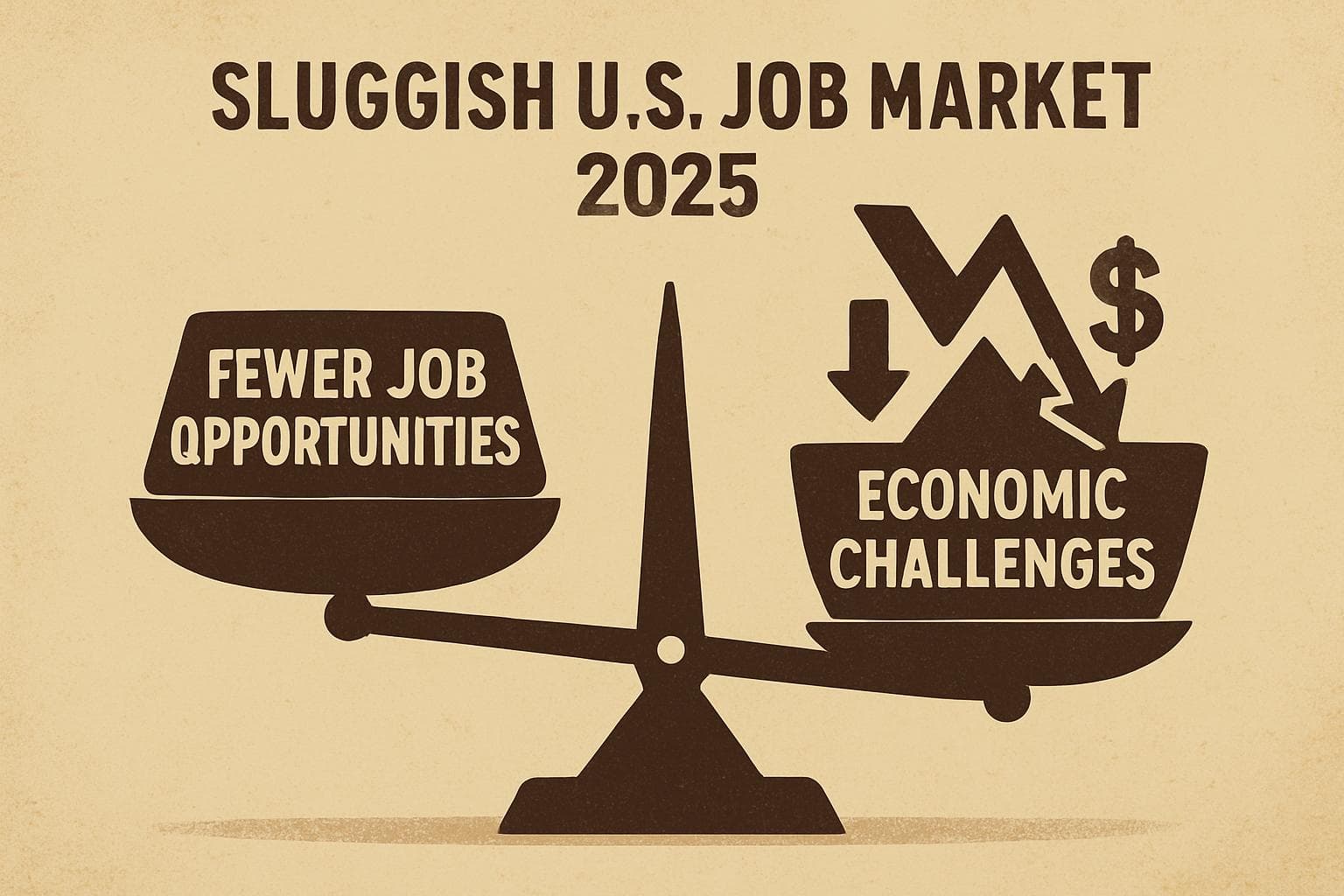
The US job market experienced its weakest growth since the pandemic in 2025, with only 50,000 jobs added in December, according to the latest data from the US Bureau of Labor Statistics. This modest increase fell short of economists' expectations of 73,000 new jobs and capped a year characterized by economic uncertainty and fluctuating employment trends.
Employment Trends and Economic Policies
The unemployment rate, which had climbed to a four-year high of 4.6% in November, improved slightly to 4.4% in December. Despite this, the overall job creation for 2025 was significantly lower than in previous years, with only 584,000 jobs added compared to 2 million in 2024. Analysts attribute this slowdown to various factors, including President Donald Trump's economic policies, which have included tariffs, immigration crackdowns, and government spending cuts.
The Federal Reserve responded to these economic challenges by reducing interest rates three times in 2025, bringing the key lending rate to 3.6%, its lowest in three years. However, policymakers remain divided on the future direction of interest rates, with concerns about inflation persisting.
Controversy Over Data Disclosure
In a controversial move, President Trump shared job data on his Truth Social platform before its official release, prompting criticism and raising questions about protocol breaches. The White House acknowledged the inadvertent disclosure and is reviewing its procedures for handling economic data.
Labor Market Dynamics
Economists describe the current labor market as being in a "no hire, no fire" phase, where job growth continues but remains subdued. Despite the slowdown, fears of mass layoffs have not materialized, and sectors such as healthcare, bars, and restaurants have seen hiring increases, offsetting losses in retail and manufacturing.
Ellen Zentner, chief economic strategist for Morgan Stanley Wealth Management, noted, "The labor market is no longer working in favor of job seekers," highlighting the challenges faced by those seeking employment in the current economic climate.
WHAT THIS MIGHT MEAN
Looking ahead, the US labor market's trajectory remains uncertain. The Federal Reserve's future interest rate decisions will be crucial in shaping economic growth and employment trends. If inflation concerns persist, further rate cuts may be limited, potentially impacting job creation.
Politically, President Trump's handling of economic data and policies will likely continue to be scrutinized, especially as the 2026 elections approach. The administration's ability to navigate these economic challenges will be pivotal in determining its political fortunes.
As the US economy grapples with these dynamics, businesses and job seekers alike will need to adapt to a landscape marked by cautious optimism and ongoing uncertainty.
Related Articles
Trump's New Tariff Strategy Sparks Global Trade Uncertainty
Trump Raises Import Tariffs to 15% After Supreme Court Setback

Tech Giants Pledge to Cover AI Data Center Energy Costs Amid Rising Electricity Concerns

Greenland Politely Declines Trump's Hospital Ship Offer Amid Healthcare Debate
Congress Subpoenas Attorney General Bondi in Epstein Investigation

Cuba Faces Widespread Blackout Amid Deepening Fuel Crisis
US Job Growth Slows in 2025 Amid Economic Uncertainty
In This Article
 Daniel Rivera| Published
 HIGHLIGHTS
- The US added 50,000 jobs in December 2025, marking the weakest job growth year since the pandemic.
- The unemployment rate decreased to 4.4% in December, down from a four-year high of 4.6% in November.
- The Federal Reserve cut interest rates three times in 2025, with the key rate now at 3.6%.
- President Trump's early disclosure of job data on social media raised protocol concerns.
- Economists describe the labor market as being in a "no hire, no fire" phase, with subdued job growth.
The US job market experienced its weakest growth since the pandemic in 2025, with only 50,000 jobs added in December, according to the latest data from the US Bureau of Labor Statistics. This modest increase fell short of economists' expectations of 73,000 new jobs and capped a year characterized by economic uncertainty and fluctuating employment trends.
Employment Trends and Economic Policies
The unemployment rate, which had climbed to a four-year high of 4.6% in November, improved slightly to 4.4% in December. Despite this, the overall job creation for 2025 was significantly lower than in previous years, with only 584,000 jobs added compared to 2 million in 2024. Analysts attribute this slowdown to various factors, including President Donald Trump's economic policies, which have included tariffs, immigration crackdowns, and government spending cuts.
The Federal Reserve responded to these economic challenges by reducing interest rates three times in 2025, bringing the key lending rate to 3.6%, its lowest in three years. However, policymakers remain divided on the future direction of interest rates, with concerns about inflation persisting.
Controversy Over Data Disclosure
In a controversial move, President Trump shared job data on his Truth Social platform before its official release, prompting criticism and raising questions about protocol breaches. The White House acknowledged the inadvertent disclosure and is reviewing its procedures for handling economic data.
Labor Market Dynamics
Economists describe the current labor market as being in a "no hire, no fire" phase, where job growth continues but remains subdued. Despite the slowdown, fears of mass layoffs have not materialized, and sectors such as healthcare, bars, and restaurants have seen hiring increases, offsetting losses in retail and manufacturing.
Ellen Zentner, chief economic strategist for Morgan Stanley Wealth Management, noted, "The labor market is no longer working in favor of job seekers," highlighting the challenges faced by those seeking employment in the current economic climate.
WHAT THIS MIGHT MEAN
Looking ahead, the US labor market's trajectory remains uncertain. The Federal Reserve's future interest rate decisions will be crucial in shaping economic growth and employment trends. If inflation concerns persist, further rate cuts may be limited, potentially impacting job creation.
Politically, President Trump's handling of economic data and policies will likely continue to be scrutinized, especially as the 2026 elections approach. The administration's ability to navigate these economic challenges will be pivotal in determining its political fortunes.
As the US economy grapples with these dynamics, businesses and job seekers alike will need to adapt to a landscape marked by cautious optimism and ongoing uncertainty.
Related Articles
Trump's New Tariff Strategy Sparks Global Trade Uncertainty
Trump Raises Import Tariffs to 15% After Supreme Court Setback
Tech Giants Pledge to Cover AI Data Center Energy Costs Amid Rising Electricity Concerns
Greenland Politely Declines Trump's Hospital Ship Offer Amid Healthcare Debate
Congress Subpoenas Attorney General Bondi in Epstein Investigation
Cuba Faces Widespread Blackout Amid Deepening Fuel Crisis