
US Job Market Surges in January Amidst Economic Uncertainty
In This Article
HIGHLIGHTS
- The US added 130,000 jobs in January, surpassing expectations and reducing the unemployment rate to 4.3%.
- Revised data shows 2025 was the weakest year for job growth since the pandemic, with only 181,000 jobs added.
- Job gains were primarily in healthcare and construction, while the federal government and financial sectors saw job losses.
- The White House attributes slower job growth to immigration policies, while economists debate the impact on job creation.
- The Federal Reserve is under less pressure to cut interest rates due to the stronger-than-expected job figures.
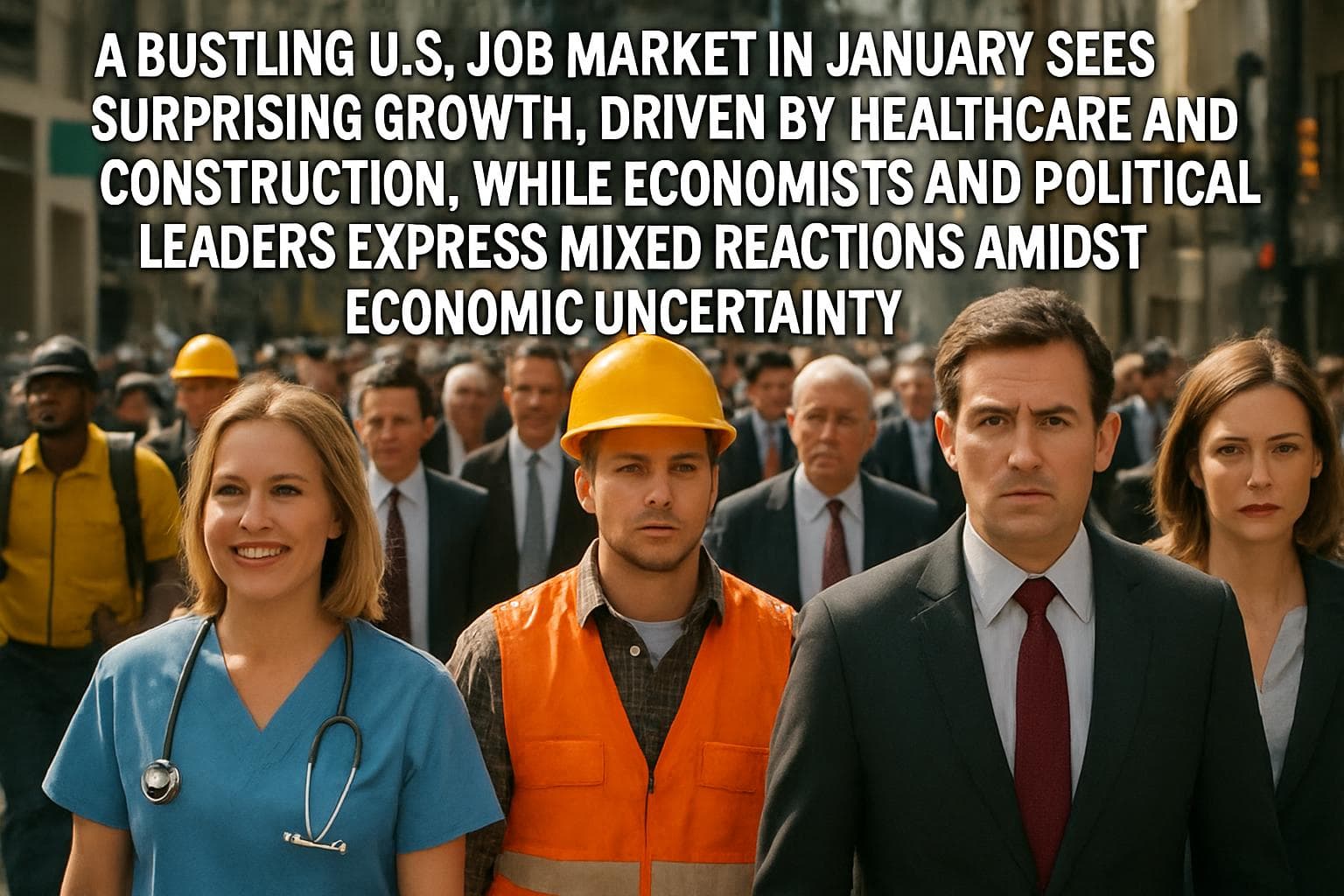
The US labor market experienced a surprising boost in January, with employers adding 130,000 jobs, according to the latest report from the Labor Department. This unexpected growth has brought the unemployment rate down to 4.3%, offering a glimmer of hope after a challenging year for the economy.
Job Growth Exceeds Expectations
Economists had anticipated a modest increase of 70,000 jobs, but the actual figures more than doubled those predictions. Despite this positive development, the revised data for 2025 paints a less optimistic picture, revealing that only 181,000 jobs were added throughout the year, marking the weakest growth since the Covid-19 pandemic. In contrast, 2024 saw the addition of 2 million jobs.
Sector-Specific Gains and Losses
The healthcare and construction sectors were the primary drivers of January's job growth, while the federal government and financial sectors experienced job cuts. Average hourly earnings also saw a year-over-year increase of 3.7%, indicating a rise in wages amid the evolving job market.
Political and Economic Reactions
President Donald Trump celebrated the job figures, declaring them a sign of a "Golden Age of America." However, the White House has faced criticism over its immigration policies, which some argue have slowed population growth and, consequently, job creation. White House adviser Peter Navarro cautioned against high expectations, suggesting that job figures during the Biden administration were inflated due to immigration.
Implications for the Federal Reserve
The stronger-than-expected job numbers have eased some pressure on the Federal Reserve to cut interest rates. Ellen Zentner, chief economic strategist at Morgan Stanley Wealth Management, noted that the data supports Fed Chair Jerome Powell's decision to maintain current interest rates. However, analysts warn that the figures may overstate the labor market's strength due to data quirks.
WHAT THIS MIGHT MEAN
Looking ahead, the US labor market's trajectory remains uncertain. The Federal Reserve's cautious stance on interest rates may continue if job growth remains robust. However, ongoing debates over immigration policies and their impact on job creation could influence future economic strategies. As the US navigates these challenges, the labor market's performance will be closely monitored for signs of stability or further volatility.
Related Articles

US Supreme Court Ruling on Tariffs Sparks Uncertainty for UK and Global Trade

Tech Giants Pledge to Cover AI Data Center Energy Costs Amid Rising Electricity Concerns
US Economic Growth Slows Amid Government Shutdown and Inflation Concerns
Trump's Tariff Strategy Faces Supreme Court Setback, Sparks New Trade Policy

Canada and Australia Forge Strategic Partnership Amid Global Uncertainty

Middle East Conflict Drives UK Energy Prices to New Highs
US Job Market Surges in January Amidst Economic Uncertainty
In This Article
 Daniel Rivera| Published
 HIGHLIGHTS
- The US added 130,000 jobs in January, surpassing expectations and reducing the unemployment rate to 4.3%.
- Revised data shows 2025 was the weakest year for job growth since the pandemic, with only 181,000 jobs added.
- Job gains were primarily in healthcare and construction, while the federal government and financial sectors saw job losses.
- The White House attributes slower job growth to immigration policies, while economists debate the impact on job creation.
- The Federal Reserve is under less pressure to cut interest rates due to the stronger-than-expected job figures.
The US labor market experienced a surprising boost in January, with employers adding 130,000 jobs, according to the latest report from the Labor Department. This unexpected growth has brought the unemployment rate down to 4.3%, offering a glimmer of hope after a challenging year for the economy.
Job Growth Exceeds Expectations
Economists had anticipated a modest increase of 70,000 jobs, but the actual figures more than doubled those predictions. Despite this positive development, the revised data for 2025 paints a less optimistic picture, revealing that only 181,000 jobs were added throughout the year, marking the weakest growth since the Covid-19 pandemic. In contrast, 2024 saw the addition of 2 million jobs.
Sector-Specific Gains and Losses
The healthcare and construction sectors were the primary drivers of January's job growth, while the federal government and financial sectors experienced job cuts. Average hourly earnings also saw a year-over-year increase of 3.7%, indicating a rise in wages amid the evolving job market.
Political and Economic Reactions
President Donald Trump celebrated the job figures, declaring them a sign of a "Golden Age of America." However, the White House has faced criticism over its immigration policies, which some argue have slowed population growth and, consequently, job creation. White House adviser Peter Navarro cautioned against high expectations, suggesting that job figures during the Biden administration were inflated due to immigration.
Implications for the Federal Reserve
The stronger-than-expected job numbers have eased some pressure on the Federal Reserve to cut interest rates. Ellen Zentner, chief economic strategist at Morgan Stanley Wealth Management, noted that the data supports Fed Chair Jerome Powell's decision to maintain current interest rates. However, analysts warn that the figures may overstate the labor market's strength due to data quirks.
WHAT THIS MIGHT MEAN
Looking ahead, the US labor market's trajectory remains uncertain. The Federal Reserve's cautious stance on interest rates may continue if job growth remains robust. However, ongoing debates over immigration policies and their impact on job creation could influence future economic strategies. As the US navigates these challenges, the labor market's performance will be closely monitored for signs of stability or further volatility.
Related Articles
US Supreme Court Ruling on Tariffs Sparks Uncertainty for UK and Global Trade
Tech Giants Pledge to Cover AI Data Center Energy Costs Amid Rising Electricity Concerns
US Economic Growth Slows Amid Government Shutdown and Inflation Concerns
Trump's Tariff Strategy Faces Supreme Court Setback, Sparks New Trade Policy
Canada and Australia Forge Strategic Partnership Amid Global Uncertainty
Middle East Conflict Drives UK Energy Prices to New Highs