
US Mint to Cease Penny Production After 230 Years
In This Article
HIGHLIGHTS
- The US Mint will produce its final batch of pennies on Wednesday, ending over 230 years of production.
- The decision is expected to save the government $56 million annually, as each penny costs nearly four cents to produce.
- Businesses are adjusting prices due to the penny phase-out, potentially costing consumers an additional $6 million annually.
- The move reflects a broader trend towards electronic transactions and the decreasing necessity of low-value coins.
- Other countries, like Canada and New Zealand, have previously phased out their lowest denomination coins.
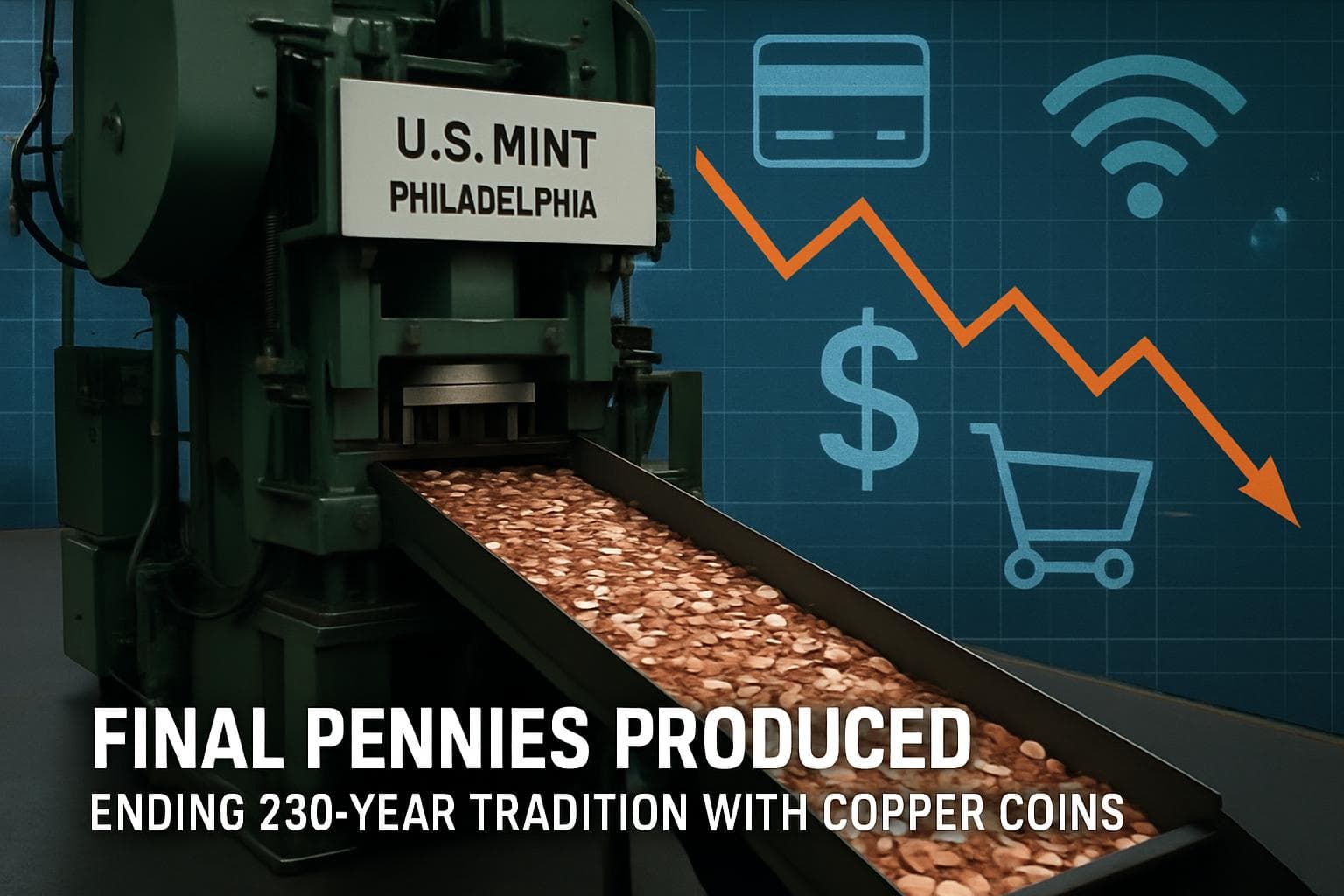
The United States is set to bid farewell to the penny, as the Philadelphia Mint prepares to strike its final batch of one-cent coins on Wednesday. This decision marks the end of a 230-year tradition, initiated shortly after the Coinage Act of 1792. The move, announced by President Donald Trump in February, aims to cut costs as each penny now costs nearly four cents to produce, according to the Treasury Department.
Economic Implications and Cost Savings
The cessation of penny production is projected to save the US government approximately $56 million annually. Despite the nostalgia associated with the penny, its practical use has diminished in an era dominated by electronic transactions. The Treasury Department estimates that around 300 billion pennies will remain in circulation, far exceeding the amount needed for commerce. However, the phase-out has prompted businesses to adjust their pricing strategies, potentially costing consumers an additional $6 million annually, as estimated by the Richmond Federal Reserve.
Business and Public Reactions
The abrupt phase-out has left some retailers scrambling for solutions, with reports of businesses rounding prices down or offering incentives for exact change. Jeff Lenard of the National Association of Convenience Stores expressed concerns over the lack of federal guidance, stating, "We have been advocating abolition of the penny for 30 years. But this is not the way we wanted it to go." Meanwhile, banks have begun rationing their penny supplies, highlighting the paradox of a coin once deemed abundant.
Global Trends in Currency Phase-Out
The US is not alone in its decision to retire low-value coins. Canada ceased penny production in 2012, while Australia and New Zealand phased out their one and two-cent coins in the 1990s. The UK considered scrapping its 1p coins in 2018 but ultimately decided against it. However, the rise of electronic transactions has led the UK to halt coin production in 2024, citing sufficient circulation of existing coins.
WHAT THIS MIGHT MEAN
The end of penny production in the US could pave the way for further currency reforms, particularly concerning the nickel, which costs nearly 14 cents to produce. As electronic transactions continue to rise, the necessity for physical currency may further diminish, prompting discussions on the future of other coins. Economists and policymakers will likely monitor the impact on consumer behavior and inflation closely, as businesses adjust to the absence of the penny. The transition may also encourage more countries to reconsider the practicality of maintaining low-denomination coins in a digital economy.
Related Articles

Canada and Australia Forge Strategic Partnership Amid Global Uncertainty
China Sets Lowest GDP Growth Target in Decades Amid Economic Challenges

UK Faces Dilemmas Amid Iran Conflict and China Spying Allegations

Tech Giants Pledge to Cover AI Data Center Energy Costs Amid Rising Electricity Concerns

Cuba Faces Widespread Blackout Amid Deepening Fuel Crisis

UK-Iran Tensions: Starmer Defends Cautious Approach Amid Trump Criticism
US Mint to Cease Penny Production After 230 Years
In This Article
 Daniel Rivera| Published
 HIGHLIGHTS
- The US Mint will produce its final batch of pennies on Wednesday, ending over 230 years of production.
- The decision is expected to save the government $56 million annually, as each penny costs nearly four cents to produce.
- Businesses are adjusting prices due to the penny phase-out, potentially costing consumers an additional $6 million annually.
- The move reflects a broader trend towards electronic transactions and the decreasing necessity of low-value coins.
- Other countries, like Canada and New Zealand, have previously phased out their lowest denomination coins.
The United States is set to bid farewell to the penny, as the Philadelphia Mint prepares to strike its final batch of one-cent coins on Wednesday. This decision marks the end of a 230-year tradition, initiated shortly after the Coinage Act of 1792. The move, announced by President Donald Trump in February, aims to cut costs as each penny now costs nearly four cents to produce, according to the Treasury Department.
Economic Implications and Cost Savings
The cessation of penny production is projected to save the US government approximately $56 million annually. Despite the nostalgia associated with the penny, its practical use has diminished in an era dominated by electronic transactions. The Treasury Department estimates that around 300 billion pennies will remain in circulation, far exceeding the amount needed for commerce. However, the phase-out has prompted businesses to adjust their pricing strategies, potentially costing consumers an additional $6 million annually, as estimated by the Richmond Federal Reserve.
Business and Public Reactions
The abrupt phase-out has left some retailers scrambling for solutions, with reports of businesses rounding prices down or offering incentives for exact change. Jeff Lenard of the National Association of Convenience Stores expressed concerns over the lack of federal guidance, stating, "We have been advocating abolition of the penny for 30 years. But this is not the way we wanted it to go." Meanwhile, banks have begun rationing their penny supplies, highlighting the paradox of a coin once deemed abundant.
Global Trends in Currency Phase-Out
The US is not alone in its decision to retire low-value coins. Canada ceased penny production in 2012, while Australia and New Zealand phased out their one and two-cent coins in the 1990s. The UK considered scrapping its 1p coins in 2018 but ultimately decided against it. However, the rise of electronic transactions has led the UK to halt coin production in 2024, citing sufficient circulation of existing coins.
WHAT THIS MIGHT MEAN
The end of penny production in the US could pave the way for further currency reforms, particularly concerning the nickel, which costs nearly 14 cents to produce. As electronic transactions continue to rise, the necessity for physical currency may further diminish, prompting discussions on the future of other coins. Economists and policymakers will likely monitor the impact on consumer behavior and inflation closely, as businesses adjust to the absence of the penny. The transition may also encourage more countries to reconsider the practicality of maintaining low-denomination coins in a digital economy.
Related Articles
Canada and Australia Forge Strategic Partnership Amid Global Uncertainty
China Sets Lowest GDP Growth Target in Decades Amid Economic Challenges
UK Faces Dilemmas Amid Iran Conflict and China Spying Allegations
Tech Giants Pledge to Cover AI Data Center Energy Costs Amid Rising Electricity Concerns
Cuba Faces Widespread Blackout Amid Deepening Fuel Crisis
UK-Iran Tensions: Starmer Defends Cautious Approach Amid Trump Criticism