
US Sanctions Palestinian Officials Amid Growing Global Recognition of Statehood
In This Article
HIGHLIGHTS
- The US has announced sanctions against the Palestinian Authority (PA) and the Palestine Liberation Organisation (PLO), denying visas to their officials.
- The sanctions are seen as a response to a UN conference advocating for a two-state solution, which the US opposed.
- A growing number of countries, including France and several Caribbean nations, have recently recognized Palestine as a state.
- The International Court of Justice's ruling on Israel's occupation has influenced the surge in Palestinian state recognition.
- Israel supports the US sanctions, criticizing countries that recognize Palestine while accusing it of supporting terrorism.
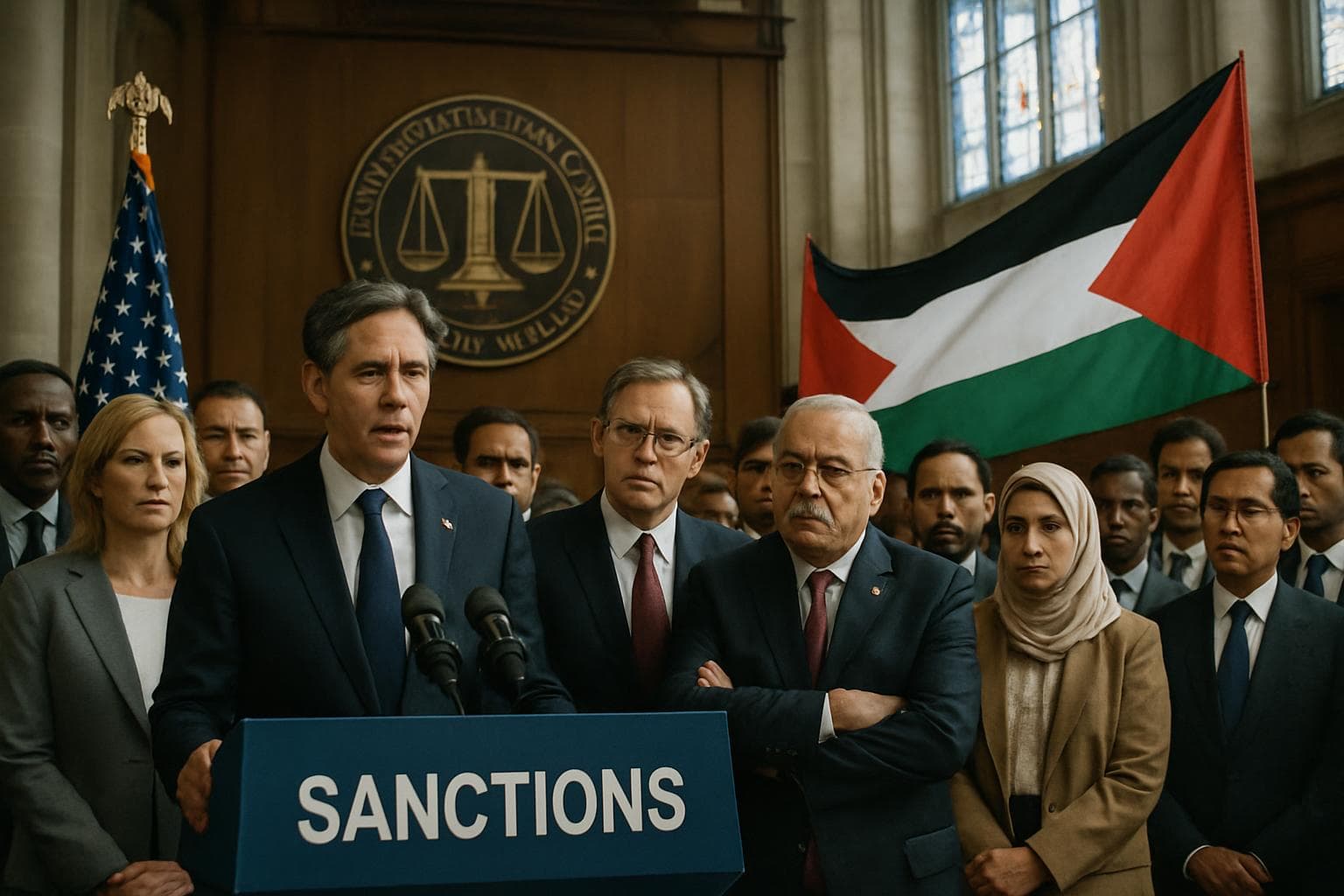
The United States has imposed sanctions on the Palestinian Authority (PA) and the Palestine Liberation Organisation (PLO), escalating tensions in the ongoing Israel-Palestine conflict. The State Department announced it would deny visas to officials from both entities, citing their actions to internationalize the conflict through bodies like the International Criminal Court (ICC) and International Court of Justice (ICJ).
Sanctions and Diplomatic Tensions
The US sanctions come in the wake of a United Nations conference led by France and Saudi Arabia, which aimed to rally support for a two-state solution. The US administration, under President Trump, has criticized these efforts, warning of diplomatic consequences for countries making "anti-Israel" declarations. The sanctions are perceived as retaliation against the growing international recognition of Palestinian statehood, with France, the UK, and Canada among those committing to recognize an independent Palestinian state.
Global Momentum for Palestinian Recognition
The movement to recognize Palestine has gained momentum, particularly in the Caribbean, where Barbados, Jamaica, and other nations have acknowledged Palestinian statehood. European countries like Ireland, Spain, and Norway have also joined this wave, with France becoming the first G7 nation to pledge recognition. This shift is partly attributed to a landmark ICJ ruling on the legality of Israel's occupation of Palestinian territories, which has galvanized calls for boycotts and sanctions against Israel.
Reactions from Israel and Palestine
Israel has welcomed the US sanctions, with Foreign Minister Gideon Sa'ar praising the move as a stand against countries that recognize Palestine while allegedly ignoring its support for terrorism. In contrast, Palestinian leaders have condemned the sanctions as punitive measures against their diplomatic successes. Mustafa Barghouti, a prominent Palestinian politician, criticized the US for targeting the "victim" rather than addressing alleged Israeli war crimes.
WHAT THIS MIGHT MEAN
The US sanctions on Palestinian officials could further strain relations between Washington and countries advocating for a two-state solution. As more nations recognize Palestinian statehood, the geopolitical landscape may shift, potentially isolating the US and Israel diplomatically. The ICJ's rulings could continue to influence international opinion, increasing pressure on Israel regarding its occupation policies. Experts suggest that the evolving dynamics might lead to renewed negotiations or, conversely, deepen existing divisions in the region.
Images from the Web

Related Articles
Intensified US-Israel Strikes on Iran Spark Global Outcry
Iran Postpones Khamenei Funeral Amid Escalating US-Israeli Strikes

UK Faces Dilemmas Amid Iran Conflict and China Spying Allegations

US and Israel Intensify Military Campaign as Iran's Capabilities Dwindle
Senate Blocks Resolution to Limit Trump's Military Actions in Iran
Spain's Sánchez Stands Firm Against Trump's Trade Threat Over Iran Stance
US Sanctions Palestinian Officials Amid Growing Global Recognition of Statehood
In This Article
 Ethan Brooks| Published
 HIGHLIGHTS
- The US has announced sanctions against the Palestinian Authority (PA) and the Palestine Liberation Organisation (PLO), denying visas to their officials.
- The sanctions are seen as a response to a UN conference advocating for a two-state solution, which the US opposed.
- A growing number of countries, including France and several Caribbean nations, have recently recognized Palestine as a state.
- The International Court of Justice's ruling on Israel's occupation has influenced the surge in Palestinian state recognition.
- Israel supports the US sanctions, criticizing countries that recognize Palestine while accusing it of supporting terrorism.
The United States has imposed sanctions on the Palestinian Authority (PA) and the Palestine Liberation Organisation (PLO), escalating tensions in the ongoing Israel-Palestine conflict. The State Department announced it would deny visas to officials from both entities, citing their actions to internationalize the conflict through bodies like the International Criminal Court (ICC) and International Court of Justice (ICJ).
Sanctions and Diplomatic Tensions
The US sanctions come in the wake of a United Nations conference led by France and Saudi Arabia, which aimed to rally support for a two-state solution. The US administration, under President Trump, has criticized these efforts, warning of diplomatic consequences for countries making "anti-Israel" declarations. The sanctions are perceived as retaliation against the growing international recognition of Palestinian statehood, with France, the UK, and Canada among those committing to recognize an independent Palestinian state.
Global Momentum for Palestinian Recognition
The movement to recognize Palestine has gained momentum, particularly in the Caribbean, where Barbados, Jamaica, and other nations have acknowledged Palestinian statehood. European countries like Ireland, Spain, and Norway have also joined this wave, with France becoming the first G7 nation to pledge recognition. This shift is partly attributed to a landmark ICJ ruling on the legality of Israel's occupation of Palestinian territories, which has galvanized calls for boycotts and sanctions against Israel.
Reactions from Israel and Palestine
Israel has welcomed the US sanctions, with Foreign Minister Gideon Sa'ar praising the move as a stand against countries that recognize Palestine while allegedly ignoring its support for terrorism. In contrast, Palestinian leaders have condemned the sanctions as punitive measures against their diplomatic successes. Mustafa Barghouti, a prominent Palestinian politician, criticized the US for targeting the "victim" rather than addressing alleged Israeli war crimes.
WHAT THIS MIGHT MEAN
The US sanctions on Palestinian officials could further strain relations between Washington and countries advocating for a two-state solution. As more nations recognize Palestinian statehood, the geopolitical landscape may shift, potentially isolating the US and Israel diplomatically. The ICJ's rulings could continue to influence international opinion, increasing pressure on Israel regarding its occupation policies. Experts suggest that the evolving dynamics might lead to renewed negotiations or, conversely, deepen existing divisions in the region.
Images from the Web
Related Articles
Intensified US-Israel Strikes on Iran Spark Global Outcry
Iran Postpones Khamenei Funeral Amid Escalating US-Israeli Strikes
UK Faces Dilemmas Amid Iran Conflict and China Spying Allegations
US and Israel Intensify Military Campaign as Iran's Capabilities Dwindle
Senate Blocks Resolution to Limit Trump's Military Actions in Iran
Spain's Sánchez Stands Firm Against Trump's Trade Threat Over Iran Stance