
US and South Korea Strike Trade Deal to Impose 15% Tariff
In This Article
HIGHLIGHTS
- The US and South Korea have agreed on a 15% tariff on imports, avoiding a potential 25% levy.
- South Korea will invest $350 billion in the US, with $150 billion earmarked for shipbuilding.
- The deal maintains South Korea's control over its rice and beef markets, avoiding further US market access.
- South Korean President Lee Jae Myung praised the deal for ensuring competitive tariff rates.
- The agreement does not affect the US-South Korea military alliance, with further discussions planned.
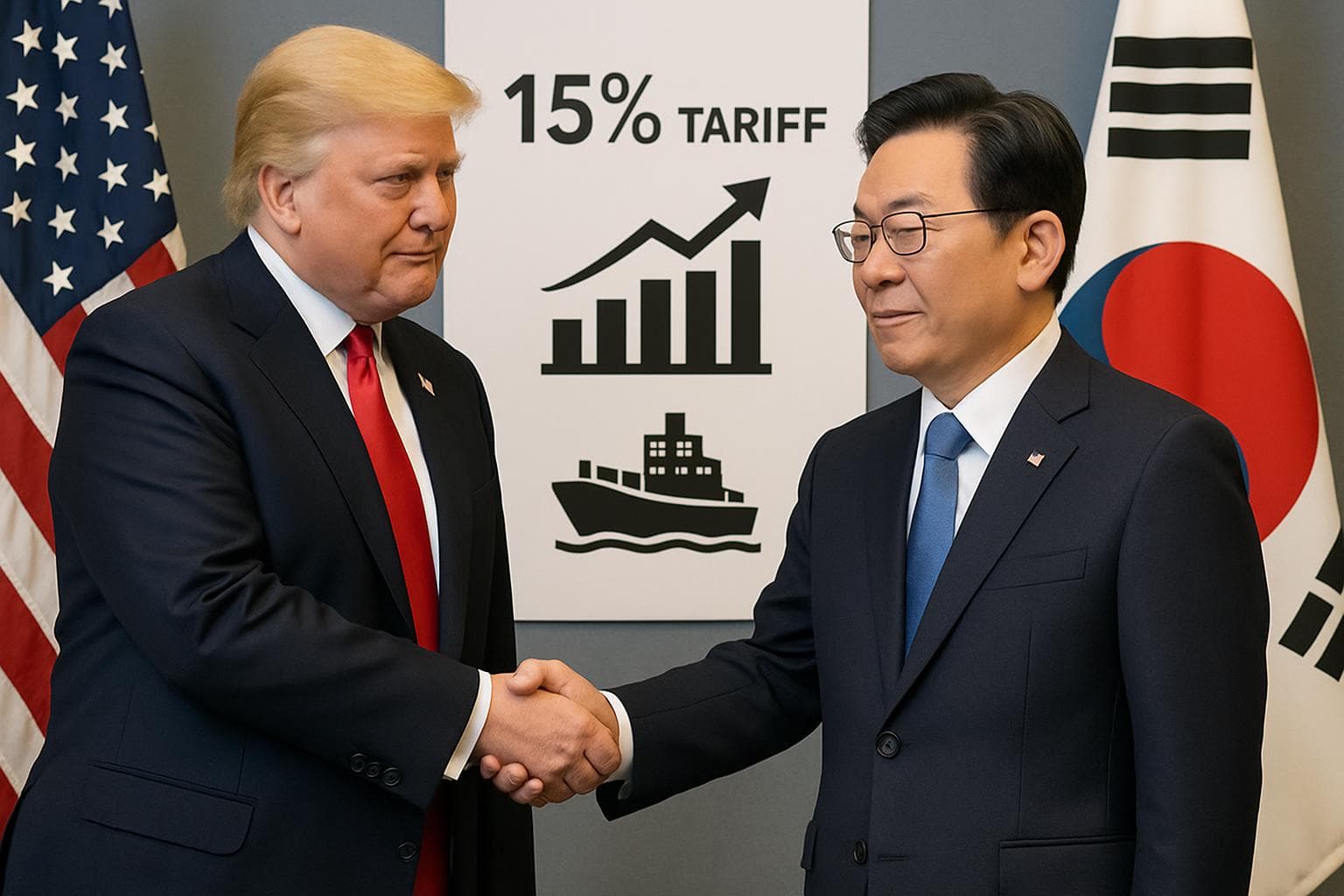
In a significant development in international trade relations, the United States and South Korea have reached an agreement to impose a 15% tariff on South Korean imports, averting a looming 25% levy. This announcement by President Donald Trump comes just ahead of a self-imposed deadline of August 1, which threatened higher tariffs on imports from various countries.
Details of the Trade Agreement
The deal, hailed as a "full and complete trade deal" by President Trump, was finalized following discussions with South Korean officials at the White House. South Korea, a major exporter of cars and semiconductors to the US, faced mounting pressure after Japan secured a similar tariff rate last week. The agreement also includes a substantial $350 billion investment from South Korea into the US economy, with $150 billion dedicated to shipbuilding, a strategic move to bolster both nations' industries.
South Korea's Strategic Gains
South Korean President Lee Jae Myung expressed satisfaction with the deal, emphasizing that it places South Korea on an equal or better footing compared to other trading partners. Crucially, the agreement preserves South Korea's strict controls over its rice and beef markets, a red line for Seoul, which had faced potential protests from its farming sector.
Broader Implications and Future Talks
While the trade deal does not alter the existing US-South Korea military alliance, it sets the stage for further negotiations. President Lee is scheduled to visit Washington in two weeks for a summit with President Trump, where discussions may include military cost-sharing arrangements. The deal is seen as a significant step in reducing trade uncertainties and ensuring competitive tariff rates for South Korean exports.
WHAT THIS MIGHT MEAN
The successful negotiation of this trade deal between the US and South Korea could set a precedent for future trade agreements under the Trump administration, potentially influencing ongoing talks with other countries. The focus on strategic investments, particularly in shipbuilding, highlights a shift towards strengthening industrial ties and addressing security concerns. As President Lee prepares for his upcoming visit to Washington, the discussions may pivot towards military cost-sharing, a topic that has previously strained US-South Korea relations. Experts suggest that the outcome of these talks could have lasting implications on the geopolitical landscape in East Asia, particularly concerning North Korea's influence in the region.
Related Articles
Trump's New Tariff Strategy Sparks Global Trade Uncertainty
China Sets Lowest GDP Growth Target in Decades Amid Economic Challenges

Tech Giants Pledge to Cover AI Data Center Energy Costs Amid Rising Electricity Concerns

Cuba Faces Widespread Blackout Amid Deepening Fuel Crisis

UK Faces Dilemmas Amid Iran Conflict and China Spying Allegations
Spain's Sánchez Stands Firm Against Trump's Trade Threat Over Iran Stance
US and South Korea Strike Trade Deal to Impose 15% Tariff
In This Article
 Daniel Rivera| Published
 HIGHLIGHTS
- The US and South Korea have agreed on a 15% tariff on imports, avoiding a potential 25% levy.
- South Korea will invest $350 billion in the US, with $150 billion earmarked for shipbuilding.
- The deal maintains South Korea's control over its rice and beef markets, avoiding further US market access.
- South Korean President Lee Jae Myung praised the deal for ensuring competitive tariff rates.
- The agreement does not affect the US-South Korea military alliance, with further discussions planned.
In a significant development in international trade relations, the United States and South Korea have reached an agreement to impose a 15% tariff on South Korean imports, averting a looming 25% levy. This announcement by President Donald Trump comes just ahead of a self-imposed deadline of August 1, which threatened higher tariffs on imports from various countries.
Details of the Trade Agreement
The deal, hailed as a "full and complete trade deal" by President Trump, was finalized following discussions with South Korean officials at the White House. South Korea, a major exporter of cars and semiconductors to the US, faced mounting pressure after Japan secured a similar tariff rate last week. The agreement also includes a substantial $350 billion investment from South Korea into the US economy, with $150 billion dedicated to shipbuilding, a strategic move to bolster both nations' industries.
South Korea's Strategic Gains
South Korean President Lee Jae Myung expressed satisfaction with the deal, emphasizing that it places South Korea on an equal or better footing compared to other trading partners. Crucially, the agreement preserves South Korea's strict controls over its rice and beef markets, a red line for Seoul, which had faced potential protests from its farming sector.
Broader Implications and Future Talks
While the trade deal does not alter the existing US-South Korea military alliance, it sets the stage for further negotiations. President Lee is scheduled to visit Washington in two weeks for a summit with President Trump, where discussions may include military cost-sharing arrangements. The deal is seen as a significant step in reducing trade uncertainties and ensuring competitive tariff rates for South Korean exports.
WHAT THIS MIGHT MEAN
The successful negotiation of this trade deal between the US and South Korea could set a precedent for future trade agreements under the Trump administration, potentially influencing ongoing talks with other countries. The focus on strategic investments, particularly in shipbuilding, highlights a shift towards strengthening industrial ties and addressing security concerns. As President Lee prepares for his upcoming visit to Washington, the discussions may pivot towards military cost-sharing, a topic that has previously strained US-South Korea relations. Experts suggest that the outcome of these talks could have lasting implications on the geopolitical landscape in East Asia, particularly concerning North Korea's influence in the region.
Related Articles
Trump's New Tariff Strategy Sparks Global Trade Uncertainty
China Sets Lowest GDP Growth Target in Decades Amid Economic Challenges
Tech Giants Pledge to Cover AI Data Center Energy Costs Amid Rising Electricity Concerns
Cuba Faces Widespread Blackout Amid Deepening Fuel Crisis
UK Faces Dilemmas Amid Iran Conflict and China Spying Allegations
Spain's Sánchez Stands Firm Against Trump's Trade Threat Over Iran Stance