
US and Vietnam Finalize Trade Deal with New Tariff Structures
In This Article
HIGHLIGHTS
- The US and Vietnam have agreed on a trade deal imposing a 20% tariff on Vietnamese exports, down from a planned 46%.
- Vietnam will allow US products tariff-free access, enhancing market access for American goods.
- A 40% tariff will apply to goods trans-shipped through Vietnam, targeting Chinese products rerouted to avoid US tariffs.
- Vietnam's exports to the US have surged since 2018, reaching $137 billion in 2024, while US exports to Vietnam grew modestly.
- The agreement is part of broader US trade negotiations, with other countries like India and Britain also seeking deals.
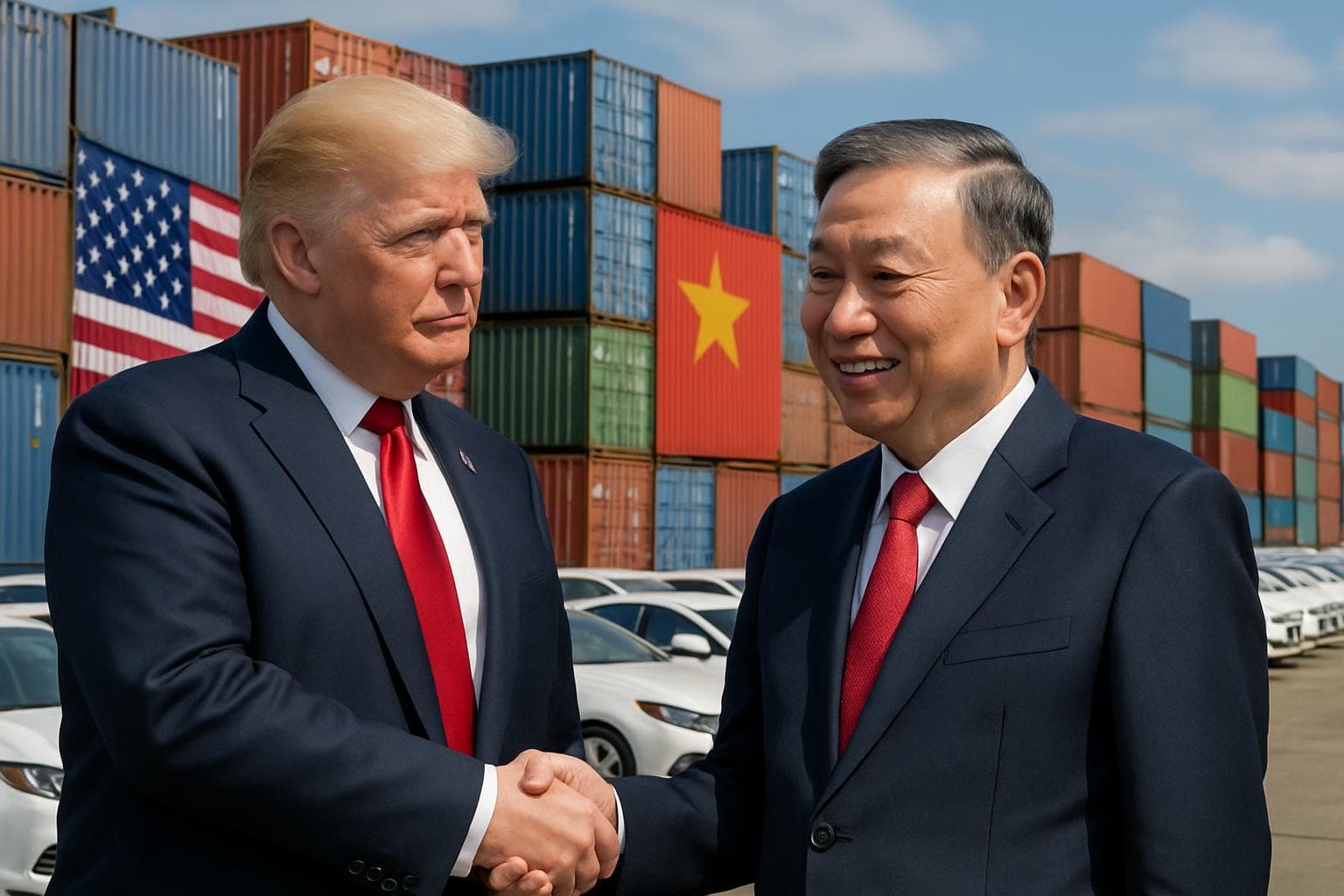
In a significant development in international trade relations, the United States and Vietnam have reached a trade agreement that introduces a 20% tariff on Vietnamese exports to the US. This agreement, announced by President Donald Trump on Wednesday, marks a reduction from the initially proposed 46% levy and comes after intense last-minute negotiations.
Tariff Adjustments and Market Access
Under the new deal, Vietnam will grant the United States tariff-free access to its markets, a move President Trump highlighted as unprecedented. "Vietnam will do something that they have never done before, give the United States of America TOTAL ACCESS to their Markets for Trade," Trump stated on social media. This agreement is expected to benefit US exporters, particularly in the automotive sector, with large-engine vehicles being a key focus.
Trans-shipment Tariffs and Trade Dynamics
A notable aspect of the agreement is the imposition of a 40% tariff on goods that are trans-shipped through Vietnam. This measure aims to curb the practice of rerouting Chinese products through Vietnam to evade US tariffs. Peter Navarro, a senior trade advisor to Trump, emphasized that a significant portion of Vietnamese exports to the US are actually Chinese goods. However, the implementation details of this provision remain unclear, with concerns about the enforceability of detecting such trans-shipments.
Economic Impact and Broader Trade Context
Vietnam has emerged as a major manufacturing hub, attracting companies like Nike and Apple seeking alternatives to China amid US tariff hikes. Since 2018, Vietnam's exports to the US have nearly tripled, reaching approximately $137 billion in 2024. Meanwhile, US exports to Vietnam have increased by about 30% over the same period. The trade deal with Vietnam is part of a broader strategy by the Trump administration to renegotiate trade terms with multiple countries, including ongoing discussions with India and a recently concluded agreement with Britain.
Political and Economic Reactions
The trade agreement has been met with cautious optimism. Adam Sitkoff, executive director of the American Chamber of Commerce in Hanoi, expressed confidence that the deal positions Vietnam favorably. However, he raised concerns about the ambiguity surrounding the definition and enforcement of trans-shipment tariffs. Vietnam's General Secretary To Lam reiterated an invitation for President Trump to visit the country, underscoring the diplomatic ties between the two nations.
WHAT THIS MIGHT MEAN
The US-Vietnam trade deal could have significant implications for both countries' economies. For Vietnam, the agreement may bolster its position as a key manufacturing hub, attracting more foreign investment. However, the enforcement of trans-shipment tariffs could pose challenges, potentially straining relations if disputes arise over their implementation.
For the US, the deal aligns with Trump's broader trade strategy of reducing trade deficits and securing better market access for American products. The success of this agreement could influence ongoing negotiations with other countries, such as India, and shape future US trade policies.
Experts suggest that while the deal provides immediate economic benefits, its long-term impact will depend on how effectively both nations address the complexities of trans-shipment and market access. As global trade dynamics continue to evolve, the US-Vietnam agreement may serve as a template for future trade negotiations.
Related Articles
Trump's New Tariff Strategy Sparks Global Trade Uncertainty
China Sets Lowest GDP Growth Target in Decades Amid Economic Challenges

Tech Giants Pledge to Cover AI Data Center Energy Costs Amid Rising Electricity Concerns
Cuba Faces Widespread Blackout Amid Deepening Fuel Crisis

UK Faces Dilemmas Amid Iran Conflict and China Spying Allegations

Iran Postpones Khamenei Funeral Amid Escalating US-Israeli Strikes
US and Vietnam Finalize Trade Deal with New Tariff Structures
In This Article
 Daniel Rivera| Published
 HIGHLIGHTS
- The US and Vietnam have agreed on a trade deal imposing a 20% tariff on Vietnamese exports, down from a planned 46%.
- Vietnam will allow US products tariff-free access, enhancing market access for American goods.
- A 40% tariff will apply to goods trans-shipped through Vietnam, targeting Chinese products rerouted to avoid US tariffs.
- Vietnam's exports to the US have surged since 2018, reaching $137 billion in 2024, while US exports to Vietnam grew modestly.
- The agreement is part of broader US trade negotiations, with other countries like India and Britain also seeking deals.
In a significant development in international trade relations, the United States and Vietnam have reached a trade agreement that introduces a 20% tariff on Vietnamese exports to the US. This agreement, announced by President Donald Trump on Wednesday, marks a reduction from the initially proposed 46% levy and comes after intense last-minute negotiations.
Tariff Adjustments and Market Access
Under the new deal, Vietnam will grant the United States tariff-free access to its markets, a move President Trump highlighted as unprecedented. "Vietnam will do something that they have never done before, give the United States of America TOTAL ACCESS to their Markets for Trade," Trump stated on social media. This agreement is expected to benefit US exporters, particularly in the automotive sector, with large-engine vehicles being a key focus.
Trans-shipment Tariffs and Trade Dynamics
A notable aspect of the agreement is the imposition of a 40% tariff on goods that are trans-shipped through Vietnam. This measure aims to curb the practice of rerouting Chinese products through Vietnam to evade US tariffs. Peter Navarro, a senior trade advisor to Trump, emphasized that a significant portion of Vietnamese exports to the US are actually Chinese goods. However, the implementation details of this provision remain unclear, with concerns about the enforceability of detecting such trans-shipments.
Economic Impact and Broader Trade Context
Vietnam has emerged as a major manufacturing hub, attracting companies like Nike and Apple seeking alternatives to China amid US tariff hikes. Since 2018, Vietnam's exports to the US have nearly tripled, reaching approximately $137 billion in 2024. Meanwhile, US exports to Vietnam have increased by about 30% over the same period. The trade deal with Vietnam is part of a broader strategy by the Trump administration to renegotiate trade terms with multiple countries, including ongoing discussions with India and a recently concluded agreement with Britain.
Political and Economic Reactions
The trade agreement has been met with cautious optimism. Adam Sitkoff, executive director of the American Chamber of Commerce in Hanoi, expressed confidence that the deal positions Vietnam favorably. However, he raised concerns about the ambiguity surrounding the definition and enforcement of trans-shipment tariffs. Vietnam's General Secretary To Lam reiterated an invitation for President Trump to visit the country, underscoring the diplomatic ties between the two nations.
WHAT THIS MIGHT MEAN
The US-Vietnam trade deal could have significant implications for both countries' economies. For Vietnam, the agreement may bolster its position as a key manufacturing hub, attracting more foreign investment. However, the enforcement of trans-shipment tariffs could pose challenges, potentially straining relations if disputes arise over their implementation.
For the US, the deal aligns with Trump's broader trade strategy of reducing trade deficits and securing better market access for American products. The success of this agreement could influence ongoing negotiations with other countries, such as India, and shape future US trade policies.
Experts suggest that while the deal provides immediate economic benefits, its long-term impact will depend on how effectively both nations address the complexities of trans-shipment and market access. As global trade dynamics continue to evolve, the US-Vietnam agreement may serve as a template for future trade negotiations.
Related Articles
Trump's New Tariff Strategy Sparks Global Trade Uncertainty
China Sets Lowest GDP Growth Target in Decades Amid Economic Challenges
Tech Giants Pledge to Cover AI Data Center Energy Costs Amid Rising Electricity Concerns
Cuba Faces Widespread Blackout Amid Deepening Fuel Crisis
UK Faces Dilemmas Amid Iran Conflict and China Spying Allegations
Iran Postpones Khamenei Funeral Amid Escalating US-Israeli Strikes