
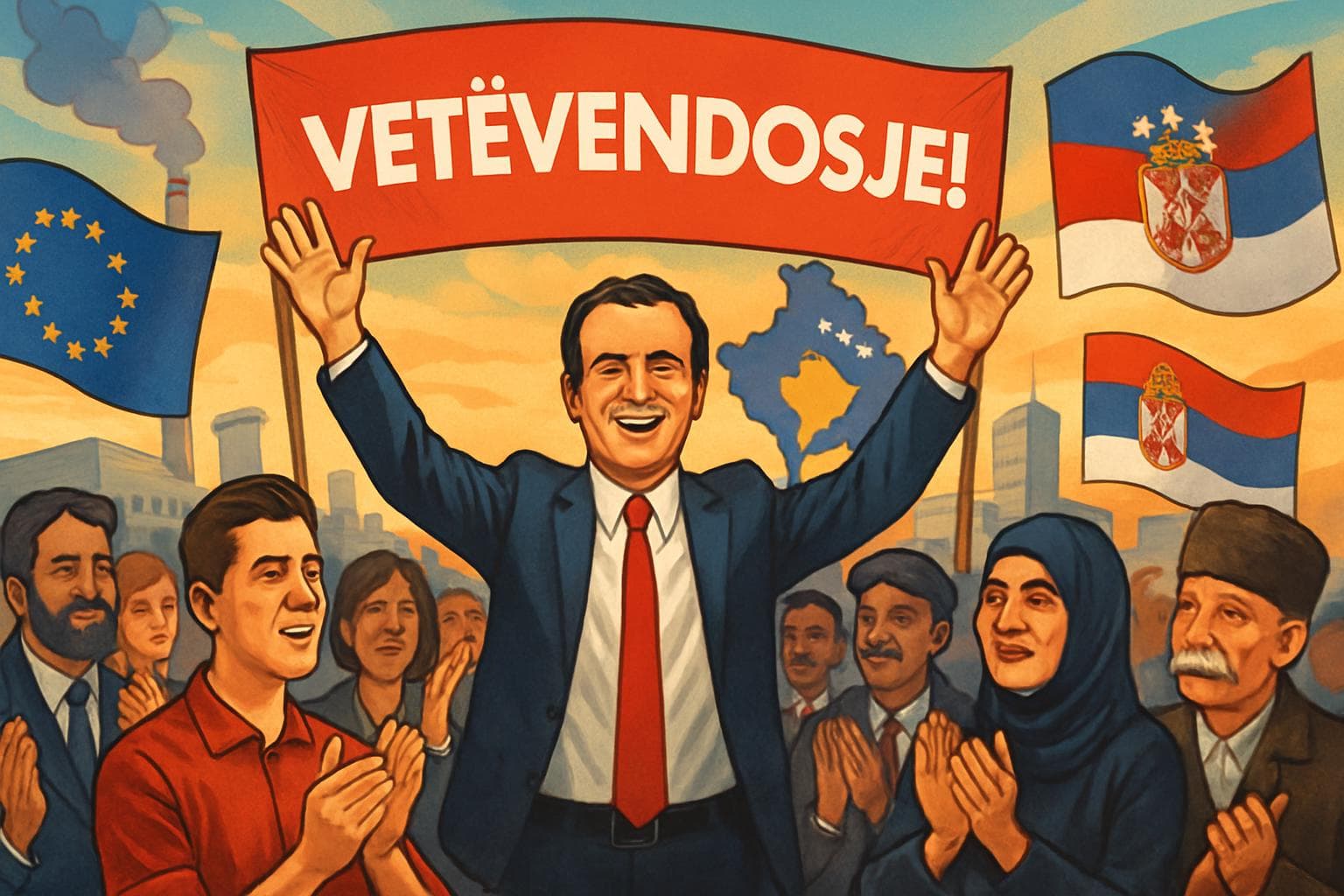
Kosovo's Vetevendosje Party Wins Election Amid Political Stalemate
In This Article
HIGHLIGHTS
- The Vetevendosje party, led by Albin Kurti, won Kosovo's parliamentary elections with 50.8% of the vote, but still requires coalition partners to govern.
- Kosovo has faced a prolonged political deadlock since February, impacting its economy and international relations, particularly with the EU and the US.
- The election results reflect voter dissatisfaction with traditional parties, which have failed to deliver economic prosperity since Kosovo's independence in 2008.
- Ethnic minority parties hold 20 of the 120 parliamentary seats, potentially playing a crucial role in forming a new government.
- Tensions with Serbia remain high, with the EU urging Kosovo to engage in dialogue to normalize relations.
Kosovo's Vetevendosje party, led by Albin Kurti, has emerged victorious in the country's parliamentary elections, securing 50.8% of the vote according to preliminary results. This marks a significant win for the Albanian nationalist party, yet it falls short of an outright majority, necessitating coalition partnerships to form a government.
Political Deadlock and Economic Implications
The election follows months of political deadlock after Vetevendosje's previous win in February failed to translate into a functioning government. This impasse has had severe economic repercussions, with Kosovo missing out on substantial European Union funding and potential agreements with the World Bank, which could have injected over €1 billion into the economy. The lack of a budget for the upcoming year has further exacerbated economic concerns in the nation of 2 million people.
Voter Sentiment and Minority Influence
The election results underscore a growing disenchantment with traditional parties, such as the Democratic Party of Kosovo (PDK) and the Democratic League of Kosovo (LDK), which have dominated the political landscape since Kosovo's 2008 declaration of independence but have failed to deliver on promises of prosperity. Ethnic minority parties, guaranteed 20 seats in the 120-member National Assembly, are poised to play a pivotal role in coalition negotiations.
International Relations and Regional Tensions
Kosovo's international relations, particularly with the EU and the US, have been strained under Kurti's leadership due to his hardline stance on institutions serving the Serb minority. This has heightened tensions in the Serb-majority north, although recent municipal elections saw ethnic Serb mayors assume power peacefully. The EU has lifted punitive measures imposed earlier this year but continues to press for progress in the normalization dialogue with Serbia, a process that has stalled amid Kurti's frosty relations with Serbian President Aleksandar Vucic.
Future Prospects
As Kosovo navigates its political future, the electorate's endorsement of Kurti's polarizing leadership reflects a desire for change amidst dissatisfaction with the status quo. The upcoming months will be crucial as the new government seeks to stabilize the economy, mend international ties, and address the ongoing tensions with Serbia.
WHAT THIS MIGHT MEAN
The formation of a new government in Kosovo hinges on successful coalition talks, with ethnic minority parties likely to be key players. Should Kurti manage to secure a stable coalition, it could pave the way for economic recovery and renewed international cooperation. However, failure to form a government could lead to further political instability and economic stagnation.
On the international front, the EU and US will be closely monitoring Kosovo's approach to the normalization dialogue with Serbia. Progress in these talks could enhance Kosovo's prospects for EU integration, while continued tensions may hinder its diplomatic standing.
Experts suggest that Kurti's ability to balance domestic priorities with international expectations will be critical in shaping Kosovo's political and economic trajectory in the coming years.
Related Articles
Venezuelan Political Prisoners Seek Amnesty Amidst Hopes for Democratic Transition
China Sets Lowest GDP Growth Target in Decades Amid Economic Challenges
Cuba Faces Widespread Blackout Amid Deepening Fuel Crisis

Russian LNG Tanker Sinks in Mediterranean Amid Accusations of Ukrainian Drone Attack

UK Faces Dilemmas Amid Iran Conflict and China Spying Allegations

Google Faces Legal Battle Over AI Chatbot's Alleged Role in Tragic Death
Kosovo's Vetevendosje Party Wins Election Amid Political Stalemate
In This Article
 Alex Carter| Published
 HIGHLIGHTS
- The Vetevendosje party, led by Albin Kurti, won Kosovo's parliamentary elections with 50.8% of the vote, but still requires coalition partners to govern.
- Kosovo has faced a prolonged political deadlock since February, impacting its economy and international relations, particularly with the EU and the US.
- The election results reflect voter dissatisfaction with traditional parties, which have failed to deliver economic prosperity since Kosovo's independence in 2008.
- Ethnic minority parties hold 20 of the 120 parliamentary seats, potentially playing a crucial role in forming a new government.
- Tensions with Serbia remain high, with the EU urging Kosovo to engage in dialogue to normalize relations.
Kosovo's Vetevendosje party, led by Albin Kurti, has emerged victorious in the country's parliamentary elections, securing 50.8% of the vote according to preliminary results. This marks a significant win for the Albanian nationalist party, yet it falls short of an outright majority, necessitating coalition partnerships to form a government.
Political Deadlock and Economic Implications
The election follows months of political deadlock after Vetevendosje's previous win in February failed to translate into a functioning government. This impasse has had severe economic repercussions, with Kosovo missing out on substantial European Union funding and potential agreements with the World Bank, which could have injected over €1 billion into the economy. The lack of a budget for the upcoming year has further exacerbated economic concerns in the nation of 2 million people.
Voter Sentiment and Minority Influence
The election results underscore a growing disenchantment with traditional parties, such as the Democratic Party of Kosovo (PDK) and the Democratic League of Kosovo (LDK), which have dominated the political landscape since Kosovo's 2008 declaration of independence but have failed to deliver on promises of prosperity. Ethnic minority parties, guaranteed 20 seats in the 120-member National Assembly, are poised to play a pivotal role in coalition negotiations.
International Relations and Regional Tensions
Kosovo's international relations, particularly with the EU and the US, have been strained under Kurti's leadership due to his hardline stance on institutions serving the Serb minority. This has heightened tensions in the Serb-majority north, although recent municipal elections saw ethnic Serb mayors assume power peacefully. The EU has lifted punitive measures imposed earlier this year but continues to press for progress in the normalization dialogue with Serbia, a process that has stalled amid Kurti's frosty relations with Serbian President Aleksandar Vucic.
Future Prospects
As Kosovo navigates its political future, the electorate's endorsement of Kurti's polarizing leadership reflects a desire for change amidst dissatisfaction with the status quo. The upcoming months will be crucial as the new government seeks to stabilize the economy, mend international ties, and address the ongoing tensions with Serbia.
WHAT THIS MIGHT MEAN
The formation of a new government in Kosovo hinges on successful coalition talks, with ethnic minority parties likely to be key players. Should Kurti manage to secure a stable coalition, it could pave the way for economic recovery and renewed international cooperation. However, failure to form a government could lead to further political instability and economic stagnation.
On the international front, the EU and US will be closely monitoring Kosovo's approach to the normalization dialogue with Serbia. Progress in these talks could enhance Kosovo's prospects for EU integration, while continued tensions may hinder its diplomatic standing.
Experts suggest that Kurti's ability to balance domestic priorities with international expectations will be critical in shaping Kosovo's political and economic trajectory in the coming years.
Related Articles
Venezuelan Political Prisoners Seek Amnesty Amidst Hopes for Democratic Transition
China Sets Lowest GDP Growth Target in Decades Amid Economic Challenges
Cuba Faces Widespread Blackout Amid Deepening Fuel Crisis
Russian LNG Tanker Sinks in Mediterranean Amid Accusations of Ukrainian Drone Attack
UK Faces Dilemmas Amid Iran Conflict and China Spying Allegations
Google Faces Legal Battle Over AI Chatbot's Alleged Role in Tragic Death