
Vietnam Floods Claim 90 Lives Amidst Severe Weather and Landslides
In This Article
HIGHLIGHTS
- At least 90 people have died and 12 are missing due to severe flooding and landslides in Vietnam, with Dak Lak province being the hardest hit.
- The floods have damaged 186,000 homes and swept away over three million livestock, causing an estimated $341 million in economic losses.
- Military and police forces have been mobilized to aid in rescue and relief efforts, particularly in the five most affected provinces.
- Rainfall has exceeded historical levels, with some areas receiving more than 1.9 meters of rain, exacerbating the impact of the floods.
- Scientists attribute the increased frequency and intensity of such extreme weather events to human-driven climate change.
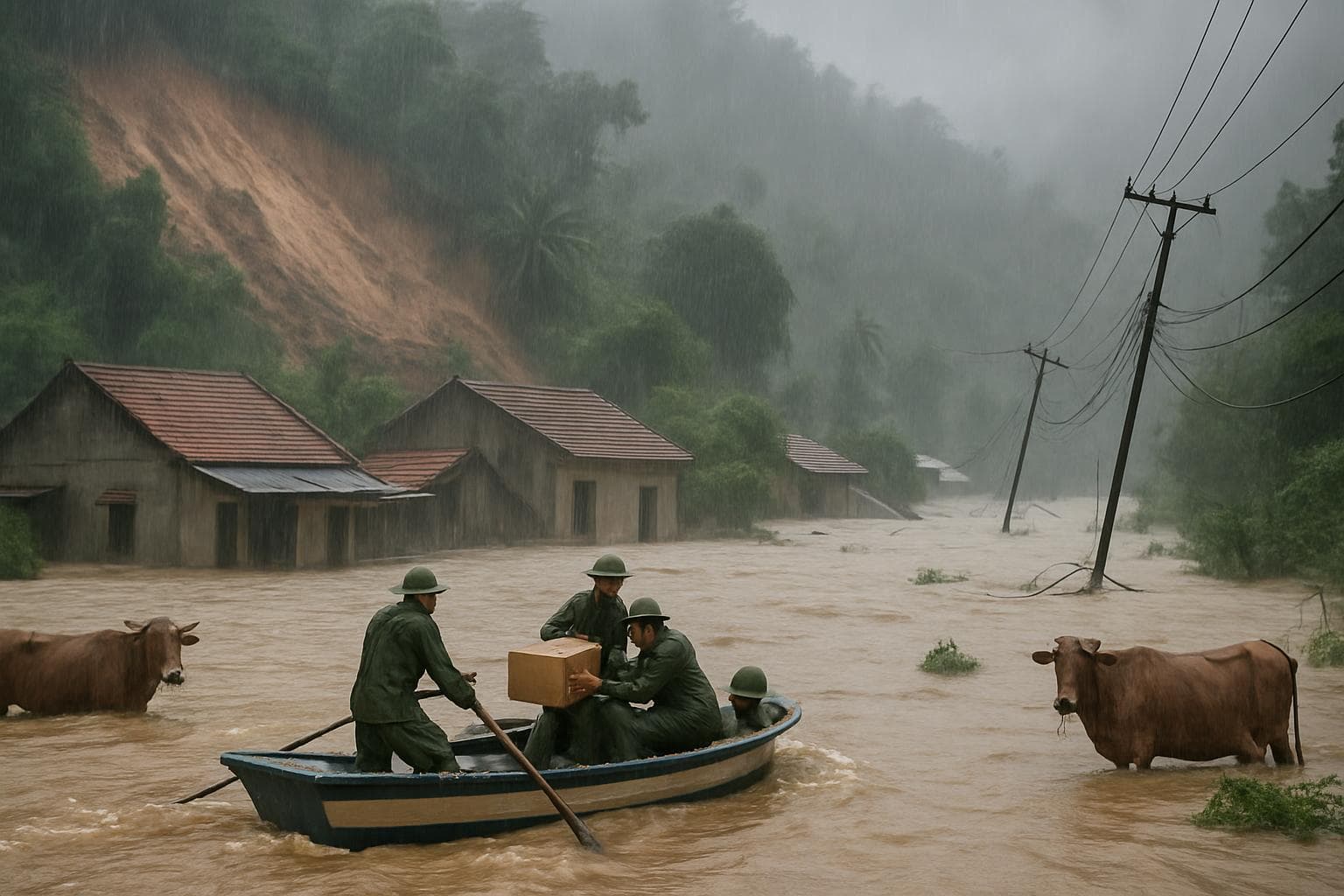
Vietnam is grappling with the aftermath of devastating floods and landslides that have claimed at least 90 lives and left 12 people missing. The relentless downpour, which began in late October, has wreaked havoc across the south-central regions, particularly in the mountainous province of Dak Lak, where more than 60 fatalities have been recorded since November 16.
Widespread Destruction and Economic Impact
The floods have inflicted significant damage, with 186,000 homes affected and over three million livestock lost. The Vietnamese government estimates the economic toll at approximately 8.98 trillion dong ($341 million). The disaster has also disrupted power supplies, leaving 258,000 people without electricity, and obstructed major transport routes, complicating relief efforts.
Emergency Response and Relief Efforts
In response to the crisis, military and police units have been deployed to assist in the hardest-hit areas, including Quang Ngai, Gia Lai, Dak Lak, Khanh Hoa, and Lam Dong provinces. Rescuers have been working tirelessly, using boats to reach stranded residents and delivering essential supplies to flooded hospitals, where medical staff and patients have been surviving on limited resources.
Record Rainfall and Climate Change Concerns
The region has experienced unprecedented rainfall, with some areas recording over 1.9 meters in a week, surpassing levels not seen since 1993. The Ba River in Dak Lak and the Cai River in Khanh Hoa have reached new highs, exacerbating the flooding. Experts warn that human-driven climate change is making such extreme weather events more frequent and severe, posing ongoing challenges for Vietnam.
Government and International Response
Prime Minister Phạm Minh Chính, who chaired an emergency meeting from South Africa, emphasized the need for coordinated relief efforts. The international community has also been urged to support Vietnam in its recovery and adaptation strategies to mitigate future climate-related disasters.
WHAT THIS MIGHT MEAN
As the immediate crisis subsides, Vietnam faces the daunting task of rebuilding and addressing the long-term impacts of climate change. The government may need to invest in more robust infrastructure and disaster preparedness measures to mitigate future risks. International aid and cooperation could play a crucial role in supporting these efforts. Additionally, the increased frequency of such events may prompt Vietnam to strengthen its climate policies and engage more actively in global climate change discussions.
Related Articles
Myanmar's Controversial Elections Amidst Civil Unrest and International Criticism

Jesse Jackson: A Legacy of Civil Rights and Political Change

Prince Andrew Under Scrutiny for Alleged Breach of Confidentiality in Epstein Scandal
US-India Trade Deal: A New Chapter in Bilateral Relations

Diplomatic Tensions Escalate as South Africa and Israel Expel Top Envoys

Viral 'Crying Horse' Toy Captures China's Corporate Fatigue Ahead of Lunar New Year
Vietnam Floods Claim 90 Lives Amidst Severe Weather and Landslides
In This Article
HIGHLIGHTS
- At least 90 people have died and 12 are missing due to severe flooding and landslides in Vietnam, with Dak Lak province being the hardest hit.
- The floods have damaged 186,000 homes and swept away over three million livestock, causing an estimated $341 million in economic losses.
- Military and police forces have been mobilized to aid in rescue and relief efforts, particularly in the five most affected provinces.
- Rainfall has exceeded historical levels, with some areas receiving more than 1.9 meters of rain, exacerbating the impact of the floods.
- Scientists attribute the increased frequency and intensity of such extreme weather events to human-driven climate change.
Vietnam is grappling with the aftermath of devastating floods and landslides that have claimed at least 90 lives and left 12 people missing. The relentless downpour, which began in late October, has wreaked havoc across the south-central regions, particularly in the mountainous province of Dak Lak, where more than 60 fatalities have been recorded since November 16.
Widespread Destruction and Economic Impact
The floods have inflicted significant damage, with 186,000 homes affected and over three million livestock lost. The Vietnamese government estimates the economic toll at approximately 8.98 trillion dong ($341 million). The disaster has also disrupted power supplies, leaving 258,000 people without electricity, and obstructed major transport routes, complicating relief efforts.
Emergency Response and Relief Efforts
In response to the crisis, military and police units have been deployed to assist in the hardest-hit areas, including Quang Ngai, Gia Lai, Dak Lak, Khanh Hoa, and Lam Dong provinces. Rescuers have been working tirelessly, using boats to reach stranded residents and delivering essential supplies to flooded hospitals, where medical staff and patients have been surviving on limited resources.
Record Rainfall and Climate Change Concerns
The region has experienced unprecedented rainfall, with some areas recording over 1.9 meters in a week, surpassing levels not seen since 1993. The Ba River in Dak Lak and the Cai River in Khanh Hoa have reached new highs, exacerbating the flooding. Experts warn that human-driven climate change is making such extreme weather events more frequent and severe, posing ongoing challenges for Vietnam.
Government and International Response
Prime Minister Phạm Minh Chính, who chaired an emergency meeting from South Africa, emphasized the need for coordinated relief efforts. The international community has also been urged to support Vietnam in its recovery and adaptation strategies to mitigate future climate-related disasters.
WHAT THIS MIGHT MEAN
As the immediate crisis subsides, Vietnam faces the daunting task of rebuilding and addressing the long-term impacts of climate change. The government may need to invest in more robust infrastructure and disaster preparedness measures to mitigate future risks. International aid and cooperation could play a crucial role in supporting these efforts. Additionally, the increased frequency of such events may prompt Vietnam to strengthen its climate policies and engage more actively in global climate change discussions.
Related Articles
Myanmar's Controversial Elections Amidst Civil Unrest and International Criticism
Jesse Jackson: A Legacy of Civil Rights and Political Change
Prince Andrew Under Scrutiny for Alleged Breach of Confidentiality in Epstein Scandal
US-India Trade Deal: A New Chapter in Bilateral Relations
Diplomatic Tensions Escalate as South Africa and Israel Expel Top Envoys
Viral 'Crying Horse' Toy Captures China's Corporate Fatigue Ahead of Lunar New Year