
Zelensky Proposes Demilitarised Zone in Eastern Ukraine Amid Peace Negotiations
In This Article
HIGHLIGHTS
- Ukrainian President Volodymyr Zelensky has proposed a peace plan involving a demilitarised zone in the eastern Donbas region, contingent on Russian troop withdrawal.
- The plan, developed with US envoys, includes security guarantees from the US, NATO, and European allies, aiming to prevent future invasions.
- Moscow's response remains uncertain, though the proposal marks a shift from earlier drafts perceived as favoring Kremlin demands.
- A sunflower oil spill in Odesa, caused by Russian bombardments, has raised environmental concerns, highlighting ongoing regional tensions.
- The plan suggests Ukraine's potential withdrawal from NATO ambitions in exchange for security assurances, a significant concession in the negotiations.
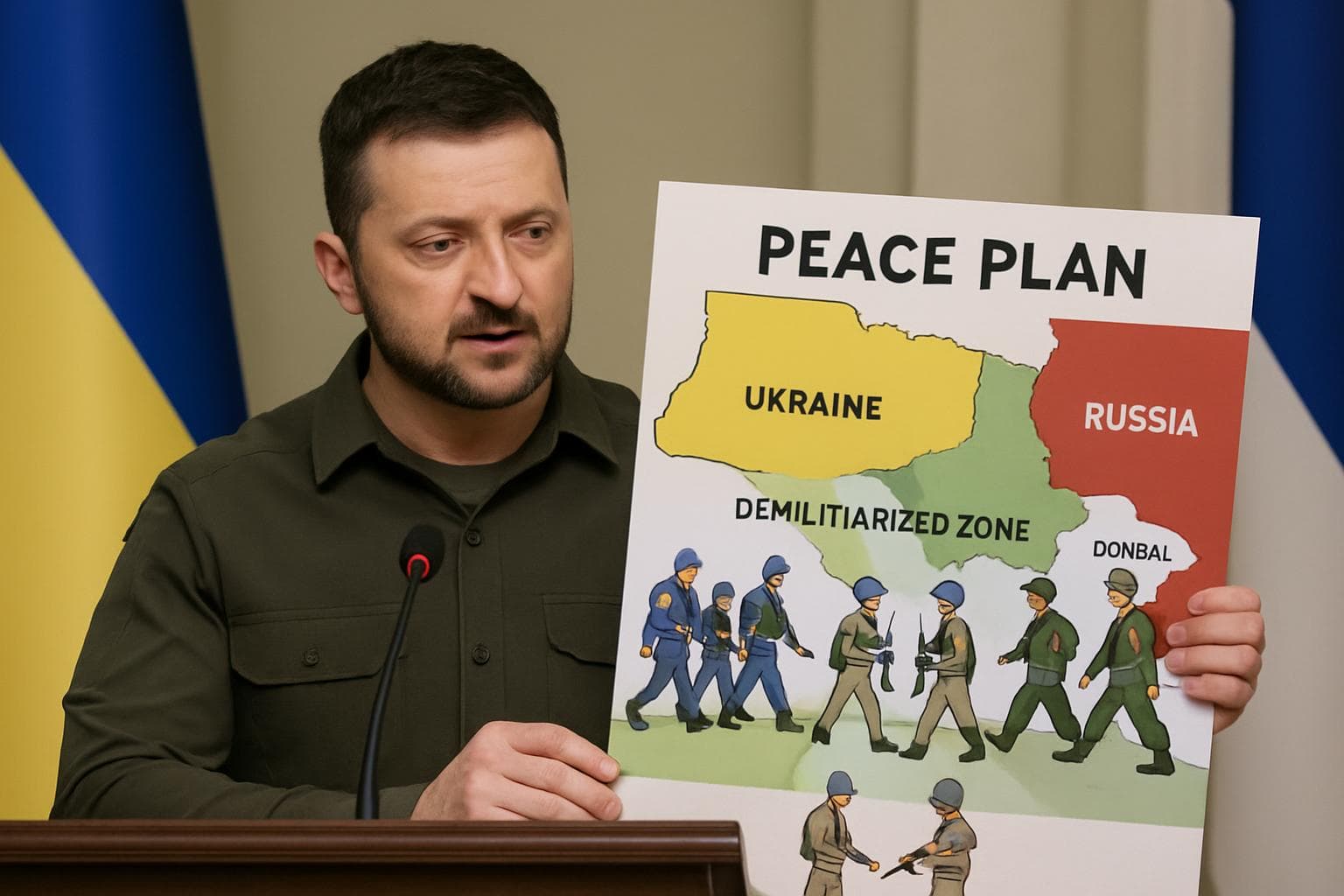
Ukrainian President Volodymyr Zelensky has unveiled a revised peace proposal aimed at ending the ongoing conflict with Russia, focusing on the creation of a demilitarised zone in the eastern Donbas region. This plan, developed in collaboration with US negotiators, seeks to address longstanding territorial disputes while providing Ukraine with robust security guarantees.
A New Framework for Peace
The 20-point peace plan, discussed over the weekend in Florida, outlines a potential withdrawal of Ukrainian troops from the eastern territories, contingent upon a reciprocal pullback by Russian forces. Zelensky emphasized that any demilitarised area would remain under Ukrainian policing, with international forces potentially overseeing the zone. The proposal also includes security guarantees from the US, NATO, and European allies, designed to ensure a coordinated military response should Russia attempt another invasion.
Moscow's Response and Strategic Implications
While the plan represents a significant shift from earlier drafts criticized as aligning with Kremlin interests, Moscow's response remains uncertain. Russian President Vladimir Putin has previously demanded Ukraine cede control of substantial portions of the Donbas region. However, the new proposal, which includes potential US-European security guarantees, could alter the dynamics of the negotiations. Zelensky has indicated that the US will engage with Russian officials to discuss the plan further.
Environmental and Regional Tensions
Amid these diplomatic efforts, the conflict's impact continues to be felt across Ukraine. A recent sunflower oil spill in Odesa, attributed to Russian aerial bombardments, has caused significant environmental damage, killing wildlife and prompting conservationist warnings. The incident underscores the ongoing hostilities and their broader implications for Ukraine's maritime and agricultural sectors.
Concessions and Future Prospects
As part of the negotiations, Ukraine has signaled a willingness to forgo its NATO membership ambitions in exchange for security assurances akin to NATO's Article 5. This concession, while controversial, reflects the complex realities of the peace talks. Zelensky has expressed confidence that the proposal strengthens Ukraine's position, with potential consequences for Moscow if the plan is rejected, including increased US military support for Kyiv and heightened sanctions against Russia.
WHAT THIS MIGHT MEAN
The proposed peace plan, if accepted, could mark a pivotal moment in the Ukraine-Russia conflict, potentially leading to a de-escalation of hostilities and a more stable regional environment. However, the success of the plan hinges on Moscow's willingness to engage constructively and make reciprocal concessions. Should Russia reject the proposal, Ukraine may seek further military and economic support from Western allies, escalating tensions further. Experts suggest that the plan's security guarantees could serve as a model for future conflict resolution efforts, though the path to peace remains fraught with challenges and uncertainties.
Related Articles
Russian LNG Tanker Sinks in Mediterranean Amid Accusations of Ukrainian Drone Attack
Middle East Conflict Drives UK Energy Prices to New Highs
US and Israel Intensify Military Campaign as Iran's Capabilities Dwindle
UK Reinforces Military Presence in Cyprus Amid Middle East Tensions
UK-Iran Tensions: Starmer Defends Cautious Approach Amid Trump Criticism
Russia-Ukraine Conflict: Four Years of Unyielding Struggle and Human Resilience
Zelensky Proposes Demilitarised Zone in Eastern Ukraine Amid Peace Negotiations
In This Article
 James Okoro| Published
 HIGHLIGHTS
- Ukrainian President Volodymyr Zelensky has proposed a peace plan involving a demilitarised zone in the eastern Donbas region, contingent on Russian troop withdrawal.
- The plan, developed with US envoys, includes security guarantees from the US, NATO, and European allies, aiming to prevent future invasions.
- Moscow's response remains uncertain, though the proposal marks a shift from earlier drafts perceived as favoring Kremlin demands.
- A sunflower oil spill in Odesa, caused by Russian bombardments, has raised environmental concerns, highlighting ongoing regional tensions.
- The plan suggests Ukraine's potential withdrawal from NATO ambitions in exchange for security assurances, a significant concession in the negotiations.
Ukrainian President Volodymyr Zelensky has unveiled a revised peace proposal aimed at ending the ongoing conflict with Russia, focusing on the creation of a demilitarised zone in the eastern Donbas region. This plan, developed in collaboration with US negotiators, seeks to address longstanding territorial disputes while providing Ukraine with robust security guarantees.
A New Framework for Peace
The 20-point peace plan, discussed over the weekend in Florida, outlines a potential withdrawal of Ukrainian troops from the eastern territories, contingent upon a reciprocal pullback by Russian forces. Zelensky emphasized that any demilitarised area would remain under Ukrainian policing, with international forces potentially overseeing the zone. The proposal also includes security guarantees from the US, NATO, and European allies, designed to ensure a coordinated military response should Russia attempt another invasion.
Moscow's Response and Strategic Implications
While the plan represents a significant shift from earlier drafts criticized as aligning with Kremlin interests, Moscow's response remains uncertain. Russian President Vladimir Putin has previously demanded Ukraine cede control of substantial portions of the Donbas region. However, the new proposal, which includes potential US-European security guarantees, could alter the dynamics of the negotiations. Zelensky has indicated that the US will engage with Russian officials to discuss the plan further.
Environmental and Regional Tensions
Amid these diplomatic efforts, the conflict's impact continues to be felt across Ukraine. A recent sunflower oil spill in Odesa, attributed to Russian aerial bombardments, has caused significant environmental damage, killing wildlife and prompting conservationist warnings. The incident underscores the ongoing hostilities and their broader implications for Ukraine's maritime and agricultural sectors.
Concessions and Future Prospects
As part of the negotiations, Ukraine has signaled a willingness to forgo its NATO membership ambitions in exchange for security assurances akin to NATO's Article 5. This concession, while controversial, reflects the complex realities of the peace talks. Zelensky has expressed confidence that the proposal strengthens Ukraine's position, with potential consequences for Moscow if the plan is rejected, including increased US military support for Kyiv and heightened sanctions against Russia.
WHAT THIS MIGHT MEAN
The proposed peace plan, if accepted, could mark a pivotal moment in the Ukraine-Russia conflict, potentially leading to a de-escalation of hostilities and a more stable regional environment. However, the success of the plan hinges on Moscow's willingness to engage constructively and make reciprocal concessions. Should Russia reject the proposal, Ukraine may seek further military and economic support from Western allies, escalating tensions further. Experts suggest that the plan's security guarantees could serve as a model for future conflict resolution efforts, though the path to peace remains fraught with challenges and uncertainties.
Related Articles
Russian LNG Tanker Sinks in Mediterranean Amid Accusations of Ukrainian Drone Attack
Middle East Conflict Drives UK Energy Prices to New Highs
US and Israel Intensify Military Campaign as Iran's Capabilities Dwindle
UK Reinforces Military Presence in Cyprus Amid Middle East Tensions
UK-Iran Tensions: Starmer Defends Cautious Approach Amid Trump Criticism
Russia-Ukraine Conflict: Four Years of Unyielding Struggle and Human Resilience