
Bank of England Holds Rates Steady Amid Global Uncertainty, Signals Possible Cuts
In This Article
HIGHLIGHTS
- The Bank of England held interest rates at 4.25% but hinted at potential cuts in August amid rising unemployment and a slowing economy.
- Governor Andrew Bailey emphasized the unpredictability of global events, particularly the Middle East conflict, which could affect energy prices and inflation.
- The UK economy showed uneven growth, with a 0.3% contraction in April following a 0.7% expansion in the first quarter of 2025.
- Inflation remains above the Bank's 2% target, with food prices notably increasing due to poor harvests and geopolitical tensions.
- Analysts predict the Bank may cut rates to 4% in August, with further reductions expected by the year's end.
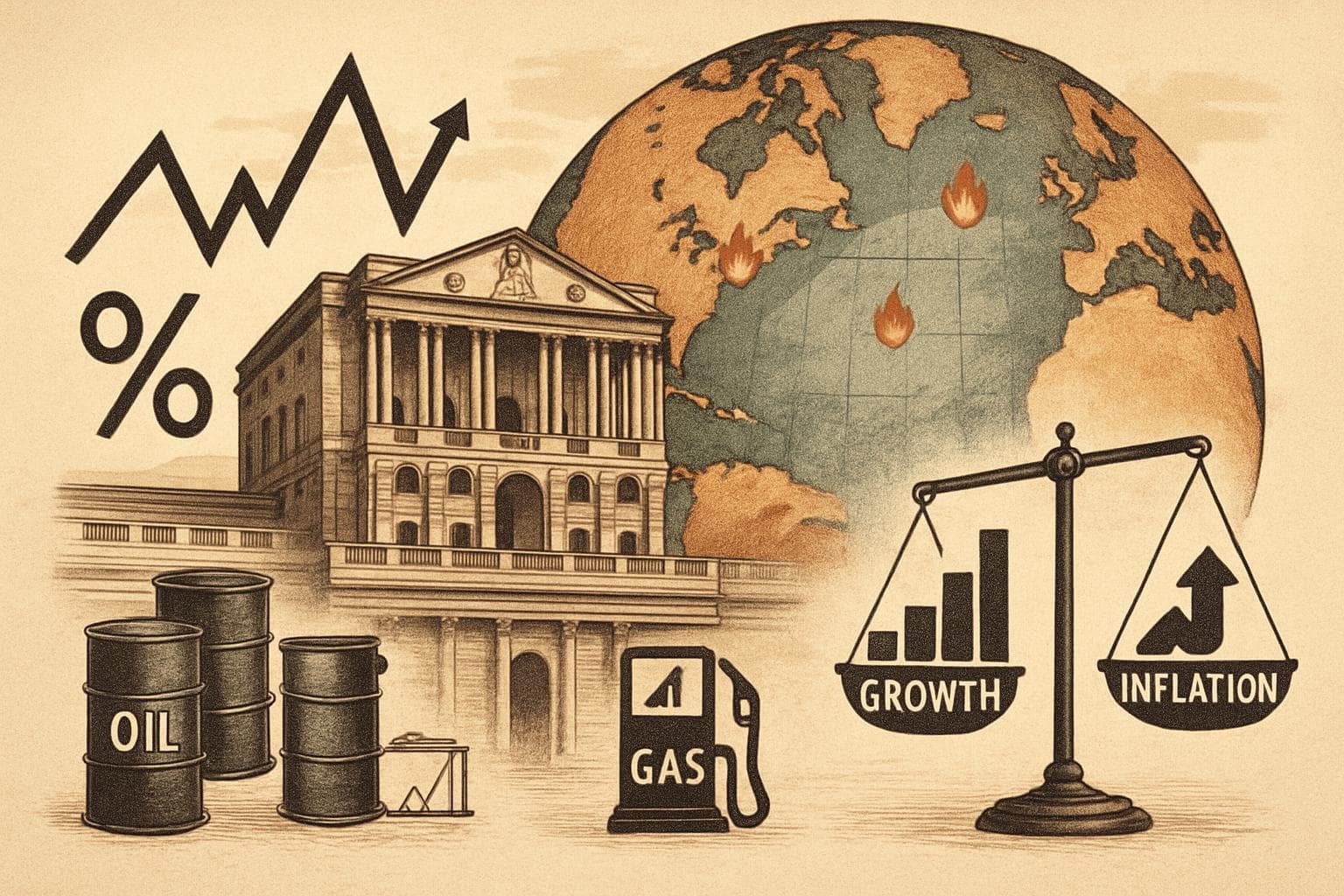
The Bank of England has decided to maintain its interest rate at 4.25%, while signaling potential rate cuts later this year as the UK grapples with rising unemployment and a slowing economy. The decision, made by the Bank's nine-member Monetary Policy Committee (MPC), comes amid heightened global uncertainty, particularly due to the ongoing conflict in the Middle East, which has driven up energy prices.
Economic Challenges and Inflation Concerns
Governor Andrew Bailey highlighted the unpredictability of global events, noting that the conflict between Israel and Iran could further escalate energy costs, impacting inflation and future rate decisions. The Bank remains vigilant, acknowledging a 26% rise in oil prices and an 11% increase in gas prices since May. Inflation in the UK edged down slightly to 3.4% in May but remains above the Bank's 2% target, with food prices seeing significant hikes due to poor harvests.
Labour Market and Economic Growth
The UK economy has experienced uneven growth this year, with a 0.3% contraction in April following a 0.7% expansion in the first quarter. The labour market shows signs of softening, with rising unemployment and slowing wage growth. The Bank's report indicates that businesses are hesitant to invest amid economic uncertainty, contributing to weak underlying GDP growth.
Future Rate Cuts on the Horizon
Financial markets and analysts anticipate that the MPC may reduce rates to 4% at its next meeting in August, with further cuts expected by the end of the year. The committee remains divided, with some members advocating for immediate cuts due to the loosening labour market, while others await more concrete evidence of reduced price growth.
Government and Expert Reactions
Chancellor Rachel Reeves expressed support for the Bank's cautious approach, acknowledging the complexity of its task. Economists like Paul Dales from Capital Economics predict that the weakening employment landscape will eventually lead to significant easing in wage growth, prompting further rate cuts.
WHAT THIS MIGHT MEAN
Looking ahead, the Bank of England's monetary policy will likely be influenced by the evolving geopolitical landscape and its impact on energy prices. Should the Middle East conflict intensify, the Bank may face increased pressure to adjust its strategy to manage inflation effectively. Additionally, the UK's economic performance and labour market conditions will be critical factors in determining the timing and extent of future rate cuts. As the year progresses, policymakers will need to balance the dual challenges of fostering economic growth and maintaining price stability.
Related Articles
Middle East Conflict Drives UK Energy Prices to New Highs

Intensified US-Israel Strikes on Iran Spark Global Outcry
Senate Blocks Resolution to Limit Trump's Military Actions in Iran

Canada and Australia Forge Strategic Partnership Amid Global Uncertainty

UK Faces Dilemmas Amid Iran Conflict and China Spying Allegations

US and Israel Intensify Military Campaign as Iran's Capabilities Dwindle
Bank of England Holds Rates Steady Amid Global Uncertainty, Signals Possible Cuts
In This Article
 Daniel Rivera| Published
 HIGHLIGHTS
- The Bank of England held interest rates at 4.25% but hinted at potential cuts in August amid rising unemployment and a slowing economy.
- Governor Andrew Bailey emphasized the unpredictability of global events, particularly the Middle East conflict, which could affect energy prices and inflation.
- The UK economy showed uneven growth, with a 0.3% contraction in April following a 0.7% expansion in the first quarter of 2025.
- Inflation remains above the Bank's 2% target, with food prices notably increasing due to poor harvests and geopolitical tensions.
- Analysts predict the Bank may cut rates to 4% in August, with further reductions expected by the year's end.
The Bank of England has decided to maintain its interest rate at 4.25%, while signaling potential rate cuts later this year as the UK grapples with rising unemployment and a slowing economy. The decision, made by the Bank's nine-member Monetary Policy Committee (MPC), comes amid heightened global uncertainty, particularly due to the ongoing conflict in the Middle East, which has driven up energy prices.
Economic Challenges and Inflation Concerns
Governor Andrew Bailey highlighted the unpredictability of global events, noting that the conflict between Israel and Iran could further escalate energy costs, impacting inflation and future rate decisions. The Bank remains vigilant, acknowledging a 26% rise in oil prices and an 11% increase in gas prices since May. Inflation in the UK edged down slightly to 3.4% in May but remains above the Bank's 2% target, with food prices seeing significant hikes due to poor harvests.
Labour Market and Economic Growth
The UK economy has experienced uneven growth this year, with a 0.3% contraction in April following a 0.7% expansion in the first quarter. The labour market shows signs of softening, with rising unemployment and slowing wage growth. The Bank's report indicates that businesses are hesitant to invest amid economic uncertainty, contributing to weak underlying GDP growth.
Future Rate Cuts on the Horizon
Financial markets and analysts anticipate that the MPC may reduce rates to 4% at its next meeting in August, with further cuts expected by the end of the year. The committee remains divided, with some members advocating for immediate cuts due to the loosening labour market, while others await more concrete evidence of reduced price growth.
Government and Expert Reactions
Chancellor Rachel Reeves expressed support for the Bank's cautious approach, acknowledging the complexity of its task. Economists like Paul Dales from Capital Economics predict that the weakening employment landscape will eventually lead to significant easing in wage growth, prompting further rate cuts.
WHAT THIS MIGHT MEAN
Looking ahead, the Bank of England's monetary policy will likely be influenced by the evolving geopolitical landscape and its impact on energy prices. Should the Middle East conflict intensify, the Bank may face increased pressure to adjust its strategy to manage inflation effectively. Additionally, the UK's economic performance and labour market conditions will be critical factors in determining the timing and extent of future rate cuts. As the year progresses, policymakers will need to balance the dual challenges of fostering economic growth and maintaining price stability.
Related Articles
Middle East Conflict Drives UK Energy Prices to New Highs
Intensified US-Israel Strikes on Iran Spark Global Outcry
Senate Blocks Resolution to Limit Trump's Military Actions in Iran
Canada and Australia Forge Strategic Partnership Amid Global Uncertainty
UK Faces Dilemmas Amid Iran Conflict and China Spying Allegations
US and Israel Intensify Military Campaign as Iran's Capabilities Dwindle