
Boeing Defense Workers Strike Over Contract Dispute
In This Article
HIGHLIGHTS
- Over 3,200 Boeing defense workers in Missouri and Illinois have initiated a strike after rejecting a new contract offer.
- The strike is the first at Boeing's defense division since 1996, impacting the production of F-15 jets and MQ-25 drones.
- Boeing's rejected offer included a 40% average wage increase, aiming to raise annual wages to $102,600.
- The International Association of Machinists and Aerospace Workers (IAM) is leading the strike, demanding fair contracts for its members.
- Boeing has implemented contingency plans to mitigate the strike's impact on its defense operations.
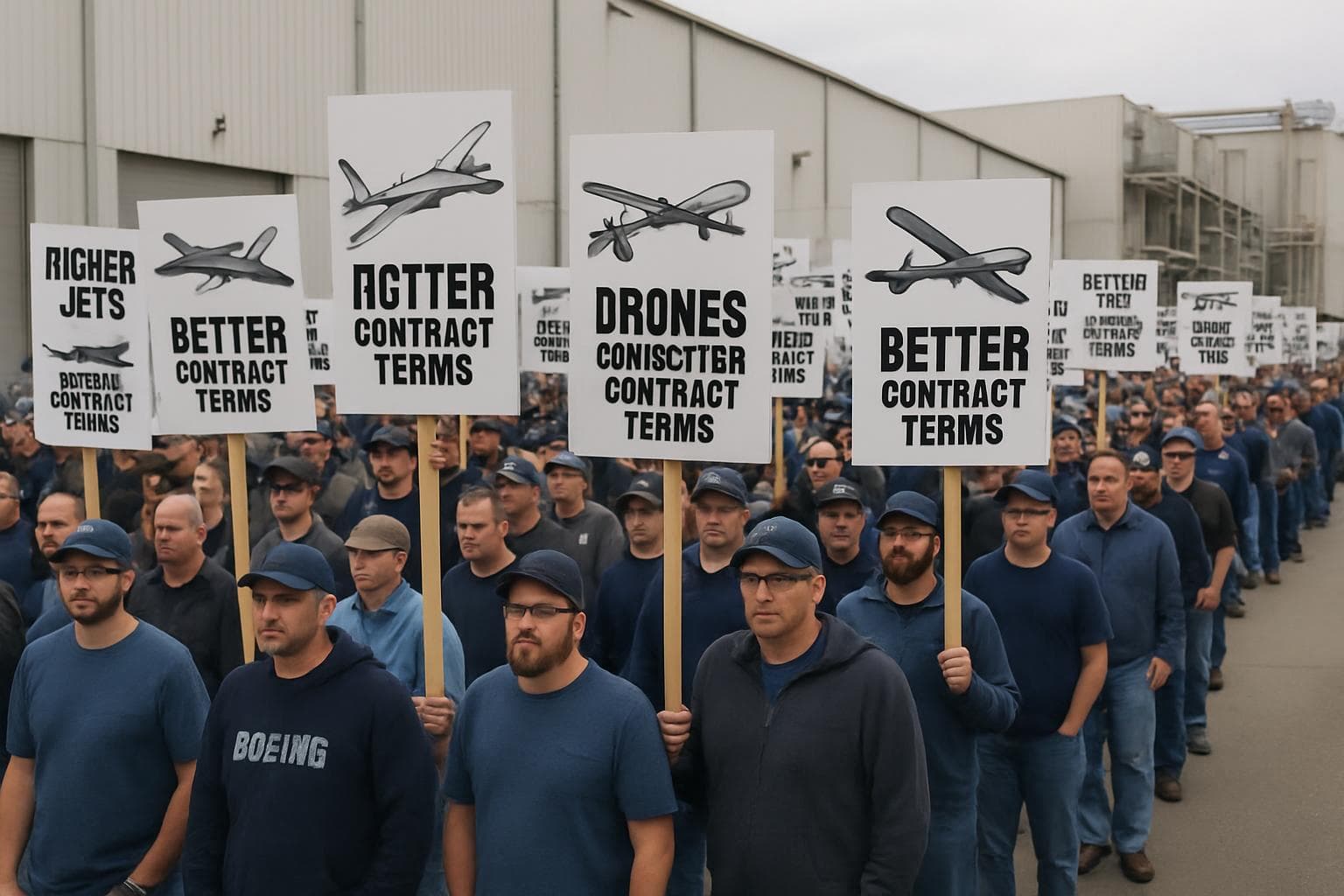
In a significant labor dispute, more than 3,200 unionized Boeing defense workers have gone on strike, marking the first such action at the company's defense division since 1996. The strike, which began on Monday, follows the rejection of Boeing's latest contract offer by workers in Missouri and Illinois, who are responsible for assembling F-15 fighter jets and MQ-25 aerial refueling drones.
Union Demands and Boeing's Offer
The International Association of Machinists and Aerospace Workers (IAM), representing the striking employees, has voiced its dissatisfaction with Boeing's proposed contract. The offer, which included a 40% average wage increase, was intended to raise the average annual wage to $102,600. Despite these terms, the union members voted against the proposal, citing concerns over pay, work schedules, and pensions. Tom Boelling, a top IAM official, emphasized the need for a contract that reflects the workers' skills and dedication to national defense.
Boeing's Response and Contingency Plans
Boeing has expressed disappointment over the rejection of its offer, which it claims addressed key issues such as alternative work schedules. Dan Gillian, vice president of Boeing's Air Dominance unit, stated that the company is prepared for the strike and has activated contingency plans to ensure continued support for its defense customers. The strike comes at a challenging time for Boeing, which has faced multiple crises, including safety issues and a costly strike by passenger plane workers last year.
Impact on Boeing's Defense Operations
The strike could affect Boeing's defense operations, particularly in the St. Louis area, where the company is expanding its manufacturing facilities for the new F-47 fighter jet. Boeing's defense division holds several major contracts with the U.S. Department of Defense, including the F-15EX fighters and the T-7 training jet. Despite the potential disruptions, Boeing CEO Kelly Ortberg has downplayed the strike's impact, noting that it is smaller in scale compared to last year's labor action.
WHAT THIS MIGHT MEAN
The ongoing strike at Boeing's defense division could have several implications for the company and the broader aerospace industry. If prolonged, the strike may delay the production of critical defense equipment, potentially affecting Boeing's contractual obligations with the U.S. Department of Defense. This could lead to financial penalties or strained relationships with government clients. Additionally, the strike highlights the growing tensions between labor unions and large corporations over fair wages and working conditions, a trend that may influence future negotiations in the aerospace sector. As Boeing navigates this labor dispute, the company's ability to maintain its defense operations and fulfill its contracts will be closely watched by industry analysts and stakeholders.
Related Articles

Bayer Proposes $7.25 Billion Settlement to Resolve Roundup Cancer Claims

Supreme Court Upholds California's New Voting Map, Boosting Democratic Prospects

Facial Recognition Technology Faces Legal and Ethical Challenges in the UK and US

Air Force One's Electrical Issue Delays Trump's Davos Visit
Boeing's Oversight in Engine Defect Linked to Fatal UPS Plane Crash

Arkansas Player Wins $1.817 Billion Powerball Jackpot on Christmas Eve
Boeing Defense Workers Strike Over Contract Dispute
In This Article
 Daniel Rivera| Published
 HIGHLIGHTS
- Over 3,200 Boeing defense workers in Missouri and Illinois have initiated a strike after rejecting a new contract offer.
- The strike is the first at Boeing's defense division since 1996, impacting the production of F-15 jets and MQ-25 drones.
- Boeing's rejected offer included a 40% average wage increase, aiming to raise annual wages to $102,600.
- The International Association of Machinists and Aerospace Workers (IAM) is leading the strike, demanding fair contracts for its members.
- Boeing has implemented contingency plans to mitigate the strike's impact on its defense operations.
In a significant labor dispute, more than 3,200 unionized Boeing defense workers have gone on strike, marking the first such action at the company's defense division since 1996. The strike, which began on Monday, follows the rejection of Boeing's latest contract offer by workers in Missouri and Illinois, who are responsible for assembling F-15 fighter jets and MQ-25 aerial refueling drones.
Union Demands and Boeing's Offer
The International Association of Machinists and Aerospace Workers (IAM), representing the striking employees, has voiced its dissatisfaction with Boeing's proposed contract. The offer, which included a 40% average wage increase, was intended to raise the average annual wage to $102,600. Despite these terms, the union members voted against the proposal, citing concerns over pay, work schedules, and pensions. Tom Boelling, a top IAM official, emphasized the need for a contract that reflects the workers' skills and dedication to national defense.
Boeing's Response and Contingency Plans
Boeing has expressed disappointment over the rejection of its offer, which it claims addressed key issues such as alternative work schedules. Dan Gillian, vice president of Boeing's Air Dominance unit, stated that the company is prepared for the strike and has activated contingency plans to ensure continued support for its defense customers. The strike comes at a challenging time for Boeing, which has faced multiple crises, including safety issues and a costly strike by passenger plane workers last year.
Impact on Boeing's Defense Operations
The strike could affect Boeing's defense operations, particularly in the St. Louis area, where the company is expanding its manufacturing facilities for the new F-47 fighter jet. Boeing's defense division holds several major contracts with the U.S. Department of Defense, including the F-15EX fighters and the T-7 training jet. Despite the potential disruptions, Boeing CEO Kelly Ortberg has downplayed the strike's impact, noting that it is smaller in scale compared to last year's labor action.
WHAT THIS MIGHT MEAN
The ongoing strike at Boeing's defense division could have several implications for the company and the broader aerospace industry. If prolonged, the strike may delay the production of critical defense equipment, potentially affecting Boeing's contractual obligations with the U.S. Department of Defense. This could lead to financial penalties or strained relationships with government clients. Additionally, the strike highlights the growing tensions between labor unions and large corporations over fair wages and working conditions, a trend that may influence future negotiations in the aerospace sector. As Boeing navigates this labor dispute, the company's ability to maintain its defense operations and fulfill its contracts will be closely watched by industry analysts and stakeholders.
Related Articles
Bayer Proposes $7.25 Billion Settlement to Resolve Roundup Cancer Claims
Supreme Court Upholds California's New Voting Map, Boosting Democratic Prospects
Facial Recognition Technology Faces Legal and Ethical Challenges in the UK and US
Air Force One's Electrical Issue Delays Trump's Davos Visit
Boeing's Oversight in Engine Defect Linked to Fatal UPS Plane Crash
Arkansas Player Wins $1.817 Billion Powerball Jackpot on Christmas Eve