
Bulgarian Government Resigns Amid Mass Anti-Corruption Protests
In This Article
HIGHLIGHTS
- Bulgarian Prime Minister Rosen Zhelyazkov resigned amid mass protests against corruption and economic policies.
- The resignation occurred ahead of a no-confidence vote and Bulgaria's eurozone entry on January 1.
- Protests, involving up to 100,000 people, were fueled by dissatisfaction with figures like Delyan Peevski and Boyko Borissov.
- President Rumen Radev supported the resignation, highlighting the public's demand for change.
- Bulgaria faces political instability, with potential for an eighth election in four years if a new government cannot be formed.
In a dramatic turn of events, Bulgarian Prime Minister Rosen Zhelyazkov has resigned following widespread protests against his government, which has been accused of corruption and economic mismanagement. The resignation comes just weeks before Bulgaria is set to join the eurozone on January 1, marking a significant moment in the country's political landscape.
Mass Protests and Political Pressure
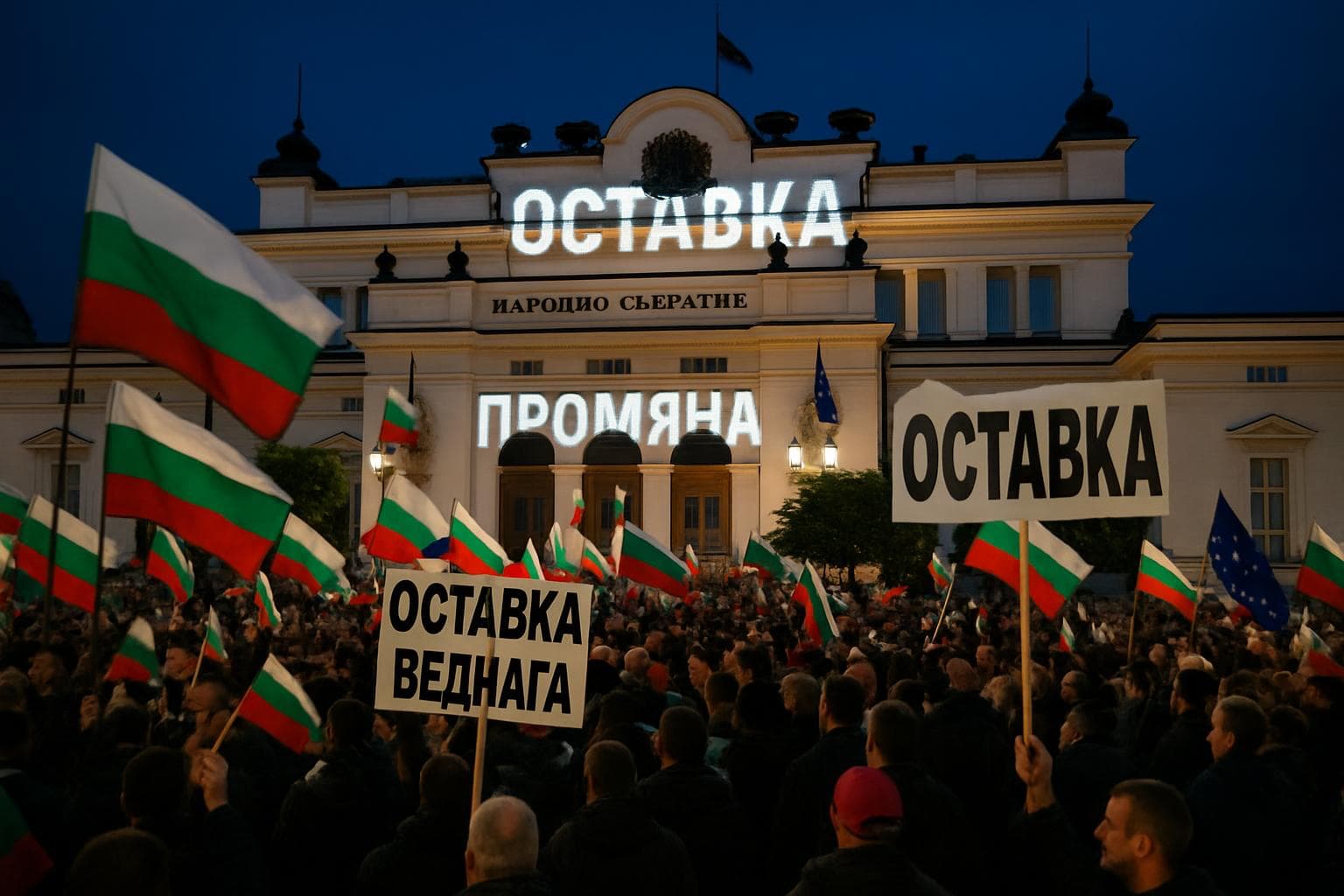
Tens of thousands of Bulgarians took to the streets in Sofia and other cities, demanding the resignation of Zhelyazkov's minority centre-right government. The protests, which drew between 50,000 and 100,000 participants, were sparked by dissatisfaction with the government's economic policies and perceived corruption. Demonstrators projected messages like "Resignation" and "Mafia Out" onto the parliament building, expressing their frustration with figures such as oligarch Delyan Peevski and former Prime Minister Boyko Borissov.
Government's Response and Resignation
Facing a looming no-confidence vote, Zhelyazkov announced his resignation in a televised address, acknowledging the public's demand for change. "Power stems from the voice of the people," he stated, emphasizing the need to support the civic energy demonstrated by the protests. The government had already withdrawn a controversial budget plan in response to earlier demonstrations.
Political Instability and Future Prospects
Bulgaria's political scene has been marked by instability, with Zhelyazkov's government surviving five previous no-confidence votes. President Rumen Radev, who had also called for the government's resignation, will now task parliament with forming a new government. If unsuccessful, an interim administration will be appointed, potentially leading to the eighth election in four years.
Challenges Ahead
Despite the political upheaval, Bulgaria's entry into the eurozone is not expected to be derailed. However, the country continues to grapple with high levels of perceived corruption, as highlighted by Transparency International. As Bulgaria navigates this transitional period, the public's call for genuine reform and accountability remains a pressing issue.
WHAT THIS MIGHT MEAN
The resignation of Prime Minister Rosen Zhelyazkov opens a new chapter in Bulgaria's ongoing political saga. If parliament fails to form a new government, the likelihood of another election looms, potentially exacerbating the country's political instability. The European Union will be closely monitoring Bulgaria's adherence to rule of law standards, especially as it prepares to adopt the euro. Analysts suggest that addressing corruption and restoring public trust in national institutions will be crucial for Bulgaria's future stability and economic progress.
Related Articles
Russian LNG Tanker Sinks in Mediterranean Amid Accusations of Ukrainian Drone Attack
Spain's Sánchez Stands Firm Against Trump's Trade Threat Over Iran Stance

EU Launches Investigation into Shein Over Alleged Digital Law Breaches
UK PM Keir Starmer Calls for Stronger European Defence Ties at Munich Conference
Labour's Push for Closer EU Ties Sparks Debate
Tragedy in the Mediterranean: 53 Feared Dead After Migrant Boat Capsizes Off Libyan Coast
Bulgarian Government Resigns Amid Mass Anti-Corruption Protests
In This Article
 Alex Carter| Published
 HIGHLIGHTS
- Bulgarian Prime Minister Rosen Zhelyazkov resigned amid mass protests against corruption and economic policies.
- The resignation occurred ahead of a no-confidence vote and Bulgaria's eurozone entry on January 1.
- Protests, involving up to 100,000 people, were fueled by dissatisfaction with figures like Delyan Peevski and Boyko Borissov.
- President Rumen Radev supported the resignation, highlighting the public's demand for change.
- Bulgaria faces political instability, with potential for an eighth election in four years if a new government cannot be formed.
In a dramatic turn of events, Bulgarian Prime Minister Rosen Zhelyazkov has resigned following widespread protests against his government, which has been accused of corruption and economic mismanagement. The resignation comes just weeks before Bulgaria is set to join the eurozone on January 1, marking a significant moment in the country's political landscape.
Mass Protests and Political Pressure
Tens of thousands of Bulgarians took to the streets in Sofia and other cities, demanding the resignation of Zhelyazkov's minority centre-right government. The protests, which drew between 50,000 and 100,000 participants, were sparked by dissatisfaction with the government's economic policies and perceived corruption. Demonstrators projected messages like "Resignation" and "Mafia Out" onto the parliament building, expressing their frustration with figures such as oligarch Delyan Peevski and former Prime Minister Boyko Borissov.
Government's Response and Resignation
Facing a looming no-confidence vote, Zhelyazkov announced his resignation in a televised address, acknowledging the public's demand for change. "Power stems from the voice of the people," he stated, emphasizing the need to support the civic energy demonstrated by the protests. The government had already withdrawn a controversial budget plan in response to earlier demonstrations.
Political Instability and Future Prospects
Bulgaria's political scene has been marked by instability, with Zhelyazkov's government surviving five previous no-confidence votes. President Rumen Radev, who had also called for the government's resignation, will now task parliament with forming a new government. If unsuccessful, an interim administration will be appointed, potentially leading to the eighth election in four years.
Challenges Ahead
Despite the political upheaval, Bulgaria's entry into the eurozone is not expected to be derailed. However, the country continues to grapple with high levels of perceived corruption, as highlighted by Transparency International. As Bulgaria navigates this transitional period, the public's call for genuine reform and accountability remains a pressing issue.
WHAT THIS MIGHT MEAN
The resignation of Prime Minister Rosen Zhelyazkov opens a new chapter in Bulgaria's ongoing political saga. If parliament fails to form a new government, the likelihood of another election looms, potentially exacerbating the country's political instability. The European Union will be closely monitoring Bulgaria's adherence to rule of law standards, especially as it prepares to adopt the euro. Analysts suggest that addressing corruption and restoring public trust in national institutions will be crucial for Bulgaria's future stability and economic progress.
Related Articles
Russian LNG Tanker Sinks in Mediterranean Amid Accusations of Ukrainian Drone Attack
Spain's Sánchez Stands Firm Against Trump's Trade Threat Over Iran Stance
EU Launches Investigation into Shein Over Alleged Digital Law Breaches
UK PM Keir Starmer Calls for Stronger European Defence Ties at Munich Conference
Labour's Push for Closer EU Ties Sparks Debate
Tragedy in the Mediterranean: 53 Feared Dead After Migrant Boat Capsizes Off Libyan Coast