
China's Military Parade: A Display of Power and Diplomatic Alliances
In This Article
HIGHLIGHTS
- Chinese President Xi Jinping and Russian President Vladimir Putin met in Beijing, highlighting "unprecedented" Russia-China relations.
- The meeting precedes a massive military parade marking 80 years since Japan's WWII surrender, showcasing China's military might.
- North Korea's Kim Jong-un and other leaders from sanctioned nations will attend, emphasizing China's diplomatic alliances.
- The parade underscores China's ambition to reshape global governance, challenging Western dominance.
- A new gas export deal between Russia and China was signed, boosting economic ties amid Western sanctions on Moscow.
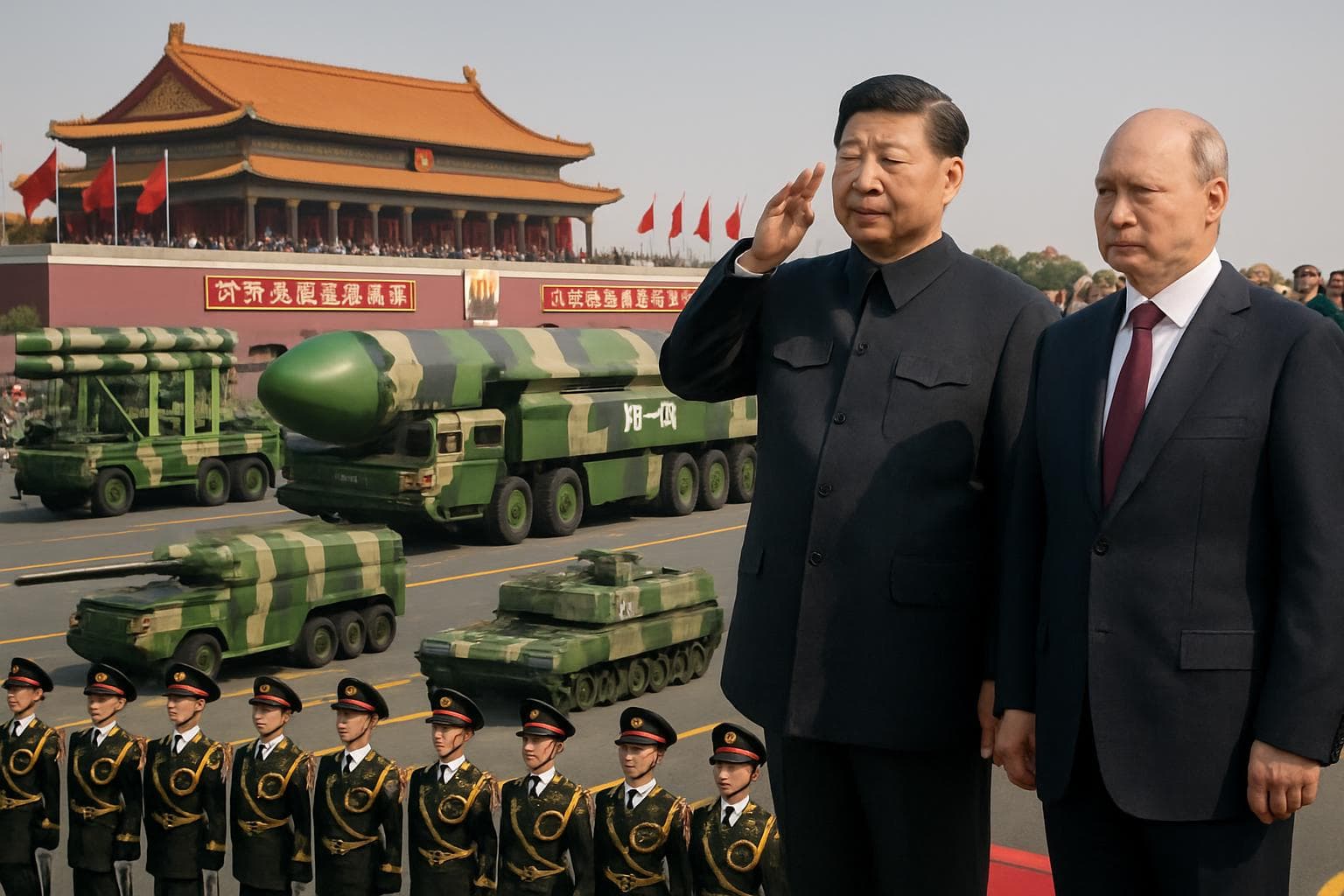
In a significant diplomatic event, Chinese President Xi Jinping and Russian President Vladimir Putin convened in Beijing, underscoring the robust ties between their nations. The meeting, held on the eve of a grand military parade, marks a pivotal moment in the evolving geopolitical landscape.
Strengthening Russia-China Relations
During their discussions, Putin lauded the "unprecedented" level of Russia-China relations, emphasizing the strategic nature of their partnership. "Our close communication reflects the strategic nature of Russia-China relations, which are at an unprecedentedly high level," Putin stated, as reported by the Kremlin. Xi echoed this sentiment, noting that their relationship has withstood international changes and expressing a commitment to fostering a more equitable global governance system.
A Showcase of Military Might
The military parade, set to take place in Beijing, commemorates the 80th anniversary of Japan's surrender in World War II. It is expected to be one of China's largest displays of military strength, featuring cutting-edge equipment like hypersonic weapons and advanced missile systems. This event not only celebrates historical victories but also projects China's growing military capabilities on the global stage.
Diplomatic Solidarity with Anti-West Leaders
The parade will be attended by leaders from nations often at odds with the West, including North Korea's Kim Jong-un, Iran's Masoud Pezeshkian, and Myanmar's Min Aung Hlaing. This gathering, described by analysts as an "axis of upheaval," highlights China's role as a central figure in a coalition of countries seeking alternatives to Western-led global order. Notably absent are most Western leaders, with only Serbia and Slovakia represented.
Economic and Political Implications
The event also coincides with a new agreement for Russia to increase its gas exports to China by over 16% annually, providing an economic lifeline for Moscow amid Western sanctions. This development further cements the economic and political ties between the two nations, showcasing their mutual support in the face of international pressure.
WHAT THIS MIGHT MEAN
The Beijing military parade and the accompanying diplomatic engagements signal a potential shift in global power dynamics. As China and Russia strengthen their alliance, they present a formidable challenge to Western influence, particularly in regions like Asia and the Middle East. Experts suggest that this could lead to a more multipolar world order, with China positioning itself as a leader among non-Western nations.
The presence of leaders from heavily sanctioned countries also underscores a growing coalition that may seek to counterbalance Western policies. This could result in increased geopolitical tensions, particularly if these nations pursue coordinated strategies in international forums.
As China continues to assert its military and diplomatic prowess, the global community will closely watch how these developments influence international relations and the balance of power.
Related Articles

UK Faces Dilemmas Amid Iran Conflict and China Spying Allegations
China Sets Lowest GDP Growth Target in Decades Amid Economic Challenges
Canada and Australia Forge Strategic Partnership Amid Global Uncertainty
Russian LNG Tanker Sinks in Mediterranean Amid Accusations of Ukrainian Drone Attack
Middle East Conflict Drives UK Energy Prices to New Highs
Intensified US-Israel Strikes on Iran Spark Global Outcry
China's Military Parade: A Display of Power and Diplomatic Alliances
In This Article
HIGHLIGHTS
- Chinese President Xi Jinping and Russian President Vladimir Putin met in Beijing, highlighting "unprecedented" Russia-China relations.
- The meeting precedes a massive military parade marking 80 years since Japan's WWII surrender, showcasing China's military might.
- North Korea's Kim Jong-un and other leaders from sanctioned nations will attend, emphasizing China's diplomatic alliances.
- The parade underscores China's ambition to reshape global governance, challenging Western dominance.
- A new gas export deal between Russia and China was signed, boosting economic ties amid Western sanctions on Moscow.
In a significant diplomatic event, Chinese President Xi Jinping and Russian President Vladimir Putin convened in Beijing, underscoring the robust ties between their nations. The meeting, held on the eve of a grand military parade, marks a pivotal moment in the evolving geopolitical landscape.
Strengthening Russia-China Relations
During their discussions, Putin lauded the "unprecedented" level of Russia-China relations, emphasizing the strategic nature of their partnership. "Our close communication reflects the strategic nature of Russia-China relations, which are at an unprecedentedly high level," Putin stated, as reported by the Kremlin. Xi echoed this sentiment, noting that their relationship has withstood international changes and expressing a commitment to fostering a more equitable global governance system.
A Showcase of Military Might
The military parade, set to take place in Beijing, commemorates the 80th anniversary of Japan's surrender in World War II. It is expected to be one of China's largest displays of military strength, featuring cutting-edge equipment like hypersonic weapons and advanced missile systems. This event not only celebrates historical victories but also projects China's growing military capabilities on the global stage.
Diplomatic Solidarity with Anti-West Leaders
The parade will be attended by leaders from nations often at odds with the West, including North Korea's Kim Jong-un, Iran's Masoud Pezeshkian, and Myanmar's Min Aung Hlaing. This gathering, described by analysts as an "axis of upheaval," highlights China's role as a central figure in a coalition of countries seeking alternatives to Western-led global order. Notably absent are most Western leaders, with only Serbia and Slovakia represented.
Economic and Political Implications
The event also coincides with a new agreement for Russia to increase its gas exports to China by over 16% annually, providing an economic lifeline for Moscow amid Western sanctions. This development further cements the economic and political ties between the two nations, showcasing their mutual support in the face of international pressure.
WHAT THIS MIGHT MEAN
The Beijing military parade and the accompanying diplomatic engagements signal a potential shift in global power dynamics. As China and Russia strengthen their alliance, they present a formidable challenge to Western influence, particularly in regions like Asia and the Middle East. Experts suggest that this could lead to a more multipolar world order, with China positioning itself as a leader among non-Western nations.
The presence of leaders from heavily sanctioned countries also underscores a growing coalition that may seek to counterbalance Western policies. This could result in increased geopolitical tensions, particularly if these nations pursue coordinated strategies in international forums.
As China continues to assert its military and diplomatic prowess, the global community will closely watch how these developments influence international relations and the balance of power.
Related Articles
UK Faces Dilemmas Amid Iran Conflict and China Spying Allegations
China Sets Lowest GDP Growth Target in Decades Amid Economic Challenges
Canada and Australia Forge Strategic Partnership Amid Global Uncertainty
Russian LNG Tanker Sinks in Mediterranean Amid Accusations of Ukrainian Drone Attack
Middle East Conflict Drives UK Energy Prices to New Highs
Intensified US-Israel Strikes on Iran Spark Global Outcry