
COP30 in Brazil: A Crucial Gathering for Climate Action and Youth Engagement
In This Article
HIGHLIGHTS
- COP30, the 30th Conference of the Parties, is being held in Belém, Brazil, focusing on climate change solutions and youth involvement.
- The conference marks a decade since the Paris climate agreement, aiming to limit global temperature rise to 1.5C.
- University of Birmingham students and academics are attending to contribute to discussions and inspire future climate action.
- Current national plans, or NDCs, are insufficient, with projected temperature rises of 2.5C to 2.8C, far above the Paris targets.
- Brazil, as COP30 president, seeks to guide nations towards more effective emissions reductions to meet the 1.5C goal.
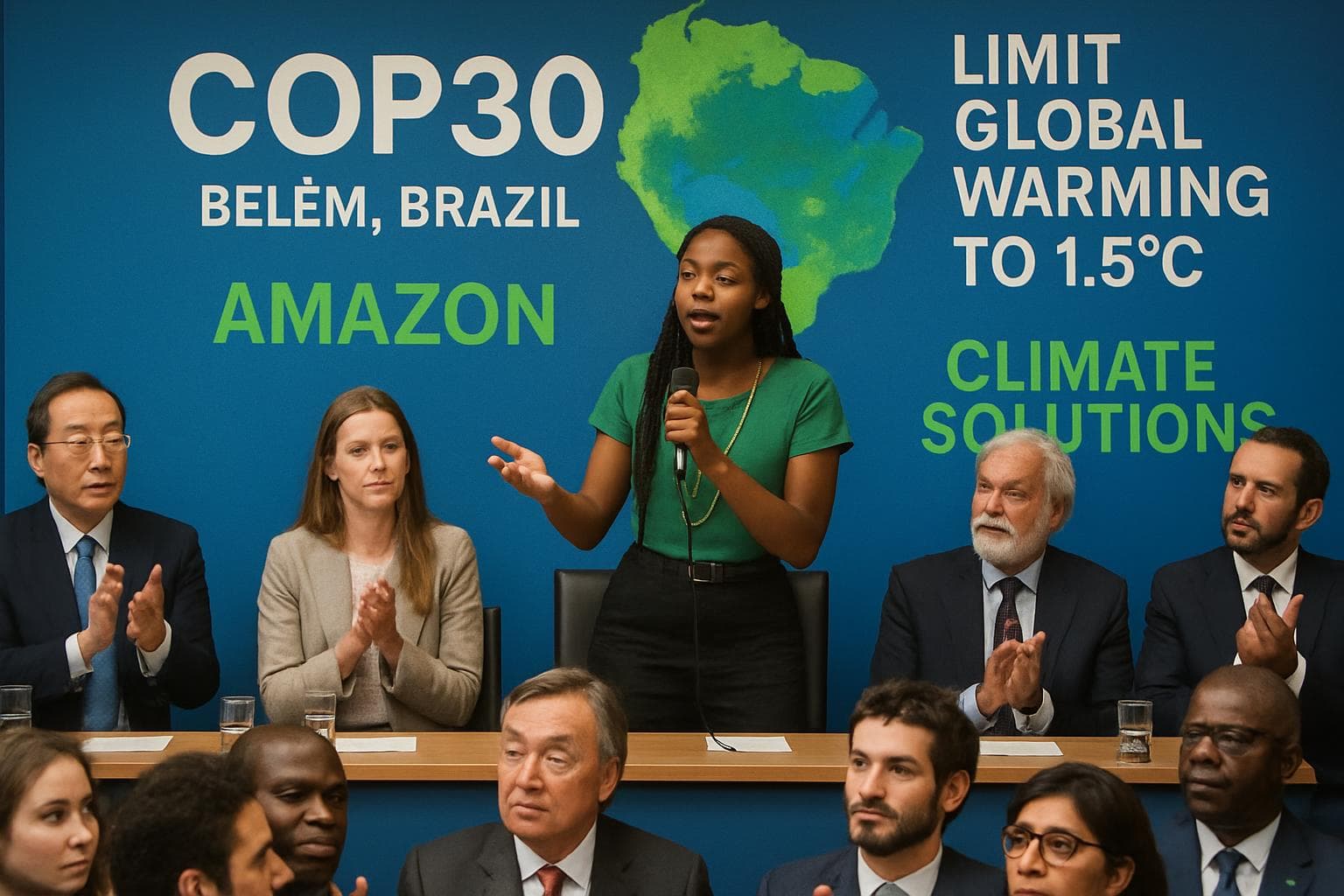
As the 30th Conference of the Parties (COP30) unfolds in Belém, Brazil, the global spotlight turns to the Amazon rainforest, where world leaders, diplomats, and activists from over 200 countries are convening to address the pressing issue of climate change. This year's conference, a decade after the landmark Paris climate agreement, emphasizes the urgent need to limit global temperature rise to 1.5C.
Among the thousands attending are two students from the University of Birmingham, Benika Lal and Hadil Touihri, who are eager to contribute their perspectives on climate solutions. "The focus at COP30 is on youth voices and how we can contribute to our own future," said Lal, a geography student. Touihri, a medical student, highlighted the impact of climate change on healthcare systems, noting its effects on the NHS.
The students' participation follows their involvement in the university's "Immerse Amazonia" project, which allowed them to explore the Amazon and engage with Brazilian students and academics. Accompanying them are three academics from the University of Birmingham, including Prof. David Hannah, who aims to integrate cutting-edge research with global policy recommendations at the conference.
Challenges and Goals at COP30
COP30 arrives at a critical juncture in the implementation of the Paris agreement, which requires countries to submit nationally determined contributions (NDCs) outlining their plans to reduce greenhouse gas emissions. Despite the urgency, many nations have yet to align their NDCs with the 1.5C target. Current assessments suggest that if all targets are met, temperatures could rise by 2.5C, or 2.8C if only targets with clear policy measures are considered.
Brazil, as the host and COP30 president, faces the formidable task of steering discussions towards more ambitious emissions reductions. The conference agenda includes 145 items, with a preliminary Belém Climate Summit aimed at encouraging bold actions from world leaders.
The Path Forward
As COP30 progresses, the focus remains on how countries can enhance their NDCs and implement real-world actions to achieve the necessary emissions cuts. The conference serves as a platform for nations to collaborate on innovative climate solutions and inspire future generations to engage in sustainable practices.
WHAT THIS MIGHT MEAN
The outcomes of COP30 could significantly influence global climate policy, particularly if countries commit to more stringent emissions reductions. Success in Belém may hinge on Brazil's ability to foster consensus and drive meaningful action. Experts suggest that without substantial progress, the world risks missing the crucial 1.5C target, with severe implications for ecosystems and communities worldwide. As youth voices gain prominence, their involvement could catalyze a new wave of climate activism, pushing governments to prioritize sustainable development and environmental stewardship.
Related Articles
UK Government to Reform Asylum Seeker Support and Employment Policies

Persistent Safety Concerns in Nottingham Maternity Services Amidst Calls for Systemic Reform
St Francis of Assisi's Bones Draw Global Pilgrims to Italy

Nottingham Attacks Inquiry: Families Demand Accountability and Truth

Birmingham's Proactive Approach to Measles Outbreak Offers Lessons for North London
Willie Colón: The Salsa Legend Who Transformed Latin Music Passes Away at 75
COP30 in Brazil: A Crucial Gathering for Climate Action and Youth Engagement
In This Article
 Leila Hassan| Published
 HIGHLIGHTS
- COP30, the 30th Conference of the Parties, is being held in Belém, Brazil, focusing on climate change solutions and youth involvement.
- The conference marks a decade since the Paris climate agreement, aiming to limit global temperature rise to 1.5C.
- University of Birmingham students and academics are attending to contribute to discussions and inspire future climate action.
- Current national plans, or NDCs, are insufficient, with projected temperature rises of 2.5C to 2.8C, far above the Paris targets.
- Brazil, as COP30 president, seeks to guide nations towards more effective emissions reductions to meet the 1.5C goal.
As the 30th Conference of the Parties (COP30) unfolds in Belém, Brazil, the global spotlight turns to the Amazon rainforest, where world leaders, diplomats, and activists from over 200 countries are convening to address the pressing issue of climate change. This year's conference, a decade after the landmark Paris climate agreement, emphasizes the urgent need to limit global temperature rise to 1.5C.
Among the thousands attending are two students from the University of Birmingham, Benika Lal and Hadil Touihri, who are eager to contribute their perspectives on climate solutions. "The focus at COP30 is on youth voices and how we can contribute to our own future," said Lal, a geography student. Touihri, a medical student, highlighted the impact of climate change on healthcare systems, noting its effects on the NHS.
The students' participation follows their involvement in the university's "Immerse Amazonia" project, which allowed them to explore the Amazon and engage with Brazilian students and academics. Accompanying them are three academics from the University of Birmingham, including Prof. David Hannah, who aims to integrate cutting-edge research with global policy recommendations at the conference.
Challenges and Goals at COP30
COP30 arrives at a critical juncture in the implementation of the Paris agreement, which requires countries to submit nationally determined contributions (NDCs) outlining their plans to reduce greenhouse gas emissions. Despite the urgency, many nations have yet to align their NDCs with the 1.5C target. Current assessments suggest that if all targets are met, temperatures could rise by 2.5C, or 2.8C if only targets with clear policy measures are considered.
Brazil, as the host and COP30 president, faces the formidable task of steering discussions towards more ambitious emissions reductions. The conference agenda includes 145 items, with a preliminary Belém Climate Summit aimed at encouraging bold actions from world leaders.
The Path Forward
As COP30 progresses, the focus remains on how countries can enhance their NDCs and implement real-world actions to achieve the necessary emissions cuts. The conference serves as a platform for nations to collaborate on innovative climate solutions and inspire future generations to engage in sustainable practices.
WHAT THIS MIGHT MEAN
The outcomes of COP30 could significantly influence global climate policy, particularly if countries commit to more stringent emissions reductions. Success in Belém may hinge on Brazil's ability to foster consensus and drive meaningful action. Experts suggest that without substantial progress, the world risks missing the crucial 1.5C target, with severe implications for ecosystems and communities worldwide. As youth voices gain prominence, their involvement could catalyze a new wave of climate activism, pushing governments to prioritize sustainable development and environmental stewardship.
Related Articles
UK Government to Reform Asylum Seeker Support and Employment Policies
Persistent Safety Concerns in Nottingham Maternity Services Amidst Calls for Systemic Reform
St Francis of Assisi's Bones Draw Global Pilgrims to Italy
Nottingham Attacks Inquiry: Families Demand Accountability and Truth
Birmingham's Proactive Approach to Measles Outbreak Offers Lessons for North London
Willie Colón: The Salsa Legend Who Transformed Latin Music Passes Away at 75