
Dalai Lama's Grammy Win Sparks Beijing's Criticism Over Political Manipulation
In This Article
HIGHLIGHTS
- The Dalai Lama won a Grammy for his audiobook "Meditations," sparking criticism from China, which views the award as "anti-China political manipulation."
- The 90-year-old spiritual leader, living in exile in India since 1959, accepted the award with "gratitude and humility," emphasizing shared universal responsibility.
- Beijing condemns the Dalai Lama as a separatist and insists any succession must comply with Chinese laws, raising concerns among Tibetans about future leadership.
- The Dalai Lama's audiobook features messages of peace and compassion, with contributions from artists like Rufus Wainwright, who accepted the award on his behalf.
- The succession of the Dalai Lama remains a contentious issue, with fears of Chinese interference in the selection of his successor.
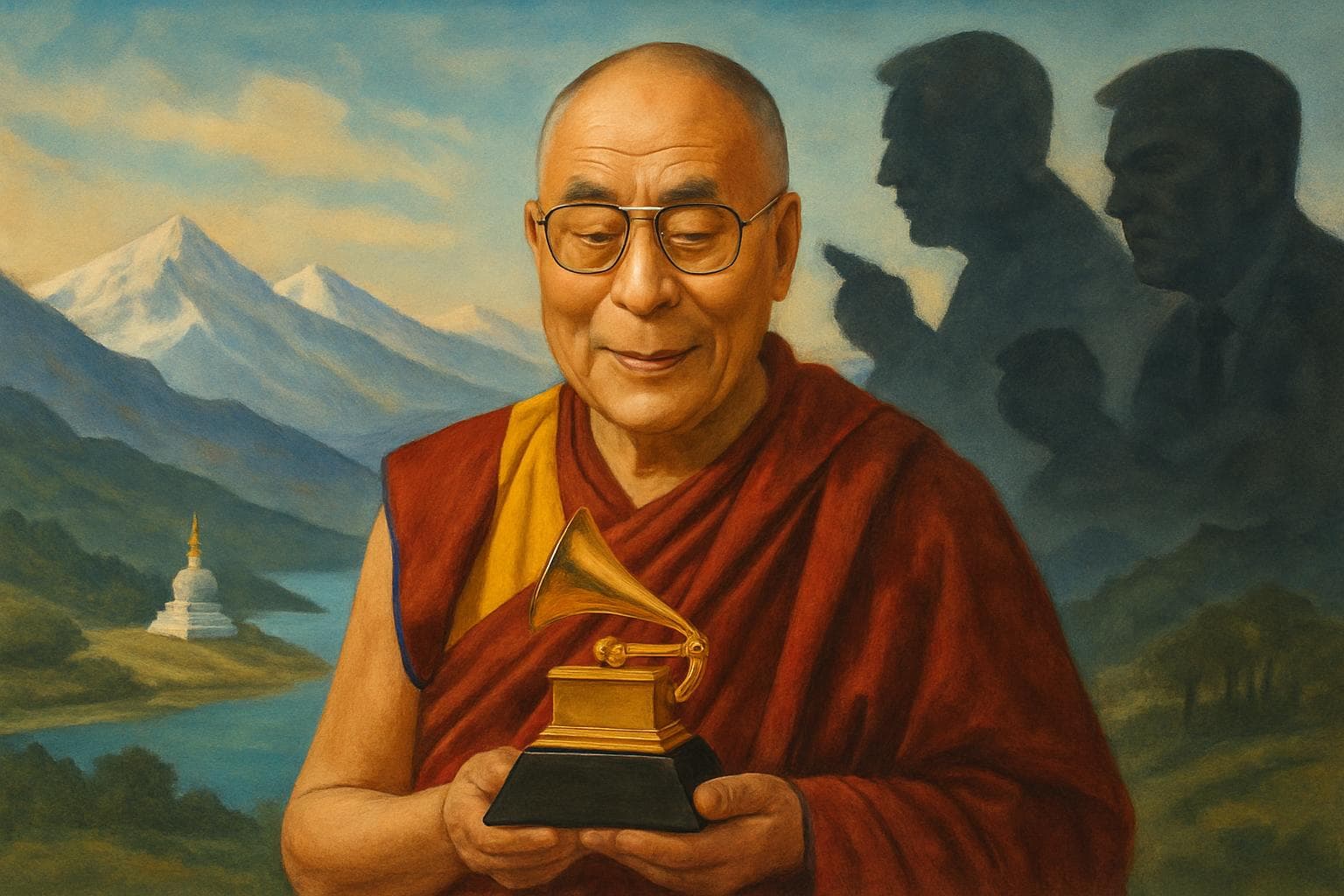
The Dalai Lama's recent Grammy win has ignited a diplomatic spat, with Beijing condemning the accolade as a tool for "anti-China political manipulation." The 90-year-old Tibetan spiritual leader, who has lived in exile in India since 1959, was awarded in the audiobook category for "Meditations: The Reflections of His Holiness the Dalai Lama." This recognition adds to his prestigious accolades, including a Nobel Peace Prize.
In a statement following the award ceremony, the Dalai Lama expressed his gratitude, stating, "I receive this recognition with gratitude and humility. I don’t see it as something personal, but as a recognition of our shared universal responsibility." The audiobook, featuring messages of peace and compassion, includes contributions from artists such as Rufus Wainwright, who accepted the award on his behalf.
Beijing's Response
China's reaction was swift and critical. Lin Jian, a spokesperson for the Chinese foreign ministry, reiterated Beijing's stance, stating, "We firmly oppose relevant parties using art awards as a tool for anti-China political manipulation, and this position is consistent and clear." The Dalai Lama, considered a separatist by China, has long advocated for greater autonomy for Tibet, a region annexed by China in 1950.
The Succession Controversy
The issue of the Dalai Lama's succession remains a point of tension. Traditionally, the Dalai Lama is reincarnated, a process deeply rooted in Tibetan Buddhism. However, Beijing insists that any succession must adhere to Chinese laws and be approved by the government. This has heightened fears among Tibetans that China will attempt to control the selection of the next spiritual leader to tighten its grip on Tibet.
WHAT THIS MIGHT MEAN
The Dalai Lama's Grammy win highlights the ongoing geopolitical tensions between China and Tibet. As the Dalai Lama continues to age, the question of his succession looms large. Experts suggest that Beijing's insistence on controlling the process could lead to increased unrest among Tibetans and further strain international relations. The global community will be watching closely to see how this cultural and political saga unfolds, with potential implications for Tibet's autonomy and the future of its spiritual leadership.
Related Articles
China Sets Lowest GDP Growth Target in Decades Amid Economic Challenges

UK Faces Dilemmas Amid Iran Conflict and China Spying Allegations

US Supreme Court Ruling Sparks Trade Uncertainty in Asia and Beyond
Trump's New Tariff Strategy Sparks Global Trade Uncertainty
Peru's Political Turmoil: President José Jerí Ousted Amid Scandal

Labour MP's Husband Arrested in UK-China Espionage Probe
Dalai Lama's Grammy Win Sparks Beijing's Criticism Over Political Manipulation
In This Article
 Alex Carter| Published
 HIGHLIGHTS
- The Dalai Lama won a Grammy for his audiobook "Meditations," sparking criticism from China, which views the award as "anti-China political manipulation."
- The 90-year-old spiritual leader, living in exile in India since 1959, accepted the award with "gratitude and humility," emphasizing shared universal responsibility.
- Beijing condemns the Dalai Lama as a separatist and insists any succession must comply with Chinese laws, raising concerns among Tibetans about future leadership.
- The Dalai Lama's audiobook features messages of peace and compassion, with contributions from artists like Rufus Wainwright, who accepted the award on his behalf.
- The succession of the Dalai Lama remains a contentious issue, with fears of Chinese interference in the selection of his successor.
The Dalai Lama's recent Grammy win has ignited a diplomatic spat, with Beijing condemning the accolade as a tool for "anti-China political manipulation." The 90-year-old Tibetan spiritual leader, who has lived in exile in India since 1959, was awarded in the audiobook category for "Meditations: The Reflections of His Holiness the Dalai Lama." This recognition adds to his prestigious accolades, including a Nobel Peace Prize.
In a statement following the award ceremony, the Dalai Lama expressed his gratitude, stating, "I receive this recognition with gratitude and humility. I don’t see it as something personal, but as a recognition of our shared universal responsibility." The audiobook, featuring messages of peace and compassion, includes contributions from artists such as Rufus Wainwright, who accepted the award on his behalf.
Beijing's Response
China's reaction was swift and critical. Lin Jian, a spokesperson for the Chinese foreign ministry, reiterated Beijing's stance, stating, "We firmly oppose relevant parties using art awards as a tool for anti-China political manipulation, and this position is consistent and clear." The Dalai Lama, considered a separatist by China, has long advocated for greater autonomy for Tibet, a region annexed by China in 1950.
The Succession Controversy
The issue of the Dalai Lama's succession remains a point of tension. Traditionally, the Dalai Lama is reincarnated, a process deeply rooted in Tibetan Buddhism. However, Beijing insists that any succession must adhere to Chinese laws and be approved by the government. This has heightened fears among Tibetans that China will attempt to control the selection of the next spiritual leader to tighten its grip on Tibet.
WHAT THIS MIGHT MEAN
The Dalai Lama's Grammy win highlights the ongoing geopolitical tensions between China and Tibet. As the Dalai Lama continues to age, the question of his succession looms large. Experts suggest that Beijing's insistence on controlling the process could lead to increased unrest among Tibetans and further strain international relations. The global community will be watching closely to see how this cultural and political saga unfolds, with potential implications for Tibet's autonomy and the future of its spiritual leadership.
Related Articles
China Sets Lowest GDP Growth Target in Decades Amid Economic Challenges
UK Faces Dilemmas Amid Iran Conflict and China Spying Allegations
US Supreme Court Ruling Sparks Trade Uncertainty in Asia and Beyond
Trump's New Tariff Strategy Sparks Global Trade Uncertainty
Peru's Political Turmoil: President José Jerí Ousted Amid Scandal
Labour MP's Husband Arrested in UK-China Espionage Probe